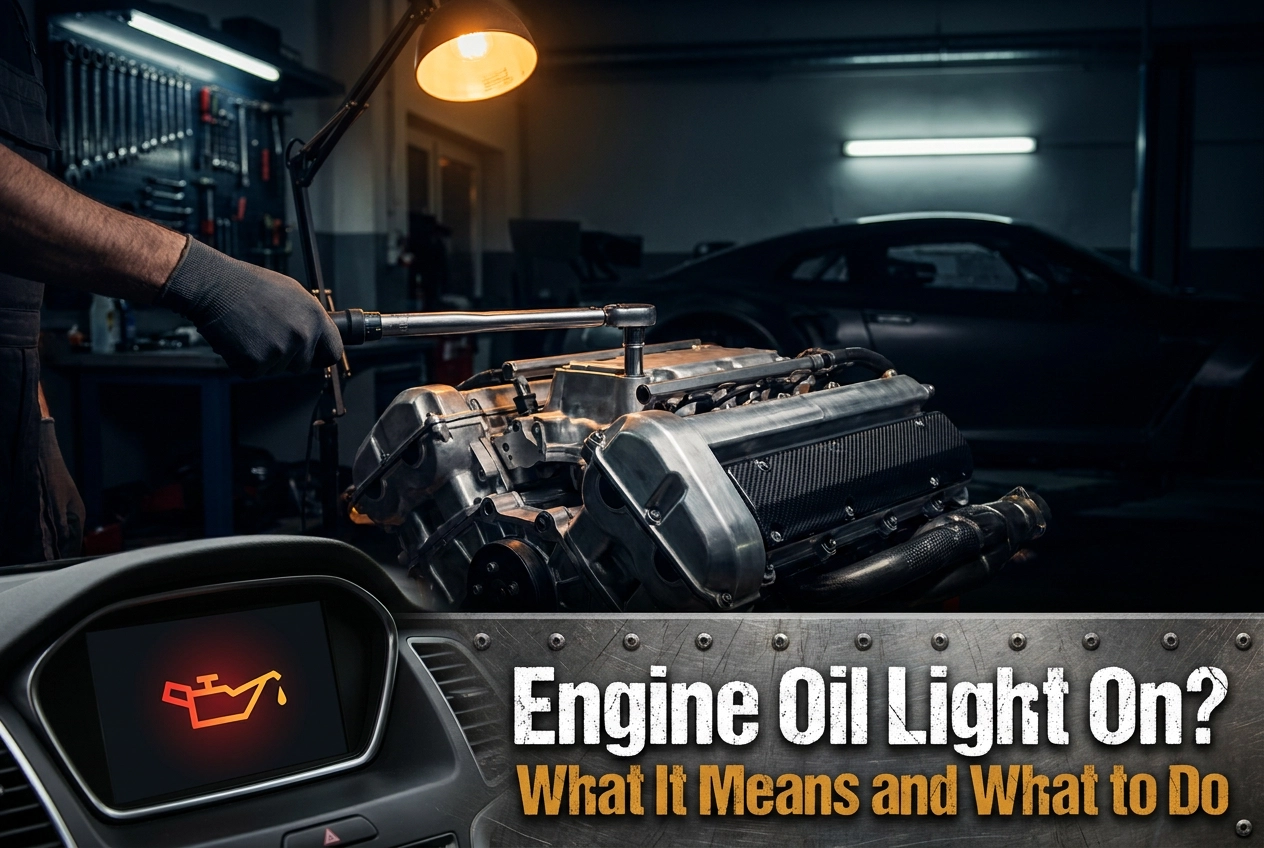
That small amber glow on your dashboard might seem easy to ignore, but the engine oil light is one warning you should never brush aside. It exists for a reason, and understanding what it’s telling you can mean the difference between a simple fix and a catastrophically damaged engine.
Whether you’ve seen this light flicker briefly or it’s been staring you down for miles, knowing how to respond is an essential skill for any driver who takes vehicle maintenance seriously. The engine oil light can indicate several different issues, ranging from low oil pressure to insufficient oil levels, and each scenario requires a specific course of action.
In this guide, you’ll learn exactly what triggers the engine oil light, how to diagnose what your vehicle is trying to tell you, and the precise steps you need to take to address the problem safely. We’ll also cover when you can handle the situation yourself and when it’s time to get a professional involved. By the end, you’ll have the confidence and knowledge to respond quickly and correctly every time this warning light appears.
What Does the Engine Oil Warning Light Actually Mean?
Not all engine oil warning lights are created equal, and treating them as a single, interchangeable alert is one of the most common and potentially damaging mistakes a driver can make. Your dashboard can display up to three distinct oil-related symbols, each communicating a fundamentally different condition, and the correct response to each varies dramatically. Misreading the signal, or simply ignoring it out of uncertainty, can escalate a manageable issue into a catastrophic engine failure.
The most critical of the three is the oil pressure warning light, typically displayed as a red oil can symbol, sometimes with a drip beneath the spout. This light indicates that pressure within the lubrication system has fallen below the safe operating threshold. When oil pressure drops, the engine’s moving components lose their protective film of lubricant, and metal-on-metal contact begins almost immediately. This is not a “get it checked soon” situation; it demands that you stop driving as promptly as it is safe to do so.
The low oil level warning, by contrast, is usually amber in colour and features an oil can symbol with a wavy line beneath it, representing the oil surface in the sump. This light tells you the quantity of oil has dropped below the minimum mark, but adequate pressure may still exist temporarily. It is urgent, though not the same level of immediate emergency as the red pressure warning.
A third symbol, often a spanner or a similar service indicator, is simply a scheduled maintenance reminder. It signals that an oil change interval is due based on mileage or time, not that a fault exists. As Car and Driver explains in their dashboard warning lights guide, failing to distinguish between informational prompts and genuine fault warnings can turn a minor issue into a significantly more expensive problem. Understanding precisely which light you are looking at before you react is the essential first step, and everything that follows in this guide depends on getting that identification right.
How Urgent Is the Engine Oil Light?
The urgency of your engine oil light depends entirely on which warning you are dealing with, but in neither case is it something you can safely defer. A solid, illuminated oil pressure warning demands that you pull over and cut the engine within minutes, not at the end of your journey. Continuing to drive even a short distance under active low oil pressure conditions accelerates internal engine wear at a rate that can turn a relatively minor issue into a full engine rebuild.
A flashing or intermittent oil light raises the urgency further. Pressure that drops and recovers suggests a failing oil pump or a partial blockage in the oil galleries, both of which can deteriorate to complete failure without warning. Treat a flashing light as a stop-immediately signal, not a reason to limp to the nearest garage under your own power.
The direct answer to how long you can drive with the engine oil light on is straightforward: zero additional distance for a pressure warning, and only the shortest controlled distance necessary to reach a safe stopping point for a low-level warning. The underlying physics explain why. Bearings, camshafts, and pistons all rely on a pressurised oil film to prevent direct metal contact. When that film collapses, friction and heat build within seconds, and the remaining oil rapidly degrades under those temperatures, compounding the damage.
For performance and turbocharged engines, this tolerance is even narrower. These platforms operate at higher RPM ranges and sustained temperatures where lubrication failure causes exponential damage acceleration. Turbocharged engines also rely on engine oil pressure to lubricate the turbocharger bearing housing directly, meaning pressure loss affects the turbo immediately alongside the rest of the drivetrain.
Common Causes of the Engine Oil Warning Light
Understanding why the engine oil warning light has come on is the critical first step toward an appropriate response. There are several distinct root causes, and correctly identifying which applies to your situation determines everything that follows.
Low oil level is the most frequent trigger. Engines consume small amounts of oil as part of normal operation, and over a full service interval this gradual consumption can bring the level close to or below the minimum threshold. Minor seeps from ageing seals or gaskets accelerate this process without producing a visible puddle, making the drop easy to miss until the warning light appears. A straightforward dipstick check will confirm or rule this out immediately.
Low oil pressure with a full sump is a more serious scenario. Even when oil level reads correctly, a worn oil pump, a blocked pickup strainer clogged with sludge, or oil that has degraded and lost its viscosity can all prevent the system from maintaining adequate pressure across the engine’s lubrication galleries. Low oil pressure is a distinct mechanical condition requiring prompt diagnosis rather than a simple top-up.
A faulty oil pressure sensor is worth considering when the warning light persists despite confirmed normal oil level and verified pressure readings. Sensors degrade with heat cycles and age, and corroded wiring at the switch connector is a common source of false signals. Replacing the sensor is typically straightforward and inexpensive once pressure testing confirms the mechanical system is functioning correctly.
Degraded or incorrect viscosity oil represents a frequently overlooked cause. Oil that has broken down through contamination, extended use, or excessive heat loses its ability to maintain a stable lubricating film and pressure. Topping up with the wrong grade compounds the problem; a 0W-20 specification engine filled with 10W-40, or vice versa, will not perform within designed pressure tolerances.
Performance and turbocharged engines present a specific consideration. Higher operating temperatures, increased mechanical loads, and the demands of forced induction all accelerate oil consumption and degradation. The engine oil warning light appearing sooner between services is not inherently a fault on these vehicles, but it is a firm signal that standard service intervals and check frequencies are insufficient. Owners of high-revving or turbocharged cars should inspect oil levels every one to two weeks rather than relying solely on dashboard alerts.
7 Warning Signs Your Engine Oil Needs Attention
The engine oil warning light is the most visible signal in this list, but it is also the last line of defence your vehicle has. By the time the light illuminates, the engine may already be operating under stress. Developing the habit of recognising earlier warning signs puts you ahead of potential damage rather than reacting to it.
Unusual Engine Noises
One of the earliest warnings comes not from the dashboard but from the engine bay itself. Knocking, ticking, or grinding sounds indicate that oil is no longer forming an adequate lubricating film between moving metal components. Hydraulic lifters are particularly sensitive to oil pressure loss, and a ticking sound on startup can be an early indicator that something is wrong. If the engine begins to sound rough or rattling at idle, do not dismiss it as background noise.
Dipstick Colour and Condition
Pull the dipstick and inspect the oil carefully. Fresh engine oil carries a clear amber appearance; oil that has degraded will appear dark brown, black, or gritty. At that point, the oil is functioning more as a contaminant than a lubricant, accelerating internal wear rather than preventing it. Regular dipstick checks take under a minute and give you far more reliable real-time information than waiting for a dashboard alert.
Sluggish Throttle Response
Degraded or insufficient oil increases internal friction across the engine’s moving parts. This places additional mechanical load on the drivetrain and can manifest as noticeably slower throttle response or reduced acceleration, particularly under hard driving conditions that performance car owners will recognise immediately.
Exhaust Smoke, Burning Smells, and Vibrations
Visible exhaust smoke, a sharp burning smell from the engine bay, and abnormal vibrations through the drivetrain are physical signs that oil is either burning off inside the combustion chamber, contacting hot external components via a leak, or no longer dampening mechanical movement effectively. Each of these symptoms warrants immediate investigation. For quality engine oil suited to performance and everyday applications, browse the engine oil range at Performance Cars Parts.
What to Do When the Engine Oil Light Comes On
Once the engine oil light illuminates, the sequence of actions you take in the next few minutes can be the difference between a minor top-up and a catastrophically damaged engine. Follow these steps precisely.
Step 1: Remain calm but act immediately
Do not convince yourself the light is a sensor glitch and carry on. If the warning is accompanied by ticking, knocking, or rattling from the engine bay, treat this as a critical alert. These sounds indicate that oil pressure is already dangerously low and internal components are operating with insufficient lubrication. Dismiss neither the light nor the noise.
Step 2: Reduce speed and pull over safely
Progressively ease off the throttle and move to a safe stopping point as quickly as traffic and road conditions allow. Once stationary, switch the engine off immediately and leave it to cool for a minimum of five minutes before opening the bonnet. Checking a hot engine gives inaccurate readings and risks burns from pressurised components.
Step 3: Check the dipstick correctly
Locate the dipstick, pull it free, and wipe it completely clean with a lint-free cloth. Reinsert it fully until it seats, then withdraw it again for an accurate reading. Check the oil level against the minimum and maximum markers on the blade. A reading at or below the minimum marker means a top-up is necessary before restarting.
Step 4: Top up with the correct oil grade
Using the wrong viscosity oil can compound a pressure problem rather than resolve it. For performance and turbocharged engines, a fully synthetic 5W-40 or the manufacturer-specified equivalent is typically required. Always cross-reference your owner’s manual before pouring anything into the engine. Performance Cars Parts stocks a range of engine oils suited to high-performance and turbocharged applications to ensure you are using a compatible grade.
Step 5: Restart and observe the warning light
After topping up, restart the engine and watch the dashboard. If the engine oil light extinguishes within a few seconds, the issue was likely low oil level. If the light remains illuminated despite the dipstick showing an adequate reading, the fault lies within the oil pressure system itself. Possible causes include a failed oil pressure sensor, blocked pickup tube, or worn crankshaft bearings. In this scenario, switch off the engine immediately and arrange professional diagnosis without driving the vehicle further.
Which Engine Oil Should You Use to Top Up?
Choosing the correct engine oil when responding to an oil warning light is not a matter of preference; it is a mechanical requirement. Topping up a turbocharged or high-performance engine with a generic, incorrect, or mismatched viscosity oil can reduce oil pressure, accelerate internal wear, and in some cases compromise your manufacturer’s warranty coverage. Many manufacturers specify oil grades as an explicit warranty condition, so always verify your handbook before purchasing a replacement or top-up product.
For the vast majority of modern performance and turbocharged engines, fully synthetic oil is the only appropriate choice. Fully synthetic formulations deliver superior thermal stability, better viscosity retention at high operating temperatures, and a significantly longer service life than semi-synthetic or mineral alternatives. This matters considerably in forced-induction applications, where turbochargers generate intense heat that degrades inferior oils rapidly. As noted in guidance on 5W-40 engine oil and its applications, fully synthetic 5W-40 specifically helps manage turbocharger heat while maintaining a robust oil film under pressure, two properties that standard or generic oils frequently cannot sustain.
The most commonly specified grade for high-performance petrol engines is 5W-40 fully synthetic. The “5W” governs cold-start behaviour, while the “40” rating maintains a thicker protective film at operating temperature, which is critical under the heat stress produced by turbocharged and high-revving engines. If you are uncertain between 5W-30 and 5W-40 for your application, the comparison of 5W-30 vs 5W-40 synthetic oil confirms that the higher “40” rating is generally the correct choice for performance and forced-induction engines. That said, always cross-reference against your vehicle’s handbook or the specification printed on the oil filler cap before purchasing.
Avoid mixing oil grades or brands wherever possible. Combining a fully synthetic with a semi-synthetic or mineral oil, even at the same nominal viscosity, dilutes the additive package and undermines base-stock integrity. If an emergency top-up with a mismatched product is unavoidable, schedule a full oil change within your next service interval, or within approximately 1,000 miles, to restore consistency and protect long-term engine health.
Performance Cars Parts stocks a curated range of engine oils suited to high-performance, turbocharged, and motorsport applications. Selecting the correct product for your specific engine remains the single most effective preventative measure against the oil warning light appearing prematurely.
Engine Oil Light After an Oil Change — What Is Going On?
Seeing the engine oil light illuminate shortly after a fresh oil change is a surprisingly common experience, and it is understandably alarming. However, in the majority of cases, the culprit is not a mechanical fault; it is simply the oil service reminder light that was not reset after the service. Modern vehicles use an Oil Life Monitoring System that counts engine cycles and triggers a reminder when the interval is due. This counter does not reset itself automatically when fresh oil is added; it requires a manual input specific to your vehicle.
The reset procedure varies by manufacturer but typically involves holding a designated reset button, or navigating to the oil life display through the instrument cluster menu, while the ignition is in the accessory position. Always confirm the exact steps for your specific year, make, and model using the owner’s manual, as performing the wrong sequence can dismiss the warning without completing a genuine reset.
If the light in question is the red oil pressure warning or a low-level indicator rather than a service reminder, the situation requires closer inspection. Possible causes tied directly to the oil change procedure include an incorrectly refitted or undertightened drain plug, a damaged or poorly seated oil filter, overfilling or underfilling the sump, and a sensor connector disturbed during the filter swap. Experienced mechanics note that a post-oil-change warning light is the most common comeback job, frequently traced to an incorrect filter selection or a missed quart of oil.
The oil filter deserves particular attention here. A filter that is cross-threaded, fitted with a double gasket from the previous service, or sourced from an unreliable supplier can restrict oil flow significantly, triggering a genuine pressure warning even when the sump level reads correctly on the dipstick. Quality filtration matters; using an application-correct oil filter matched to your engine specification is not optional.
If the light persists after you have confirmed the correct oil level on the dipstick and reset the service counter, do not drive the vehicle further. Stop the engine, check for visible leaks beneath the car, and arrange an inspection before continuing. Driving with an undiagnosed oil pressure warning, even briefly, can cause irreversible bearing damage within seconds of start-up.
Engine Oil Light and Engine Management Light On Together
When both the engine oil warning light and the engine management light illuminate at the same time, the situation demands immediate action. This is not a case where either warning can be attributed to a minor sensor glitch and monitored over a few days. The combination escalates urgency considerably, because the two systems are now signalling stress from overlapping directions.
The engine management system continuously monitors a broad range of parameters, including the oil pressure sensor circuit. When oil pressure drops below a programmed threshold, fault codes such as P0520 or P0522 can be logged by the ECU at the same moment the mechanical oil pressure warning activates. This parallel triggering means both lights can illuminate from a single underlying cause, typically a genuine pressure failure or a faulty pressure sensor. However, it can equally indicate that the engine has already absorbed mechanical stress as a result of oil starvation, with the ECU registering abnormal readings across multiple monitored systems as a consequence.
The correct immediate response is to stop driving as soon as it is safely possible, switch off the engine, and connect an OBD2 diagnostic scanner to read the stored fault codes. This step is critical because it separates three distinct scenarios: a faulty oil pressure sensor mimicking a real pressure loss, a genuine low-pressure event requiring investigation of the oil pump or passages, or a coincidental unrelated engine fault that has appeared at the same time.
For performance cars running aftermarket ECU tunes or remapped engine management systems, standard fault code interpretations may not reflect the actual calibration thresholds in use. A code that reads as non-critical on a stock vehicle may carry different weight on a tuned setup. Always have a modified car assessed by a specialist familiar with the specific tune before drawing conclusions from generic scan tool readings.
Engine Oil Light During or After a Track Day
Track driving places demands on an engine’s lubrication system that simply have no equivalent in road use. Sustained high-RPM loads, prolonged full-throttle acceleration, and the lateral G-forces generated through fast corners all combine to create a threat profile your engine was not necessarily designed to handle indefinitely. One of the most serious risks is oil surge, where G-forces cause oil to slosh away from the pickup in a wet-sump engine, momentarily starving the oil pump of fluid and causing a sudden drop in pressure. Oil starvation is identified as a leading cause of engine failure in competition vehicles, and wet-sump road cars used on circuit without specific preparation are the most common scenario where this occurs.
If the engine oil light appears during a track session, stop immediately. Do not complete the lap, do not ease back to the pit lane gradually; pull off as quickly and safely as possible and shut the engine down. At high RPM, oil starvation can score or seize bearings within seconds, and the resulting damage, covering bearing replacement, potential crankshaft work, or a full engine rebuild, will cost significantly more than any precautionary pit stop. Treat the warning as genuine until a mechanical oil pressure gauge confirms otherwise, since a faulty sensor, while rare, is the only justification for continuing.
Oil consumption also increases substantially under track conditions. It is entirely normal for a performance engine to use between 0.5 and 1 litre or more across a full day on circuit. Checking oil level before every session, not just at the start of the day, is a basic and non-negotiable requirement. Platform-specific oil starvation is a documented and widespread issue, affecting engines from Subaru, Toyota, Ford, and Mitsubishi when driven at sustained high loads without adequate preparation.
Running the correct oil specification matters more on track than it ever does on the road. As oil temperatures climb well beyond normal operating ranges, an oil that is too thin will fail to maintain the protective film between moving components. A high-performance, fully synthetic oil with strong thermal stability, typically in a grade such as 5W-50 or 10W-60 depending on your engine’s requirements, is essential to maintaining both viscosity and pressure throughout a session.
Preventive preparation is the most effective way to avoid an engine oil light mid-session. Fit a quality oil filter rated for high-performance use, verify that your cooling and lubrication systems are in sound condition before the day, and arrive with a fresh, correct-specification oil fill. Performance Cars Parts stocks engine oils and filtration products specifically suited to the demands of track driving, giving you a straightforward source for the right components before your next event.
Sensor Fault or Real Oil Problem? How to Tell the Difference
A faulty oil pressure sensor is one of the most common non-emergency explanations for an illuminated engine oil light, and distinguishing it from a genuine pressure failure is something every driver should be able to do before reaching for the phone to call a mechanic. The key indicators that point toward a sensor fault rather than an actual problem are straightforward: the dipstick shows oil at the correct level, the engine sounds entirely normal at all RPM ranges, throttle response feels sharp and unchanged, and there is no burning smell from the engine bay. If all four of those conditions are true, a faulty sensor is a credible diagnosis worth investigating.
A genuine oil pressure problem presents very differently. Physical symptoms typically accompany the warning light, and they are difficult to miss. Audible knocking or ticking from the engine indicates that moving components are operating without adequate lubrication. Sluggish or unresponsive throttle, a noticeable burning oil smell, or the simultaneous activation of the engine management light all suggest the pressure system itself is compromised rather than just the sensor reporting it. If the oil light flickers at idle but illuminates continuously at higher revs, treat this as a serious warning requiring immediate investigation.
The definitive way to separate a sensor fault from a system fault is to fit a mechanical oil pressure gauge temporarily to the sensor port. If the mechanical gauge reads within the normal operating range (typically 25 to 65 PSI at running speed) while the dashboard warning remains on, the electronic sensor is the likely culprit. The RAC’s oil warning light guidance confirms this approach as the correct diagnostic method.
For performance cars running aftermarket oil systems, the diagnostic scope widens considerably. Modified sumps, remote filter mounts, oil coolers, and extended oil circuits introduce additional potential failure points where leaks or blockages can develop without being immediately visible. If the cause of the warning is not obvious after checking the dipstick and listening for engine noise, a thorough inspection of the entire oil circuit is warranted before drawing any conclusions.
Replacing the oil pressure sensor is a relatively inexpensive repair, but it must only be carried out once a genuine pressure problem has been conclusively ruled out. Fitting a new sensor while an underlying low-pressure condition remains active will silence the dashboard warning while the engine continues to sustain internal damage. That sequence of events is how a minor fault becomes a catastrophic engine failure.
How to Prevent the Engine Oil Warning Light From Coming On
Prevention is always preferable to diagnosis, and for performance car owners, a consistent maintenance routine is the most reliable way to ensure the engine oil warning light never becomes an urgent problem.
Establish a regular dipstick check habit. Checking your oil level with the dipstick every two weeks, and without exception before any long motorway run or track day, is the single most effective preventive measure available to you. It takes under two minutes, costs nothing, and gives you direct confirmation of both level and oil condition. Fresh oil appears amber and translucent on the dipstick; dark brown or black oil with a gritty texture is a clear signal that a service is overdue before the warning light has any reason to appear.
Shorten your service intervals for performance use. Standard manufacturer recommendations are calibrated for lightly used road cars, and they are not appropriate benchmarks for turbocharged or high-performance engines driven hard. If your car sees spirited road use or occasional circuit work, an oil change every 5,000 to 6,000 miles is a more appropriate target. Engines subjected to regular track days should be assessed after every event, with many owners choosing to change oil and filter after each session as a matter of course.
Specify the correct oil grade and pair it with a quality filter. Using the right fully synthetic oil for your engine ensures that lubrication pressure and film strength are maintained across the full service interval. A substandard filter introduces a genuine risk; a cheap unit can collapse under pressure or allow degraded oil to bypass filtration entirely, circulating contaminants directly through critical engine components.
Inspect for leaks at each check. Look for pooling beneath the car after it has been parked overnight, and examine the rocker cover gasket, sump plug, and filter housing for wet staining or residue. A minor leak caught early is a straightforward fix; left unattended, it produces a gradual level drop that will eventually trigger the warning light without any other obvious symptoms.
Performance Cars Parts stocks engine oils, oil filters, and engine components suited to high-performance and motorsport applications. Keeping these consumables fresh on the correct schedule, using parts specified for your engine’s demands, is the most direct route to an oil warning light that never has cause to illuminate.
Final Thoughts
The hierarchy matters. An oil pressure warning means stop the engine immediately; a low oil level warning means act promptly before driving further; a service reminder is routine maintenance that can be scheduled without panic. Knowing which light you are dealing with is not a minor detail, it is the difference between a safe outcome and a seized engine.
Performance car owners carry a higher baseline risk in every one of these scenarios. Greater oil consumption rates, elevated operating temperatures, and the additional demands of track use all create conditions where oil-related warnings arrive faster and with less margin for delay. If you push your car hard, you need to be checking your dipstick more frequently than the average road driver.
The core actions remain consistent throughout this guide: check the dipstick first, top up with the correct viscosity grade for your engine, reset the service light if that is the specific warning, and seek a professional diagnosis if the light persists after those steps.
For performance car owners who want to stay ahead of their lubrication maintenance, the Performance Cars Parts engine oil range offers a practical starting point, covering the grades and specifications demanded by high-output, turbocharged, and track-driven engines.