Every gear change tells a story about your car’s drivetrain, and if yours feels vague, notchy, or simply uninspiring, the solution often starts with your shift linkage setup. For UK drivers running manual transmissions, upgrading to a weighted shifter has become one of the most talked-about modifications for improving tactile feedback and overall driving precision.
But here is where the conversation gets interesting: not all weighted shifter solutions are created equal. Two of the most popular approaches, shift knob weighting and short shifter installations, operate on fundamentally different principles and deliver noticeably different results behind the wheel. Choosing between them without understanding those differences can mean spending money on a modification that does not actually solve your specific problem.
In this guide, we will break down exactly how each approach works, compare their mechanical advantages and limitations, and help you determine which option suits your driving style and vehicle setup. Whether you are navigating tight roundabouts or pushing through a B-road run, understanding the mechanics behind your gear changes will help you make a genuinely informed decision.
What Does ‘Weighted Shifter’ Actually Mean?
The term “weighted shifter” is used loosely across enthusiast forums and social media, and that ambiguity creates real confusion at the point of purchase. In practice, it describes two fundamentally different products: a heavier-than-standard shift knob that replaces only the top of the gear lever, and a short-throw shifter assembly that modifies the mechanical geometry of the lever pivot itself. Treating these as interchangeable is a common and costly mistake.
A weighted shift knob is a bolt-on modification requiring no drivetrain disassembly. The additional mass, typically achieved through steel, brass, or aluminium alloy construction, encourages the hand to move more naturally between gates by carrying kinetic energy through the shift stroke. Installation is generally a threaded fitment, though thread pitch compatibility (commonly M10x1.25 or M12x1.25) must be confirmed before ordering.
A short-throw shifter assembly is a more involved modification. It repositions the lever fulcrum to shorten the arc between gear gates, producing faster and more precise shifts. This suits performance and track-focused driving directly, but it requires partial drivetrain disassembly and is strictly vehicle-specific in its fitment requirements.
These two products sit in different price brackets and solve different problems. The shift knob improves ergonomics and feel; the short-throw assembly improves mechanical shift speed and precision. The broader market context makes clear how significant this product category has become: the global automotive shift knob market is currently valued at approximately $1.5 billion and is projected to reach $2.9 billion by 2033 at a CAGR of 7.2%, reflecting the scale of demand for drivetrain personalisation beyond factory specification.
How a Weighted Shift Knob Changes Your Drive
The mechanics behind a weighted shift knob are rooted in basic physics. Once the knob is set in motion toward the next gate, its greater mass carries proportionally more kinetic energy than a lightweight alternative, meaning the shifter continues through resistance points, counter-springs, and detents with less sustained muscular input from the driver. The mass completes a measurable portion of the work, producing a shift that feels more fluid and less laboured. As one commonly cited explanation puts it, the additional momentum allows the knob and arm to move over resistance points without slowing, resulting in a noticeably smoother engagement.
This inertia benefit compounds during repeated, rapid gear changes. A single shift might reveal little difference, but across a spirited back-road run or a track session involving dozens of sequential changes per lap, the cumulative reduction in required effort becomes tangible. The same principle applies to stop-start commuting, where a driver making hundreds of gear changes per journey accumulates fatigue that a heavier knob measurably reduces. According to research into why drivers choose a weighted shift knob, shifting with a traditional lightweight knob can become genuinely tiring on long drives or in heavy traffic, and the added mass makes the process more effortless over time.
Weight thresholds produce meaningfully distinct outcomes. Knobs below 200g offer minimal inertia gain over a standard fitment. The 200g to 300g band represents the most broadly recommended range; a 240g knob sits comfortably within this window and suits the majority of driving styles. Above 300g, the feel shifts toward something more deliberate and planted, which suits drivers who prefer a slower, more mechanical rhythm rather than quick, reactive inputs. A detailed comparison of weighted versus non-weighted shift knobs reinforces this tiered approach to selecting the correct mass for your driving habits.
Weight is not the only variable in play. The knob’s height alters the leverage available to the driver’s wrist, while diameter affects grip span and wrist angle through the shift arc. A taller knob of moderate weight can effectively feel heavier in use than a compact, denser alternative. Selecting a weighted shifter requires treating mass, height, and diameter as an integrated system rather than optimising any single dimension in isolation.
Weighted Shift Knob vs. Short Shifter: What Is the Difference?
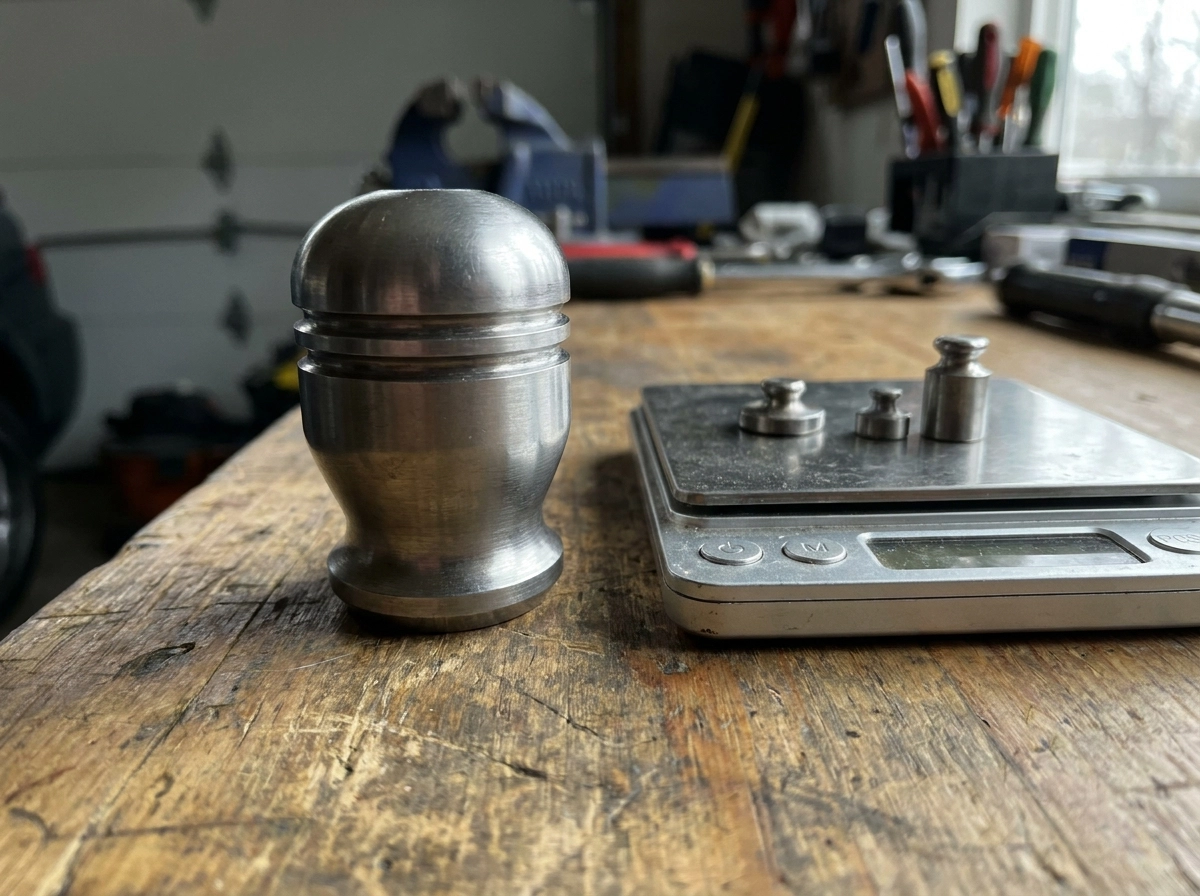
These two modifications are frequently grouped together under the “shifter upgrade” umbrella, but they address entirely different aspects of the manual transmission experience. A weighted shift knob adds mass to the top of the lever, altering the momentum and tactile effort of each individual gear change without affecting how far the lever physically travels. A short-throw shifter, by contrast, modifies the pivot point or lever geometry to reduce the arc of travel between gear gates, producing a noticeably shorter, more mechanical shift action. Understanding this distinction is essential before committing to either purchase.
The performance difference a short shifter delivers is measurable rather than purely subjective. The Billetworkz short shifter for the Subaru BRZ, for instance, reduces throw by 30% compared to the factory unit, meaning the lever covers significantly less distance on every single gear change. That reduction compounds over a track session or spirited back-road run, cutting shift times and reducing arm movement. You can explore weighted vs. non-weighted shift knob comparisons within the Subaru community for platform-specific context on how knob choice interacts with factory throw characteristics.
Critically, these two upgrades are complementary rather than competing. COBB Tuning packages weighted knobs alongside short shifters and shift boots as cohesive drivetrain bundles, a pairing that addresses both throw distance and shift feel simultaneously. Many performance drivers on the r/ManualTransmissions community treat them as sequential steps in the same upgrade path rather than an either-or decision.
Installation complexity separates them considerably. Fitting a weighted knob is typically a sub-five-minute thread-on swap requiring no tools whatsoever. A short shifter is a different proposition entirely; it requires partial centre console disassembly and, on several popular platforms, removal of the gear selector assembly. That places it firmly in the mechanical upgrade category rather than a cosmetic swap.
Cost reflects this complexity gap. Quality weighted shift knobs generally sit between £30 and £120 depending on material and manufacturer. Short-throw shifter assemblies for popular UK performance cars typically range from £80 to £250, varying by platform and specification. For drivers looking to maximise shift feel on a phased budget, a weighted knob is the logical starting point, with a short shifter as a natural follow-on upgrade.
Materials Compared: Delrin, Stainless Steel, and Aluminium
Material selection is where a weighted shifter goes from a comfortable daily upgrade to a genuine performance tool, and each option involves genuine trade-offs across weight, thermal behaviour, and durability.
Delrin (acetal resin) is the polymer of choice for knob bodies in motorsport-influenced designs. Its low thermal conductivity means it does not absorb and radiate heat the way metal does, so it stays close to ambient temperature even after prolonged sun exposure. For UK drivers, this is genuinely practical: a car parked at a summer track day in direct sunlight will leave a bare metal knob near-untouchable, while a Delrin body remains comfortable throughout a full stint. Delrin is also dimensionally stable under repeated mechanical stress, which matters when you are making rapid, forceful gear changes across multiple laps.
Stainless steel delivers the highest mass-to-volume ratio of any common knob material, which is precisely why weighted knobs achieve figures between 240g and 325g in a compact form factor. The trade-off is thermal sensitivity. Community feedback from Subaru WRX owners documents bare stainless becoming uncomfortably hot in summer and near-painfully cold at around 10 degrees Celsius, conditions that are entirely routine in the UK. The practical solution adopted by performance-oriented manufacturers is a hybrid construction: a stainless steel insert or core for mass, paired with a Delrin or wrapped outer body for thermal protection.
Aluminium sits between these two extremes. Anodised aluminium knobs typically fall in the 150g to 200g range, heavier than unweighted Delrin but lighter than stainless. The anodising process creates a hard oxide layer that resists corrosion, relevant for cars driven in wet British conditions, and produces a consistent, premium tactile surface. Aluminium is well-suited to performance road cars where the driver wants a noticeable weight improvement over OEM without committing to the thermal management requirements of a full stainless option.
Leather and Alcantara wrapping directly solves the temperature problem associated with metal knobs. Wrapped variants also align with the interior finish of cars like the Honda Civic Type R and Toyota GR86, where the OEM trim language uses soft-touch materials throughout the cabin. Alcantara in particular offers high grip and moisture resistance, both useful properties during spirited driving. For a more detailed breakdown of how weighted shift knob design affects shift feel mechanics, this comparison of weighted vs. non-weighted shift knobs covers the functional considerations in detail.
For track and motorsport applications specifically, the hybrid configuration, a stainless steel core inside a Delrin or wrapped body, represents the most considered compromise. You retain the kinetic mass needed for fatigue-free shifting across extended stints, while the outer material keeps grip temperature manageable regardless of whether the car has been stationary in the paddock or running hard through successive sessions. It is also worth reviewing material-specific guidance on shift knob construction when specifying an upgrade for a car that will see regular circuit use.
UK Fitment Guide: Thread Sizing and Popular Performance Cars
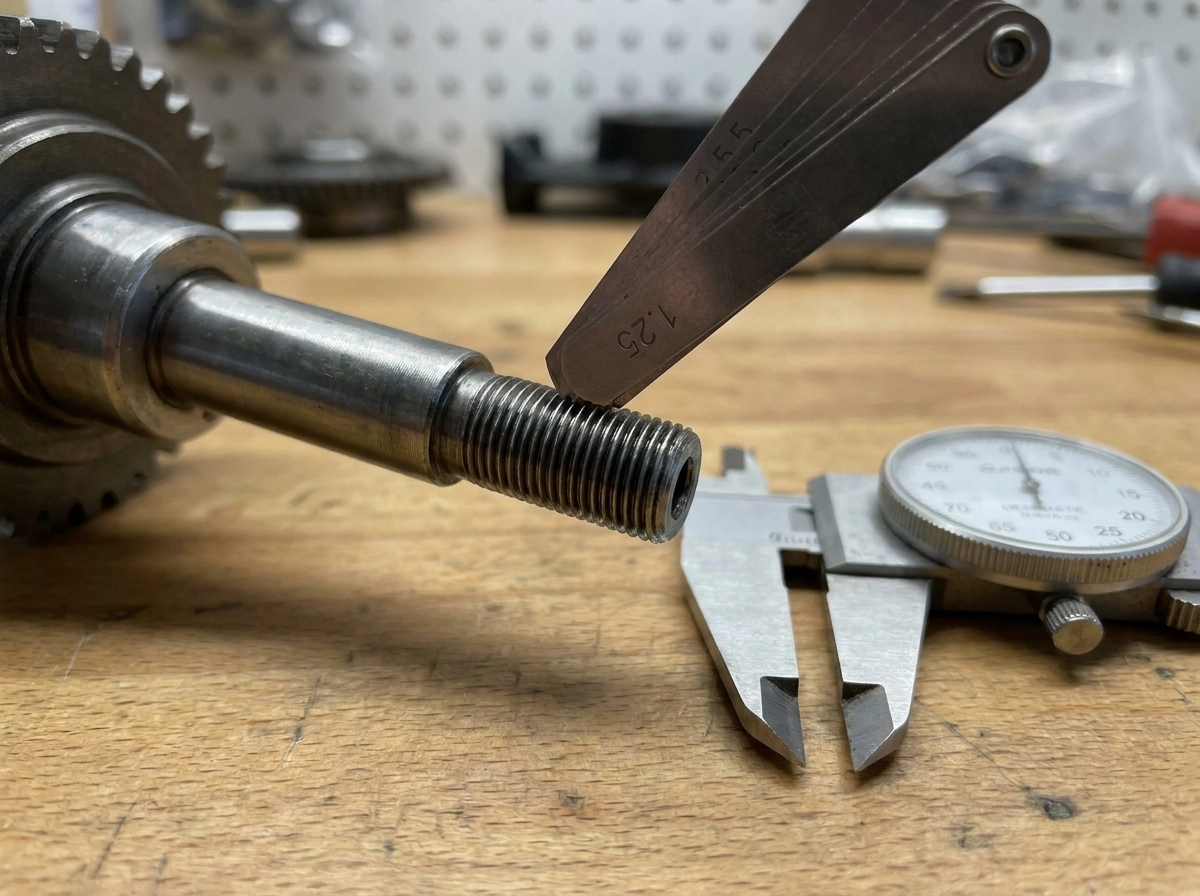
Thread pitch is the single most important specification to confirm before purchasing a weighted shift knob for any UK performance car. The notation combines diameter and pitch distance, so M12x1.25 means a 12mm diameter shaft with 1.25mm between thread peaks. A mismatch of even 0.5mm in pitch will prevent the knob from seating correctly, and the difference is not visible to the naked eye. Getting this wrong means a return, a delay, and potentially a separate adapter purchase.
The Two Dominant Thread Sizes in the UK Market
M12x1.25 is the standard across most Japanese performance platforms. The Toyota GR86, Subaru BRZ (ZD8 generation), Subaru WRX, and Honda Civic Type R (FK8 and FL5) all use this pitch, and it is well-documented across owner communities including the GR86 owner forums and Subaru Impreza ownership groups. If you drive any of these platforms, M12x1.25 should be your starting specification. M10x1.5 is the thread size associated with many European manual gearbox applications, including the Volkswagen Golf GTI and Golf R across Mk7 and Mk8 generations. Note that several Golf variants use a non-threaded OEM gear lever, meaning an adapter sleeve is required regardless of pitch before any threaded aftermarket knob will fit.
Ford Focus ST and RS Owners: Verify Before Ordering
Ford Focus ST and Focus RS models typically use M12x1.75, a coarser pitch than the M12x1.25 found on Japanese platforms. Because the diameters are identical, these two sizes are easily confused at the point of purchase. The critical issue is that most universal adapter kits bundled with aftermarket weighted shift knobs cover M8x1.25, M10x1.25, M10x1.5, and M12x1.25 as standard, but M12x1.75 is frequently absent. Ford owners should confirm the included adapter list with the retailer before ordering, and budget for a separately sourced M12x1.75 adapter if it is not included.
Reverse Lockout Collars on European Hot Hatches
Several popular European platforms, including Golf GTI/R variants and some Ford Focus configurations, use a reverse lockout mechanism integrated into the gear lever. This typically takes the form of a lift ring or collar that must be pulled upward before engaging reverse gear. Many aftermarket weighted shift knobs do not accommodate this mechanism and require the collar to be removed entirely. For daily-driven cars where reverse engagement safety is a practical concern, confirm whether the replacement knob retains or bypasses the lockout before purchasing. The fitment reference chart at We Are Likewise is a useful cross-reference for platform-specific compatibility notes alongside thread sizing.
Track Day and Motorsport Considerations
Track days place demands on a driver that standard road use simply does not replicate. In a 20-minute session, a driver completing a typical circuit will execute several hundred gear changes, often under hard acceleration, with the transmission under thermal and mechanical load throughout. The fatigue reduction offered by a weighted shift knob, which may feel marginal on a commute, compounds meaningfully across that volume of inputs. Each individual shift requires fractionally less muscular effort, and that saving accumulates across a session in a way that preserves both physical performance and focus.
The inertia benefit is particularly relevant in high-tempo driving. When shifting under acceleration, the transmission offers genuine resistance through the gate, and a lightweight knob requires the driver to overcome that resistance with direct muscular force on every change. A heavier knob, once set in motion, carries its own momentum into the gate transition, reducing the effort the driver must consciously apply. This is the functional argument for a weighted shifter in motorsport beyond simple comfort.
For time-attack or competitive use, pairing a weighted knob with a short-throw shifter provides the most complete drivetrain upgrade available at this level. The weighted knob reduces effort per shift; the shortened throw reduces the time each shift occupies. Across a full lap, that combination produces measurable gains in both driver efficiency and gear-change speed.
Heat resistance deserves serious attention. Aluminium and bare metal knobs absorb and retain heat aggressively during extended track sessions, particularly on cars where the transmission tunnel runs warm under sustained load. Medical-grade delrin knobs are specifically engineered to resist this problem, remaining at a manageable temperature even in demanding conditions. Delrin or suede-wrapped alternatives are the practical choice for anyone running multiple track sessions in a day.
For dual-purpose cars used on both road and circuit, modular swap-top designs offer a pragmatic solution, allowing drivers to configure the knob for track use without committing to a permanent change or replacing the full shifter assembly each time.
What to Look for When Buying a Weighted Shifter in the UK
Before adding any weighted shifter to your basket, verify the thread pitch for your specific car. M12x1.25, M10x1.5, and M12x1.75 are the three most common sizes across UK performance cars, and none are interchangeable without an adapter. Japanese platforms including Subaru, Nissan, and Toyota typically run M12x1.25, while VAG and Ford platforms vary. Getting this wrong means the knob either won’t seat correctly or risks damaging the shifter stub threads, so check your owner’s manual or confirm with the seller directly before ordering.
Weight selection should map to your actual driving style rather than the heaviest option available. The 200g to 260g range delivers a noticeable improvement over a standard lightweight knob without dramatically altering your muscle memory, making it a practical starting point for most road and occasional track drivers. Knobs at 300g and above cross into territory where the mass actively assists the shift movement through each gate, which suits drivers who want the knob to lead the change rather than simply complement it. For context, weighted shift knob data from the enthusiast community broadly supports this weight-to-feel relationship across different driving profiles.
Material selection should be driven by your primary use case. For track days and year-round UK driving, Delrin and wrapped knobs resist the thermal extremes that metal surfaces amplify through a British winter or a hot August track session. Aluminium and stainless steel remain a strong choice for road or show use where aesthetics carry more weight than thermal comfort. This distinction is explored in detail across the wider enthusiast community, and aligns with the material trade-offs covered earlier in this guide.
If you are likely to add a short-throw shifter within the next 12 months, bundle both at the same time. Installing each separately means pulling the centre console or gearshift surround twice, and purchasing together may reduce the overall cost versus two separate orders. Performance Cars Parts stocks weighted shift knobs alongside drivetrain accessories suited to UK performance platforms, and their team is available via email and WhatsApp if you need fitment confirmation for your specific car before committing to an order.
Choosing the Right Weighted Shifter for Your Car
A weighted shift knob remains one of the most cost-effective upgrades available for any manual performance car, delivering an immediately tangible improvement to shift feel without requiring mechanical disassembly or specialist installation. The benefits are both physical and mechanical: reduced effort through each gate, improved leverage during rapid gear changes, and noticeably less driver fatigue across longer runs or track sessions.
Three decision points determine the right choice for your car. Weight sits between 200g and 325g for practical street and performance use, with heavier options toward the upper end suiting drivers who prioritise momentum-assisted shifts. Material determines both thermal behaviour and mass distribution; Delrin and wrapped options manage cabin heat more comfortably, while stainless steel and aluminium maximise total weight. Thread fitment is non-negotiable, and UK buyers on European hot hatch platforms must also confirm reverse lockout collar compatibility before ordering, as these are the two fitment details most commonly overlooked.
For the most complete upgrade, pairing a weighted knob with a short-throw shifter addresses both shift effort and shift speed as genuinely complementary modifications. This combination is well-documented across enthusiast communities, as explored in detail at Weighted vs. Non-Weighted Shift Knobs: Which Is Right for Your Subaru? and Weighted Shift Knobs: Are They Worth It?.
Use the platform guides at Performance Cars Parts to confirm fitment for your specific car, and contact the team directly via WhatsApp or email if you need compatibility confirmed before ordering.
Conclusion
Upgrading your shift feel does not require guesswork when you understand the fundamentals. To recap the key takeaways: weighted shift knobs improve tactile feedback through added mass at the lever’s top, short shifters reduce throw distance for quicker gear changes, each solution targets a different driving complaint, and combining both can deliver a genuinely transformed experience.
The right choice depends entirely on what bothers you most about your current setup. Vague, floaty shifts often respond better to knob weighting, while long, tiresome throws call for a short shifter installation.
Ready to make your gear changes feel purposeful again? Start by identifying your biggest frustration behind the wheel, then invest in the solution that directly addresses it. Your hands will notice the difference on the very first drive.