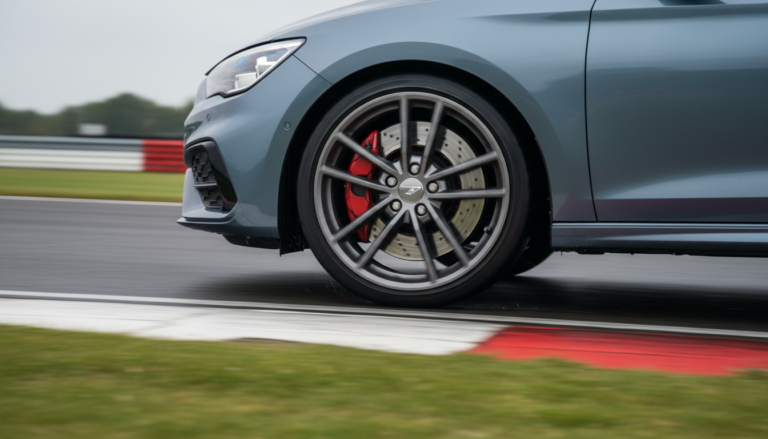
If your brake pedal feels soft after a few hard stops, sinks further than it used to, or simply lacks the crisp, progressive bite you want on a twisty B-road or a track day, the flexible hoses between your chassis pipes and calipers are one of the first places worth looking. Standard rubber hoses work perfectly well for most everyday driving, but they are designed around comfort, cost and long-term durability rather than outright feel.
That is why braided brake lines are one of the most popular brake upgrades in the UK. Replacing the factory rubber hoses with stainless steel brake hoses is relatively affordable, usually bolts straight on, and can make the pedal feel firmer and more consistent. They are not magic, though: they will not shorten stopping distances on their own, and a poor fitting job can create a genuine safety risk.
In this guide we explain how braided brake hoses are built, what they can and cannot do for brake pedal feel, how they compare with rubber, what an MOT tester looks for, whether you need to tell your insurer, and how to pick the right brake line kit for popular UK performance cars. By the end you will know whether braided brake lines are worth it for your car, and what else should be on your list at the same time.
Quick Answer: Are Braided Brake Lines Worth It?
For most modified road cars and anyone doing track days, a quality, vehicle-specific braided brake line kit is a worthwhile and relatively low-cost upgrade, especially when your rubber hoses are due for replacement anyway or you are already bleeding the system for fresh fluid. For a standard car used only for commuting, the difference may be small and good rubber hoses are perfectly adequate. Use the table below as a starting point.
| Your car and driving | Recommended starting point | Main compromise |
|---|---|---|
| Standard daily driver, no track use | Keep OEM rubber hoses in good condition; replace with OEM or a braided kit when due | Braided kit costs more than OEM rubber for a modest change in feel |
| Fast-road car with uprated pads and discs | Vehicle-specific braided brake line kit plus fresh high-boiling-point fluid | Fitting and bleeding time; correct routing is essential |
| Occasional track days | Braided lines, high-temperature fluid and track-capable pads as a package | Fluid needs changing more often; pads may be noisier on the road |
| Big brake kit or caliper swap | Use the hoses specified for that kit or caliper; do not adapt the old ones | Fitment is specific to the kit, so check lengths and fittings carefully |
| Older or classic car with tired hoses | Full hose replacement, braided or OEM, after inspecting rigid pipes too | Seized unions and corroded pipes may add work |
Final choice depends on the hose manufacturer’s approvals and the listed fitment for your exact model, engine and brake setup. This guide covers road-registered cars with conventional hydraulic brakes. Browse our full range of braided brake lines and hose kits and filter by vehicle before ordering.
What Are Braided Brake Lines and How Do They Work?
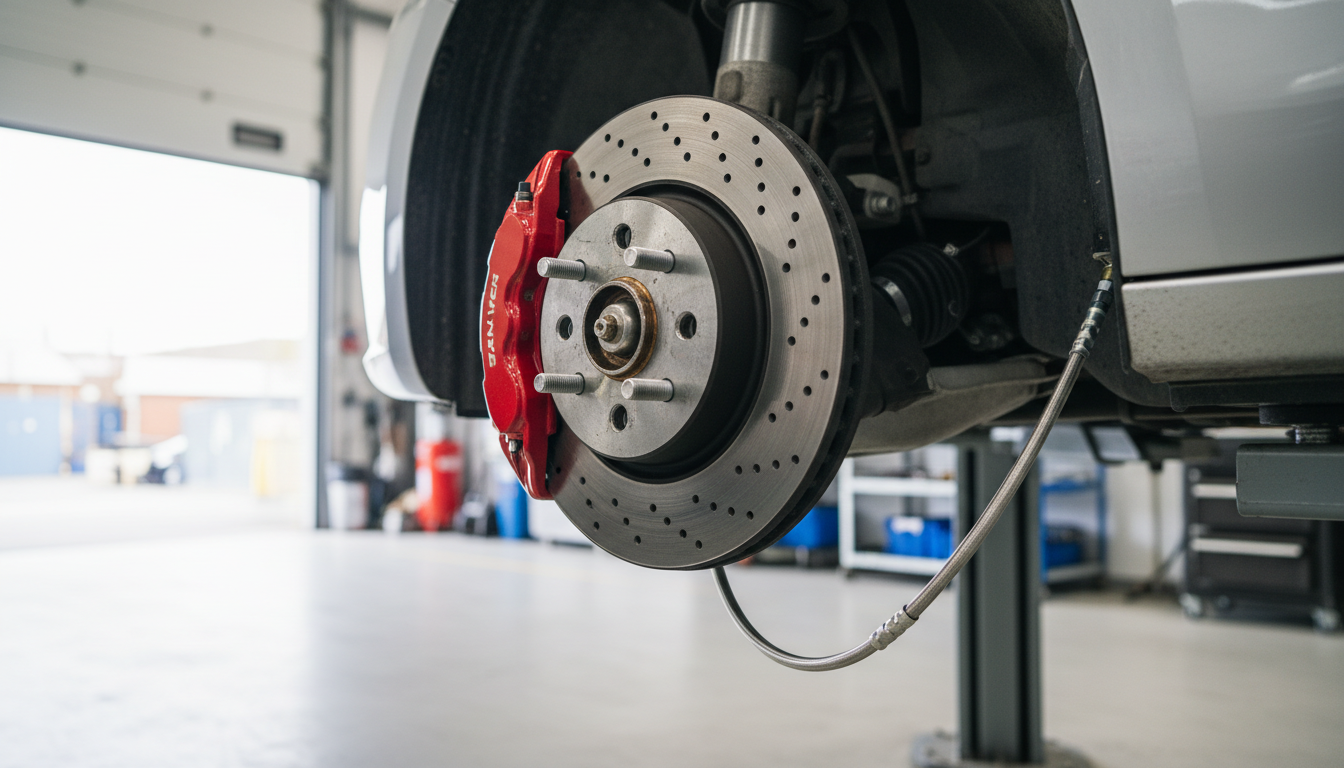
Every car with hydraulic brakes uses a mix of rigid metal pipes along the body and short flexible hoses where the brake components move: at each front wheel, which steers and rises and falls with the suspension, and at the rear where the axle or hub moves. When you press the pedal, the master cylinder pushes fluid through these pipes and hoses to the calipers, which clamp the pads onto the discs.
A conventional rubber hose is a layered construction with textile reinforcement. Under very high line pressure, rubber hoses can swell slightly. Some of the pedal travel you put in is then used up expanding the hose rather than moving the caliper pistons, which you feel as a less direct pedal.
Braided stainless steel brake hoses use a different construction. As the general description of braided stainless steel brake lines explains, they typically combine:
- A PTFE inner liner that carries the fluid and resists heat and chemical attack.
- A stainless steel wire braid wrapped tightly around the liner to stop it swelling under pressure.
- An outer cover, usually clear or coloured PVC, which protects the braid from road grime and stops the steel abrading nearby parts.
- Crimped end fittings, often stainless or plated steel, to match the original banjo or threaded connections.
Because the braid resists expansion, more of your pedal effort goes directly to the caliper pistons. The result most drivers notice is a firmer, more consistent pedal with less sponginess, particularly when the brakes are working hard.
Braided vs Rubber Brake Hoses: Real Benefits and Limitations
It is easy to overstate what a hose change does. The honest picture is that braided lines improve feel and consistency; they do not change the fundamental grip available at the tyre or the friction of your pads.
What braided brake lines can improve
- Pedal firmness: less hose expansion usually means a higher, more positive pedal.
- Modulation: a more direct pedal can make it easier to judge pressure near the limit, which helps on track and in wet UK conditions.
- Consistency when hot: manufacturers such as Goodridge market their kits on reducing sponginess during hard use. Treat this as a feel improvement rather than a cure for fade, which is mainly a pad and fluid issue.
- Durability: stainless braid and a protective cover resist cracking and perishing, and some brands back their hoses with long or lifetime warranties.
What braided brake lines will not do
- They will not stop a car with overheating fluid from developing a long pedal. Boiling fluid creates compressible vapour, so fluid choice still matters.
- They will not add grip. Stopping distance in an emergency is ultimately limited by tyres, road surface, ABS calibration and the condition of the whole system.
- They will not fix worn pads, warped discs, air in the system, a tired master cylinder or seized caliper sliders.
- They will not make an unsuitable pad compound work on track.
Some retailers’ marketing claims shorter stopping distances. In reality, any measurable difference depends on the car, the condition of the original hoses, the fluid, the pads and the driver, so we would not buy braided lines expecting a specific stopping-distance gain. For a fuller look at pads, discs and big brake kits working together, read our performance brake upgrades guide.
How to Choose a Quality Stainless Steel Brake Hose Kit
Braided hoses all look similar in a photo, but the construction and certification behind them varies. Brake hoses are safety-critical, so this is not an area to buy the cheapest unbranded kit you can find.
Approvals and testing
Look for kits that state compliance with a recognised brake hose standard. For example, HEL Performance product listings state that their hoses comply with the US FMVSS-106 brake hose standard and are supplied fully assembled and machine-crimped, while Goodridge states that each kit is pressure tested. Approval wording differs between brands and markets, so read the individual listing rather than assuming every braided hose carries the same certification.
Vehicle-specific vs universal
- Vehicle-specific kits are made to the correct length with the right fittings, brackets and grommets for your car. This is the sensible choice for almost every road car.
- Universal or custom hoses are for motorsport builds, conversions and caliper swaps where no off-the-shelf kit exists. They require careful measurement and professional assembly.
Details worth checking on the listing
- Exact model, generation, engine and brake caliper fitment, for example whether your car has the optional performance or sport-pack brakes.
- Number of hoses in the kit: front only, rear only or full car. Some cars also have a short hose at the rear axle or a separate clutch line.
- Whether the kit includes new copper or aluminium sealing washers. Banjo fittings normally need fresh washers.
- Protective outer coating. A covered hose is kinder to nearby suspension components and easier to keep clean for inspection.
- Fitting material and finish, especially if you live somewhere salted roads are common in winter.
How Much Do Braided Brake Lines Cost in the UK?
There is no single price for braided brake lines, because a kit is built around one specific car. The main things that change the cost are:
- Number of hoses: some cars need only a front pair, many need a four-hose set, and some need more. Goodridge’s Nissan GT-R R35 kit, for example, is a six-piece set.
- Vehicle application: cars with factory big brakes, optional sport-pack calipers or unusual fittings can need a different kit from the standard model.
- Front pair or full kit: doing all four corners costs more in parts but gives a consistent feel and means the whole system is bled once.
- Brand and specification: fitting material (stainless or plated), outer cover colour and whether the kit is made to order all affect the price.
- Fitting: if a garage fits the hoses, labour and a full bleed are on top of the parts. Seized unions or corroded rigid pipes can add time.
- Brake fluid: you will need enough fresh fluid to bleed the whole system after fitting.
Rather than quote figures that go out of date when supplier prices change, the examples below show live prices from our store. For other cars, check the current price on the matching kit in our brake line range.
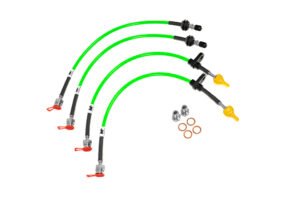
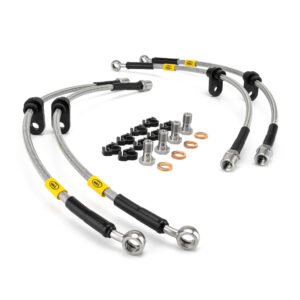
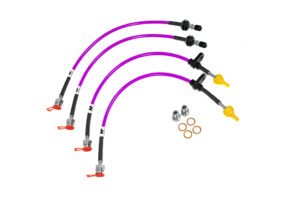

HEL vs Goodridge vs EBC Braided Brake Lines
HEL, Goodridge and EBC are three of the best-known names in braided brake hoses, and we stock all three. The table below compares what each manufacturer or its listing states. It is not a performance ranking: we have not seen independent test results that show one brand stopping a car better than another, so the right choice usually comes down to fitment for your car, fitting finish, availability and warranty terms.
| Feature (as stated) | HEL Performance | Goodridge | EBC Brakes |
|---|---|---|---|
| Hose construction | PTFE liner with stainless steel braid and PVC outer layer | PTFE inner core with stainless steel braided outer | Braided stainless steel PTFE hose |
| End fittings | Stainless steel fittings (not plated mild steel) | Varies by kit; check the listing (some kits use stainless, some plated fittings) | Grade 303 stainless steel fittings |
| Stated standards | FMVSS-106 | Built to FMVSS 106 and TÜV standards | Manufactured to FMVSS-106; TÜV approval stated |
| Testing | Supplied fully assembled and machine-crimped | Each kit 100% pressure tested | Not detailed on the listing we checked |
| Warranty | Lifetime warranty stated by retailer | Lifetime warranty for the period you own the vehicle | Lifetime warranty stated |
| Other notes | Wide choice of outer cover colours | Kits built to order at its Exeter head office | Kits include new stainless steel bolts |
Sources: HEL Performance listing, Goodridge brake hose kit page and EBC brake line listing. Warranty terms and approvals can vary by product, so always read the exact listing for your kit.
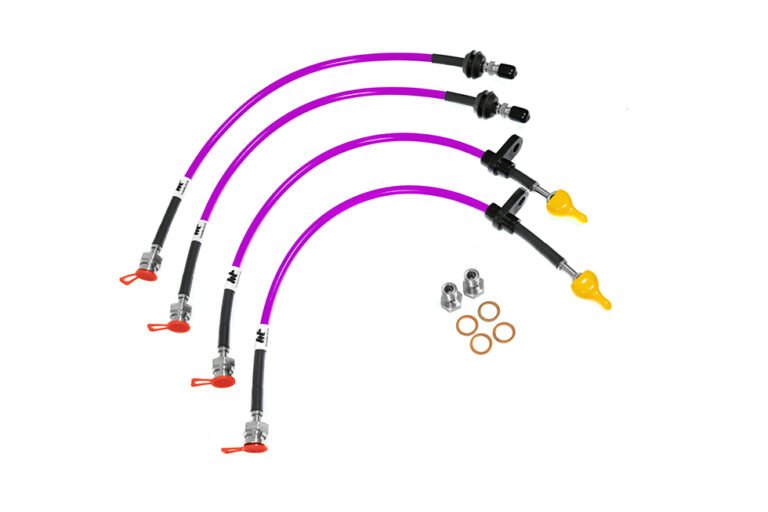
Examples from our range: HEL braided brake lines for the Toyota GT86, Goodridge brake lines for the Ford Fiesta ST180 and EBC stainless steel brake lines for the Toyota GT86 and Subaru BRZ.
Are Braided Brake Lines Legal in the UK?
Yes. Fitting braided brake hoses to a UK road car is legal, and they are not an automatic MOT failure. What matters is that the hoses are suitable for your car, correctly fitted and in good condition, and that you tell your insurer. The DVSA MOT inspection manual looks for defects such as leaks, twisting, excessive damage, bulging and corrosion rather than the type of hose.
What the MOT tester checks
There is no MOT rule that bans braided brake hoses, and properly fitted, approved hoses are common on UK road cars. The tester checks the condition and security of the hoses. The manual’s brakes section lists flexible brake hose defects under section 1.1.12, including:
- A hose damaged and likely to fail (dangerous).
- Hoses slightly damaged, chafed or twisted (minor), or excessively damaged, deteriorated, chafed, twisted or stretched (major).
- A leaking hose or connection on a hydraulic system (dangerous).
- A hose bulging under pressure or porous (major).
- Ferrules excessively corroded (major), or corroded and likely to fail (dangerous).
The manual also says a hose should only be rejected for chafing when the damage is severe enough to expose the reinforcement. On a braided hose, that means a worn-through outer cover with frayed braid showing will attract attention. Separately, the brake section includes a defect for unsafe modification of braking system components, so a badly adapted hose, a kinked line or a hose rubbing on a tyre or damper could also be failed.
In practice, braided brake hoses MOT problems almost always come down to fitting rather than the hose type:
- Route the hose exactly as the original and use the original brackets and clips.
- Check full steering lock in both directions and full suspension travel to make sure the hose does not twist, stretch or touch anything.
- Make sure the hose is not twisted when the union is tightened. Hold the hose end while torquing the fitting.
- Keep the hose and fittings clean so a tester can see them clearly.
Do You Need to Tell Your Insurer About Braided Brake Lines?
In the UK, the safest assumption is yes. Specialist broker Howden’s modified car insurance FAQs advise declaring any change from the manufacturer’s original specification, and specifically list enhanced brake pads as a modification to declare. Braided hoses fall into the same category of brake modifications.
Whether a brake upgrade changes your premium is a decision for your insurer, and it varies between companies. What matters more is that failing to declare a modification can give an insurer grounds to reduce or refuse a claim or cancel the policy, which is a far bigger cost than any premium change. Keep receipts and the product listing showing the hose approvals in case you are asked.
Fitting Braided Brake Lines: What the Job Involves
Swapping brake hoses is within reach of a competent home mechanic with the right tools, but it is a safety-critical job. If you are not confident bleeding brakes and torquing fittings correctly, have a qualified garage do it.
Typical steps
- Loosen the hose unions while the car is on its wheels if the fittings are tight, then lift and support the car safely on axle stands.
- Use a proper flare-nut (line) spanner on rigid pipe unions to avoid rounding them; old unions can be seized.
- Clamp or cap lines where appropriate to limit fluid loss, and protect paintwork, since brake fluid damages paint.
- Fit the new hoses with new sealing washers, follow the original routing, and tighten to the vehicle manufacturer’s specified torque. There is no universal torque figure, so check the workshop data for your car.
- Bleed the whole system in the order your manufacturer specifies. Cars with ABS may have their own procedure, and some require diagnostic equipment.
- Check for leaks with the pedal held firmly, check routing at full lock and full droop, then road test gently before using the brakes hard.
Because you are opening the hydraulic system, this is the ideal time to switch to fresh fluid. For a breakdown of DOT 4, DOT 5.1 and racing fluids, see our track day brake fluid guide, and pick up high-performance brake fluid at the same time as your hoses.
Braided Brake Line Upgrades for Popular UK Tuned Cars
Most popular UK performance cars have vehicle-specific hose kits available. The checks below are what we suggest owners confirm before ordering, rather than a guarantee that every variant is covered.
| Vehicle family | What to check before ordering |
|---|---|
| Honda Civic Type R (EP3, FN2, FK2, FK8) | Chassis code and whether the car has factory Brembo front calipers; front and rear hose counts differ between generations |
| Ford Fiesta ST and Focus ST | Generation (Mk7 vs Mk8 Fiesta; Mk3 vs Mk4 Focus) and whether the kit covers rear disc or drum setups |
| Toyota GT86, Subaru BRZ and GR86 | Standard brakes or the Brembo sport-pack option, plus model year, as hoses and fittings can differ |
| VW Golf GTI and Golf R, Audi S3 | Platform (Mk7 or Mk8, 8V or 8Y) and front caliper size, especially after a big brake kit or caliper swap |
| BMW 1 Series and 3 Series (M135i, 335i) | Chassis code and whether the car has M Sport or M Performance brakes |
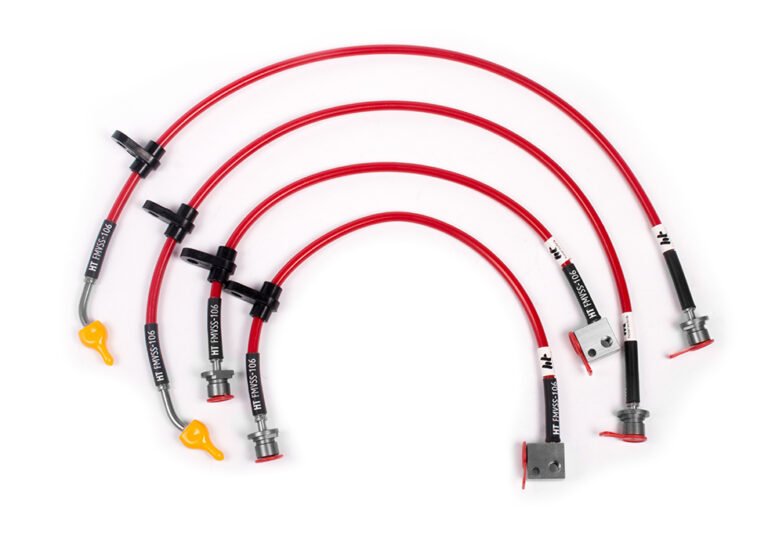
Examples from our range
- Honda Civic Type R FK8 2.0 Turbo Brake Lines
- Ford Focus ST250 Mk3 Brake Lines
- HEL Braided Brake Lines Ford Fiesta Mk8 ST 1.5 EcoBoost 18+
- Toyota GT86 Brake Lines
Not listed? We carry hose kits for hundreds of applications, so search our brake line range by make and model, or ask us to check fitment.
Building a Track Day Brake Upgrade Around Braided Lines
Braided hoses work best as part of a balanced package. If you are preparing for circuit use, think about the whole system rather than one part:
- Fluid: a high dry and wet boiling point fluid, changed more often than a road-only car.
- Pads: a compound rated for the temperatures you will see. Our performance brake pads include fast-road and track compounds.
- Discs: in good condition with enough thickness above the minimum, plus correct bedding of new pads and discs following the pad manufacturer’s procedure.
- Cooling: clear ducts and undamaged dust shields, and brake cooling ducts for heavier or more powerful cars.
- Tyres: braking performance is capped by grip, so tyres in good condition at sensible pressures matter as much as any brake part.
For everything else you should have sorted before your first session, from helmets to tow straps, see our track day safety equipment checklist.
Braided Brake Line Upgrade Checklist: Before You Buy and Fit
- Confirm make, model, generation, engine and exact brake setup, including any optional or aftermarket calipers.
- Choose a kit that states compliance with a recognised brake hose standard and comes fully assembled.
- Check how many hoses the kit includes and whether you need front, rear or a full set.
- Order new sealing washers if they are not included, plus enough fresh brake fluid to bleed the whole system.
- Inspect rigid brake pipes and unions while you are there; corroded pipes are a separate MOT failure.
- Use flare-nut spanners and the manufacturer’s torque figures, and route hoses exactly as standard.
- Check clearance at full steering lock and full suspension travel.
- Bleed the system using the correct procedure for your car and check for leaks.
- Declare the modification to your insurer.
- Re-inspect the hoses after the first few drives and before every track day.
Braided Brake Lines FAQs
Are braided brake lines worth it for a daily driver?
On a standard car used for commuting, the change in pedal feel is often modest, and good OEM rubber hoses are perfectly adequate. Braided lines make more sense when your hoses are due for replacement anyway, when you have already upgraded pads or discs, or when you want a firmer, more consistent pedal for spirited road driving.
Do braided brake lines improve stopping distance?
Not on their own. Emergency stopping distance is limited mainly by tyre grip, road surface and ABS. Braided lines reduce hose expansion, which improves pedal feel and consistency, but you should not buy them expecting a specific reduction in stopping distance.
How long do stainless steel braided brake hoses last?
There is no universal lifespan. HEL, Goodridge and EBC all advertise lifetime warranties on their brake line kits, subject to their terms, but a warranty is not the same as a service life. Inspect the hoses at every service and before track days, and replace any hose with a damaged cover, exposed or frayed braid, a corroded ferrule or a weeping fitting.
Will braided brake lines pass a UK MOT?
Yes, if they are in good condition and correctly fitted. The tester checks for leaks, chafing, twisting, stretching, bulging and corroded ferrules, and for any unsafe modification, so follow the original routing and check clearance at full lock and full suspension travel.
Do braided brake lines need special brake fluid?
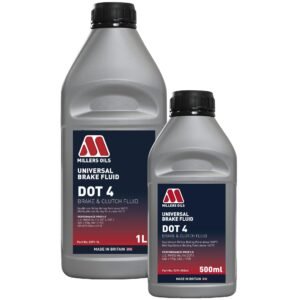
No. PTFE-lined hoses are designed for use with normal car brake fluid, so use the DOT grade your vehicle manufacturer specifies. Do not mix silicone-based DOT 5 with glycol-based DOT 3, DOT 4 or DOT 5.1 fluids. Fitting new hoses is a good time to switch to fresh high-boiling-point brake fluid if you do track days.
Shop Brake Lines and Brake Fluid

Conclusion
Braided brake lines are one of the most cost-effective ways to sharpen brake pedal feel on a modified road car or track day car. They reduce hose expansion, help the pedal stay firm and consistent, and resist the ageing that affects rubber hoses. They will not replace good pads, fresh fluid or decent tyres, and they are only as safe as the fitting job: correct routing, proper torque and a thorough bleed are what keep them MOT-friendly and reliable.
Ready to upgrade? Browse our braided brake lines and wider performance brakes range at performancecarsparts.co.uk. If you are not sure which kit fits your car, message the Performance Car Parts UK team on WhatsApp or email us with your registration, model and brake setup and we will help you choose the right hoses.
Shop related performance parts

Explore related products
Always check the individual product listing for your vehicle and engine before ordering.