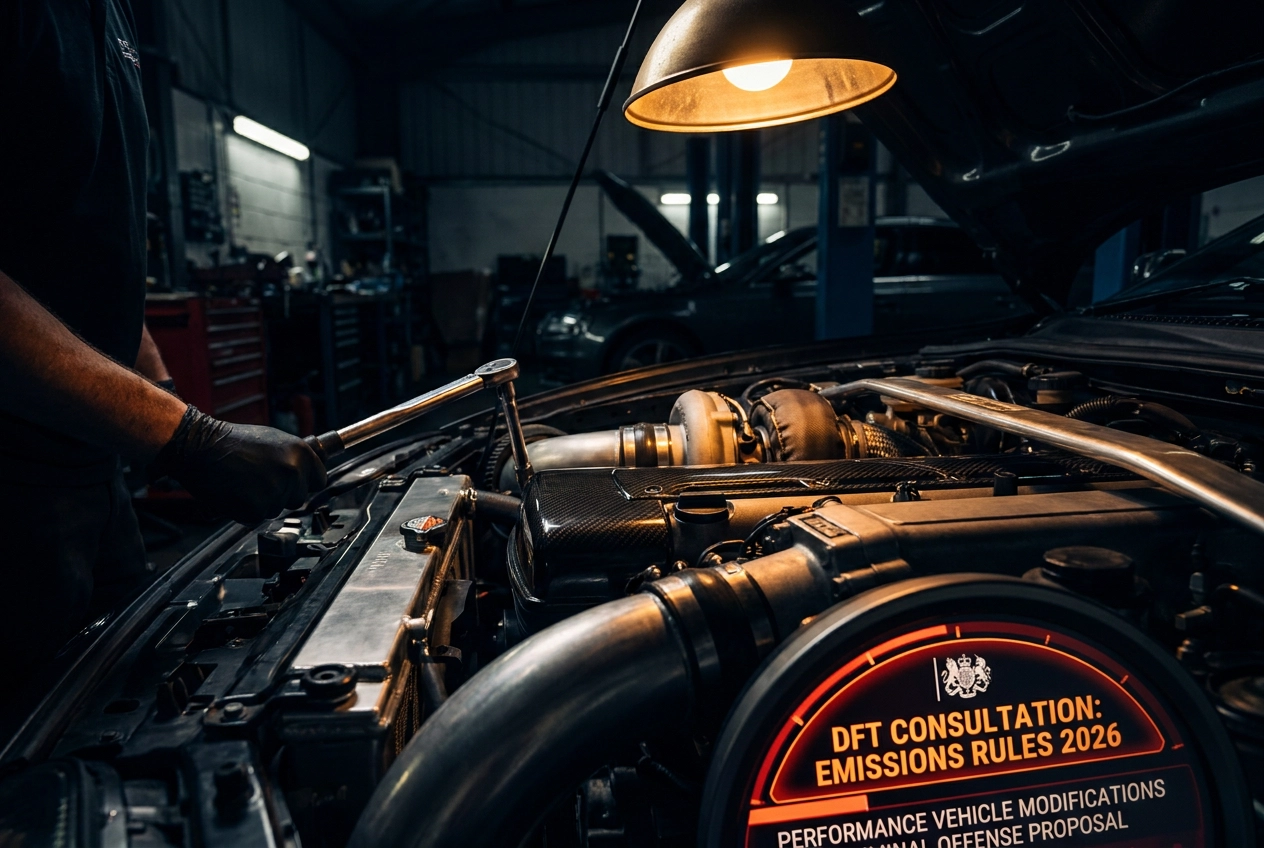
The rules governing what you can legally do to your car after purchase are about to change in ways that will directly affect thousands of performance and modified vehicle owners across the UK. In July 2026, the Department for Transport launched a public consultation proposing to criminalise DPF removal, AdBlue bypass software, catalytic converter deletion, and any engine management modifications that increase emissions on Euro 5 and 6 vehicles. For anyone who has already made these changes, or is currently planning an exhaust upgrade or tuning package, the implications are serious and demand careful attention.
This analysis breaks down exactly what the DfT is proposing, why the existing legal framework has left a significant gap that the government now intends to close, and what it means in practical terms for your build or purchase decisions. You will learn which modifications remain fully compliant, which vehicles fall outside the new proposals, and what responsible performance ownership looks like heading into 2026 and beyond. If you are spending money on performance hardware right now, understanding this consultation is no longer optional.
Why This Consultation Matters to Every Performance Car Owner
On 6 July 2026, the Department for Transport opened a public consultation on in-use emissions from road vehicles, with responses due by 6 September 2026. This is a live policy process, not a distant proposal, and the window to influence it is short.
The proposals directly target Euro 5 and Euro 6 vehicles, which make up the majority of the current UK performance car parc. If enacted, owners who have already removed a DPF, deleted a catalytic converter, or installed AdBlue bypass software face potential criminalisation of modifications they may have considered routine. Owners planning any exhaust upgrade or engine management work on a Euro 5 or Euro 6 platform are operating in a narrower legal window than existed twelve months ago.
The scale of this shift is significant. Existing legislation on emission control device retention covers only Euro 4 light vehicles, leaving Euro 5 and Euro 6 cars in a regulatory grey area that the consultation is specifically designed to close. Bringing those vehicles into scope represents the largest expansion of in-use emissions enforcement the UK has seen since Euro 4 rules were introduced.
For anyone researching exhaust systems or considering performance car upgrades, understanding what the consultation proposes is now a prerequisite. Committing budget to components that could become illegal on a Euro 5 or Euro 6 road car is a risk that careful buyers will want to avoid. The sections below work through exactly what is proposed, who is exempt, and what compliant modifications still look like.
The Current Legal Gap and Why the Government Is Closing It
Under Regulation 61A of the Road Vehicles (Construction and Use) Regulations 1986, the obligation to retain functioning emission control devices covers only Euro 4 light vehicles and Euro V heavy goods vehicles. The gap creates an unintentional and unfair burden on older vehicles, which remain subject to in-use compliance obligations that newer cars avoid. A pre-2010 Euro 4 diesel owner faces legal duties that the owner of a more capable Euro 6 platform does not.
The asymmetry matters because Euro 5 and Euro 6 vehicles are precisely the cars most likely to carry advanced emissions hardware. DPFs, SCR systems, and AdBlue injection were mandated under Regulation 715/2007 and are absent from Euro 4 vehicles entirely, making the gap between type-approval standards and in-use reality considerably wider for modern cars.
The government frames closing this gap as an air quality and enforcement credibility issue. Roadside remote-sensing data shows fewer than one in ten passenger cars in UK cities comply with official nitrogen oxide limits, with nearly two-thirds of Euro 5 and Euro 6 diesels exceeding their thresholds threefold.
For performance buyers, this is the critical signal. The proposals rest on coherent legal foundations and address a documented public health shortfall. That combination makes eventual legislation far more probable than a consultation that lacks either.
What the DfT Is Proposing: The Specific Targets
The consultation proposes five concrete changes, each targeting a specific modification practice that currently sits in the Euro 5 and Euro 6 regulatory gap.
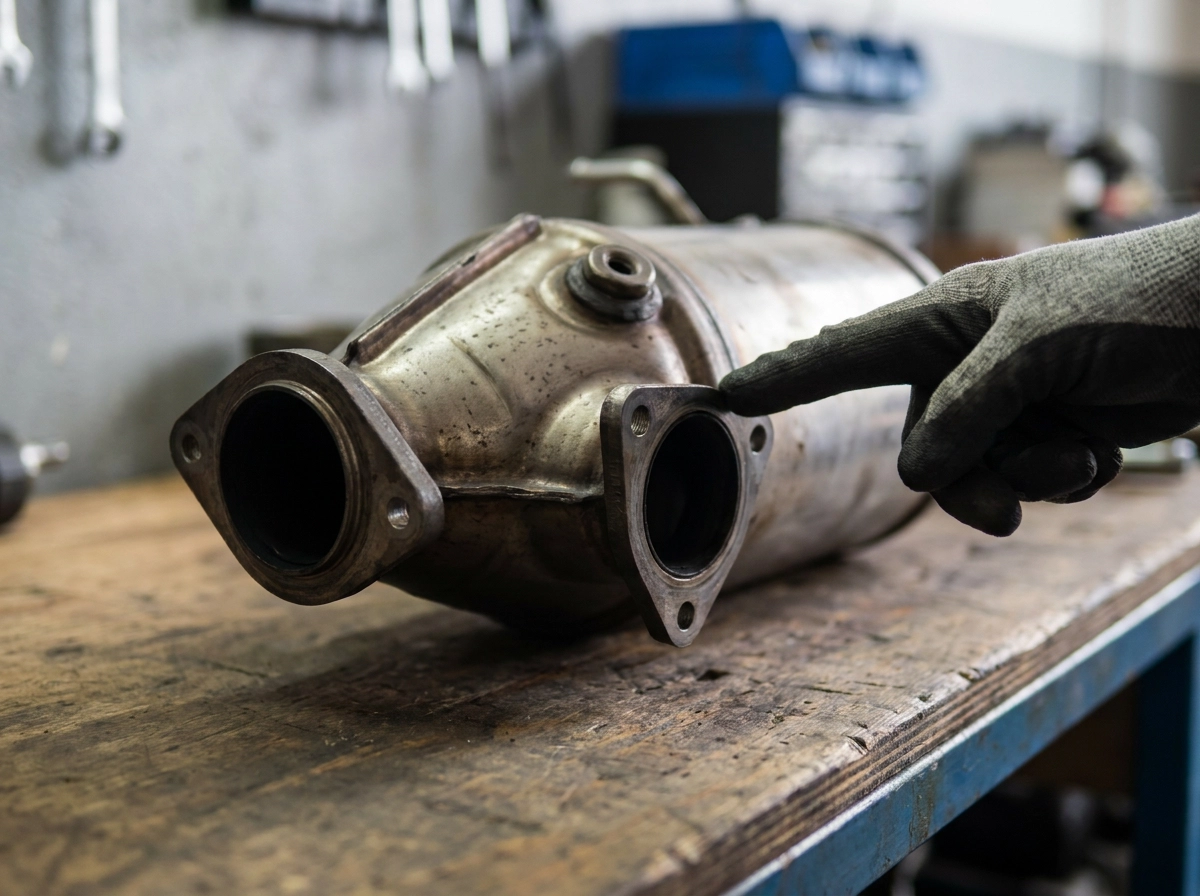
DPF removal on Euro 5 and Euro 6 diesel vehicles would become a criminal offence, mirroring the prohibition that already exists for Euro 4 cars. AdBlue bypass software, which defeats selective catalytic reduction (SCR) systems and allows NOx emissions to rise unchecked, would be explicitly banned. Catalytic converter deletion on both petrol and diesel vehicles within the Euro 5 and Euro 6 scope would be prohibited, closing an avenue that has remained technically unregulated on modern platforms.
The fourth and broadest proposal targets software directly. Any ECU or engine management modification that causes emissions to exceed the original factory-certified maximum would shift from a civil matter to a criminal offence, with magistrates’ court convictions carrying fines from £1,000 upwards. This is the proposal with the widest reach, because it captures tuning solutions that leave hardware intact but push emissions beyond certified limits.
Underpinning all four specific prohibitions is a single overarching principle: every road vehicle in Great Britain must retain its original factory-fitted emission control devices and software, maintaining the same maximum emissions profile as when it left the manufacturer.
The proposed mechanism is an amendment to Regulation 61A of the Road Vehicles (Construction and Use) Regulations 1986, enforced via the Road Traffic Act 1988. The proposals are specifically directed at deliberate modifications rather than vehicles with hardware degraded by ordinary wear.
Who Is Exempt: Older Vehicles and the Pre-2001 Advantage
Those proposed prohibitions apply exclusively to Euro 5 and Euro 6 vehicles. Pre-2001 cars sit entirely outside their scope.
The DfT consultation explicitly confirms that older vehicles would not be required to meet Euro 5, 6, or 7 emissions standards, nor would they face repeat original type-approval testing under the new rules. The Department for Transport has gone further, publicly labelling claims that classics would be drawn into new MOT-style emissions tests as “categorically false.” Owners of pre-2001 performance and classic cars have considerably more latitude than those running modern Euro-standard platforms.
The rationale is practical. Older vehicles account for a small proportion of total vehicle kilometres travelled across the UK fleet, which limits their aggregate contribution to urban air quality problems. Regulating them to the same standard as high-mileage Euro 6 daily drivers would impose disproportionate burden for minimal environmental return.
For anyone weighing up a classic build against a modern Euro 5 or Euro 6 platform, this distinction carries real weight. Pre-2001 owners planning exhaust upgrades or engine modifications are not exposed to the criminal liability the consultation introduces for newer vehicles. The legal risk profile is fundamentally different. That said, MOT emissions standards remain in force regardless of vehicle age; passing an emissions test at the annual inspection is a separate obligation that no exemption removes.
If you are still mapping out which direction to take a build, the guide to performance parts that genuinely transform how your car drives covers the upgrades worth prioritising across both classic and modern platforms.
What Remains Legal: Compliant Performance Upgrades Explained
For Euro 5 and Euro 6 owners on modern platforms, the picture is more restrictive than for pre-2001 builds, but the legal space for meaningful upgrades remains substantial.
Exhaust upgrades are compliant provided the original emission control devices stay in place. Cat-back systems, performance downpipes paired with a retained catalytic converter, and high-flow sports catalysts all fall outside the proposed prohibitions. A high-flow sports catalyst is particularly worth noting: it improves exhaust flow and sound character while maintaining emissions filtration, putting it firmly on the right side of both existing law and the incoming rules. A straight-pipe delete achieves none of that legal safety. If you are planning an exhaust upgrade, our complete UK buyer’s guide to aftermarket exhaust systems covers system types, MOT legality, and how to choose the right setup without compromising compliance.
ECU remapping sits in a grey area. The consultation targets software that increases emissions above the factory-certified maximum, not remapping in general. A map that improves power delivery within the original emissions envelope is not the stated target. However, distinguishing compliant from non-compliant tuning will ultimately depend on enforcement practice and any testing protocols that follow the consultation’s outcome.
Everything else is unaffected. Induction upgrades, suspension modifications, brake upgrades, and cooling system improvements fall entirely outside the proposals, which are narrowly drawn around emission control device integrity.
When sourcing parts, prioritise suppliers who can confirm their products are designed to work with retained factory ECDs. That single specification check is the most practical way to future-proof a build under the incoming framework.
What the Consultation Does Not Yet Answer
Knowing what the consultation does propose is only half the picture. Several critical implementation details remain absent, and those gaps matter as much as the proposals themselves.
Penalties are unspecified. The consultation references existing powers under the Road Traffic Act 1988 but does not confirm whether non-compliance will attract vehicle confiscation, driving prohibitions, licence endorsements, or what fine levels will apply in practice. The true cost of a non-compliant build remains an open question.
No DVSA testing protocol has been published. The consultation offers no detail on how enforcement bodies will detect tampering during MOT checks or roadside inspections. No published framework exists for distinguishing deliberate modification from legitimate mechanical wear, creating ambiguity for independent garages and owners alike.
Motorsport and track-day vehicles have no explicit exemption. The proposals target vehicles “used in Great Britain” but say nothing about competition cars that never operate on public roads. For owners building dedicated track machines, that silence is a significant gap. For road-legal builds in the meantime, the exhaust pipes complete buying guide covers legal compliance alongside performance considerations.
No implementation date has been set. No enforcement start date has been disclosed, complicating planning for anyone mid-build.
Owners and businesses should monitor the DfT’s published consultation response, which will set out final policy on enforcement scope, penalties, and any motorsport exemptions.
Responsible Modifications: A Forward-Looking Approach for 2026 and Beyond
With the regulatory direction now established, the practical question is how to modify compliantly.
The single most effective step is to design any exhaust upgrade around emissions-system-retaining components from the outset. Retrofitting compliance after the fact, whether by sourcing a replacement DPF or reinstalling a removed catalytic converter, is harder, costlier, and may not satisfy an enforcement officer if the original hardware is gone.
When speccing performance car upgrades, ask suppliers directly whether their exhaust systems, engine management software, and forced induction components are engineered to work alongside retained factory emission control devices. A supplier who cannot answer that question confidently is a risk worth avoiding.
For diesel owners, DPF-retaining exhaust configurations, including cat-back systems and high-flow downpipes, allow meaningful exhaust improvement without deleting emissions hardware. Deletion is no longer the only route to improved exhaust performance.
For petrol owners, the options are broader still. Sports catalysts, cat-back systems, induction upgrades, suspension tuning, and brake improvements all represent meaningful performance exhaust systems and car upgrades that fall entirely outside the scope of what the consultation targets. There is no regulatory reason to touch the emissions hardware at all.
Finally, maintain documentation. Keep invoices, part specifications, and fitment records for every component on a road-registered car, especially one that also sees track use. As enforcement tightens, a clear paper trail is the simplest form of protection available.
What Performance Owners Should Do Before the Rules Change
Start with an honest audit. If your Euro 5 or Euro 6 vehicle has had a DPF removed, a catalytic converter deleted, or an AdBlue system bypassed, it falls squarely within the category the consultation is designed to target. Establishing your current position before secondary DVSA enforcement guidance is published gives you the maximum window to act.
Use the legal framework as a planning filter. Any forthcoming exhaust upgrade or engine management change should be scoped around emissions-retaining components from the outset. This is not a constraint on performance; sports catalysts, cat-back systems, and compliant engine management software all deliver genuine gains without touching the systems the proposals target.
Monitor the consultation outcome actively. The consultation closed on 6 September 2026, but the implementation timeline and penalty structures remain unpublished. Watch for secondary DVSA guidance, which will confirm enforcement mechanisms and any phased compliance periods.
For compliant upgrade options across exhaust systems, engine parts, and wider performance car upgrades, performancecarsparts.co.uk stocks a range of components built around emissions-system retention, covering both petrol and diesel platforms.
Pre-2001 owners retain more headroom under the proposals, but that does not eliminate all obligations. MOT emissions pass rates still apply to modified exhaust configurations, and verifying compliance before committing to a build remains the prudent step regardless of the vehicle’s age.
Conclusion
The 2026 DfT consultation represents the most significant shift in modified car regulation in a generation. Four points define your position going forward: emissions-deleting modifications on post-2001 vehicles face direct legislative targeting; compliant upgrades including sports catalysts and cat-back systems remain fully viable performance options; pre-2001 owners retain greater flexibility but are not entirely exempt; and the enforcement detail will arrive through secondary DVSA guidance, making early preparation essential.
The window to audit your current setup, plan compliant builds, and stay ahead of penalty structures is open now. Do not wait for implementation notices to prompt action.
Performance and compliance are not opposing goals. The knowledge exists, the components exist, and the regulatory direction is clear. Use all three to build confidently, legally, and with full awareness of what 2026 requires of every serious performance car owner.