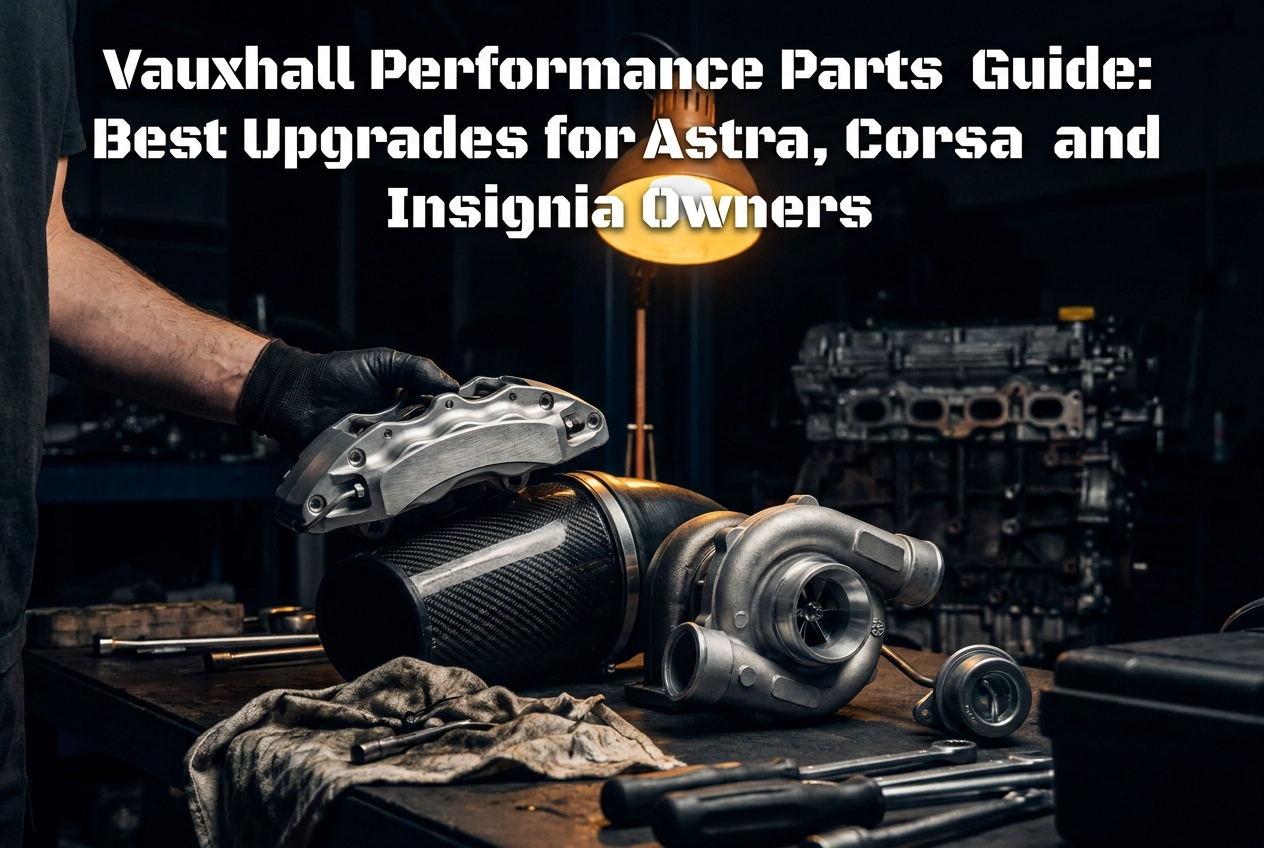
Most performance content online chases the same platforms: Golf GTIs, Civic Type Rs, German saloons. Meanwhile, a large portion of UK drivers owns and daily-drives Vauxhall hardware that responds exceptionally well to modification, yet finds almost no dedicated technical guidance. That gap matters, because choosing the wrong vauxhall performance parts in the wrong order is an effective way to waste a parts budget.
The Astra VXR, Corsa OPC and Insignia VXR share platform and powertrain DNA with their Opel counterparts, meaning a well-developed European tuning ecosystem directly supports these cars. The 2.0T and 2.8T engines in these platforms handle meaningful power increases when upgrades are applied logically, starting with airflow and ending with forced induction hardware once supporting modifications are in place.
This guide covers everything intermediate owners need to make informed decisions: platform identification, intake and intercooler upgrades, exhaust choices, suspension and brake specifications, forced induction options, and fluid requirements for performance use. It also outlines the correct upgrade sequence so each modification builds on the last, rather than working against it.
Why Vauxhall Platforms Are Worth Tuning
Vauxhall’s three flagship performance platforms share more than a badge. The Astra VXR, Corsa OPC and Insignia VXR draw on common Opel/Vauxhall powertrain architecture, with the A20NFT engine appearing in both the Astra Mk6 VXR and Insignia VXR, and the Z20LEH underpinning the Mk5 Astra VXR. This crossover means tuning knowledge, parts data and community dyno results transfer directly between platforms rather than requiring owners to start from scratch.
All three run turbocharged four-cylinder engines from the factory, and that matters. The UK ownership base for these cars is substantial, and the aftermarket has matured accordingly. Parts are competitively priced, fitment guides are well-documented across multiple platforms, and community-generated dyno data is publicly available. A Mk5 Astra VXR owner researching intake options will find verified before-and-after figures from owners running identical engine codes, which removes much of the guesswork from purchasing decisions. The same applies across exhaust, suspension and forced-induction categories; if you want broader context on what performance exhaust work can achieve on these platforms, the Exhaust Replacement Guide: OEM vs Performance Upgrades for UK Drivers is a useful reference.
The domestic VXR and OPC community also punches above its weight technically. Specialist forums and owners clubs have accumulated years of peer-reviewed modification data, including failure modes, safe power limits and parts compatibility notes that rival anything produced for import-focused platforms.
Critically, the sequence in which you modify your car determines how much value you extract from each pound spent. Owners who fit supporting hardware before a remap, and sort suspension before track use, consistently report better real-world results than those who chase headline figures without a logical build order.
Know Your Platform Before You Buy Vauxhall Performance Parts
That logical upgrade order only pays off if you are buying parts for the right engine. All three platforms share turbocharged architecture, but the engine codes underneath the bonnet are not interchangeable, and ordering parts without confirming yours first is the fastest way to waste your budget.
Astra VXR: Mk5 (2005-2011) vs Mk6 (2012-2015)
The Mk5 Astra VXR runs the Z20LEH, with power figures in the 240bhp region in standard trim according to specialist community sources. The Mk6 VXR switches to the A20NFT, widely documented by the UK VXR community at around 280bhp in standard form, and shares its block with the Insignia VXR. Both engines respond well to intake, intercooler and exhaust work ahead of a remap, but their induction and charge systems are distinct. A Z20LEH intake will not fit an A20NFT despite both being 2.0-litre turbocharged units; the inlet geometry and airflow sensor housing differ between generations. Confirm your engine code on the VIN plate before purchasing anything.
Corsa OPC/VXR: D-gen and E-gen
The D-generation Corsa OPC uses the Z16LER or A16LET, a well-documented 1.6T with an established aftermarket. The E-generation moves to the A16XNT, which carries the same upgrade sequence but adds direct injection. Direct injection calibration affects fuelling part compatibility; owners selecting upgraded injectors or fuelling components for the A16XNT must verify parts are rated for direct-injection operation, not port-injection equivalents.
The Insignia VXR (check your V5 for exact build date)
The Insignia VXR arrives from the factory with AWD and a notably higher power output than its siblings, community-quoted figures typically place it around 325bhp, though owners should verify against their specific build. Its uprated factory front callipers are a competent base, but rear brake performance under sustained heavy braking is a recognised concern among owners. Brake, suspension and intercooler upgrades return the most visible gains here before any power work begins. The Insignia VXR’s rear brake performance under sustained load, covered in detail in the next section, should be addressed before committing to suspension spend.
Why Platform Knowledge Matters Across Marques
This principle applies beyond Vauxhall. Our Audi parts buyer’s guide for UK performance enthusiasts covers the same engine-code-first methodology for another multi-platform European range.
FWD vs AWD Tuning Headroom
The Corsa OPC’s front-wheel-drive layout means suspension geometry and tyre specification have a disproportionate effect on how much power actually reaches the road. The AWD Insignia VXR has significantly more latitude with power upgrades before handling becomes the limiting factor, making the upgrade sequencing decisions genuinely different between the two platforms.
Intake and Induction Upgrades: The Logical First Step
Once you know your engine code and platform generation, the intake system is where your upgrade budget should go first.
A performance air intake or induction kit is the most cost-effective opening modification across the Astra VXR, Corsa OPC and Insignia VXR. On turbocharged platforms, intake restriction is a direct tax on turbo efficiency: the harder the compressor works to pull air through a restrictive OEM airbox, the hotter and less dense that air becomes before it reaches the intercooler. Reducing that restriction on the A20NFT and Z20LEH improves throttle response and gives the turbocharger cleaner, cooler air to work with from the point of entry.
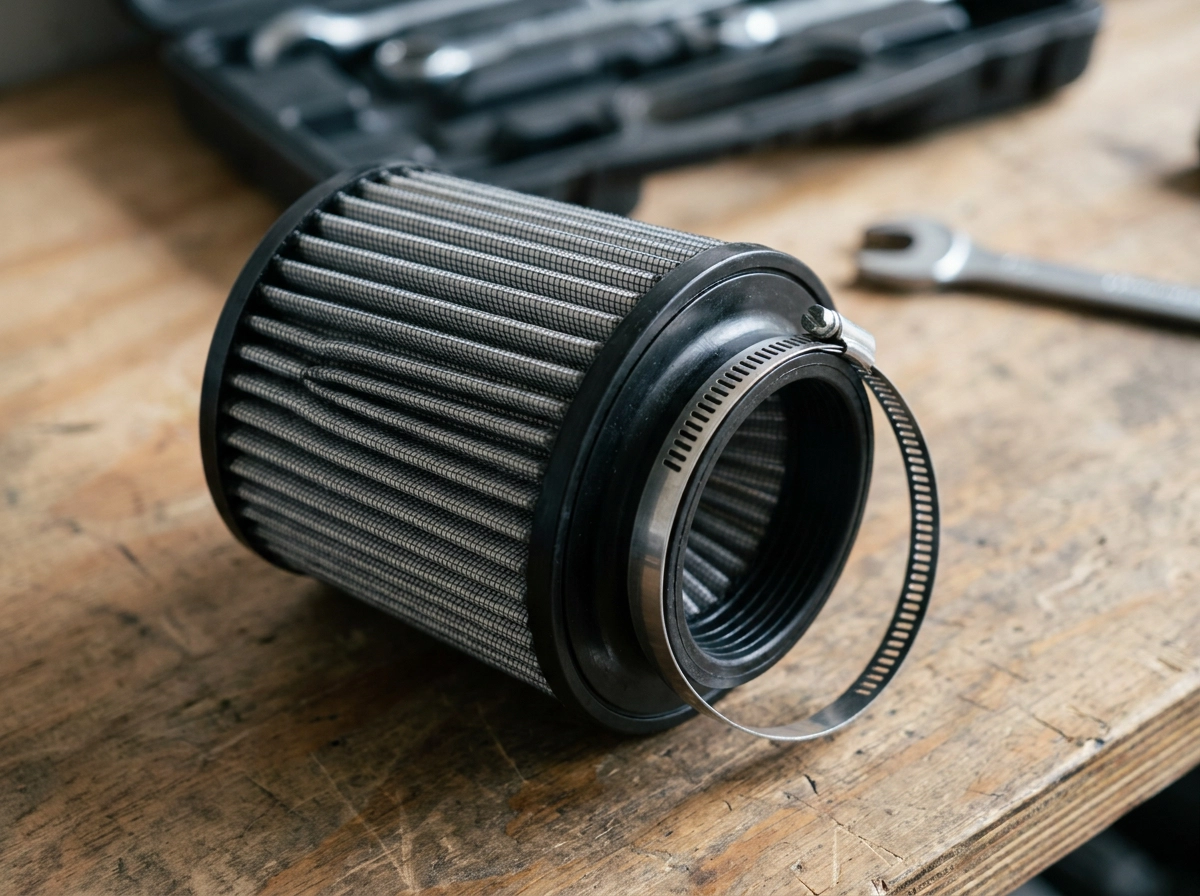
Panel filters are the sensible entry point for owners not yet committed to a full induction kit. They drop directly into the factory airbox with no pipework changes or fitment risk. Specify a high-flow cotton gauze unit rated for forced-induction use rather than a standard foam filter; cotton gauze flows more freely under boost pressure and filters effectively across a wider range of conditions.
Full induction kits that relocate the filter away from the engine bay deliver more consistent gains. Engine bay temperatures on the Insignia VXR run noticeably high under sustained load, and a heat-soaked panel filter working inside the factory housing cannot fully exploit the available airflow. A relocated filter drawing from a cooler ambient source removes that variable.
Sequencing matters significantly here. An ECU remap performed against a stock airbox leaves measurable performance unrealised. The remap’s fuelling and ignition calibration is only as good as the air supply it is calibrating against. Fit the intake first, then map the engine; the two modifications compound each other rather than simply adding.
Corsa OPC owners face a packaging constraint the Astra VXR does not. The compact engine bay limits full relocation kit options, making short-ram kits the practical choice for many. Before purchasing, confirm the kit’s filter position does not sit in the warm air stream above the radiator. If it does, the temperature advantage of moving away from the factory airbox is largely cancelled out, and you are paying full kit money for panel filter results.
Intercooler Upgrades for Sustained Boost Performance
Once your induction setup is sorted, the next bottleneck under sustained hard acceleration is charge air temperature.
The factory intercoolers on the Astra VXR and Insignia VXR handle stock boost levels without issue. Raise boost pressure through a remap or turbo upgrade and the picture changes. Heat soak builds progressively during repeated hard runs; as charge air density drops, the ECU pulls ignition timing to protect the engine. The result is power that fades precisely when you want it most.
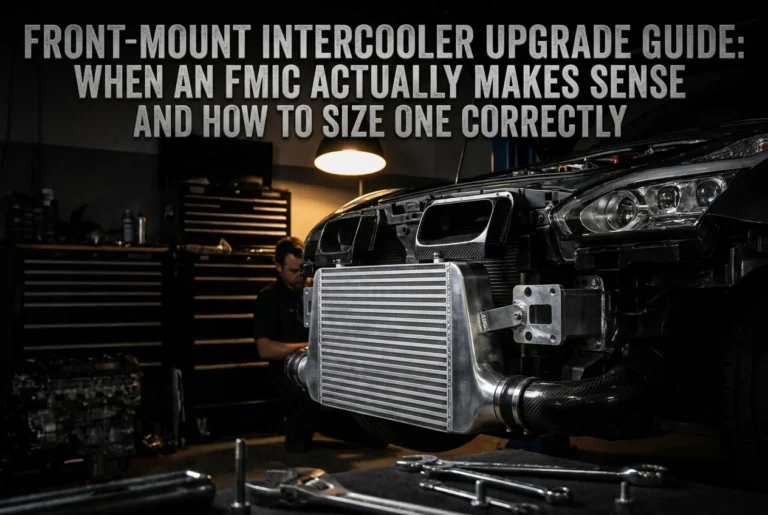
A front-mounted intercooler (FMIC) is the highest-impact single modification for any owner planning a remap. Cooler charge air is denser air, which means more oxygen per combustion cycle, better efficiency and more consistent power delivery across repeated acceleration events. If an intake upgrade is the first step, an FMIC is the logical second before the remap goes on.
When selecting a core, bar-and-plate construction is the correct choice for track or spirited road use on the Astra VXR and Insignia VXR. Bar-and-plate cores are widely regarded among performance builders as carrying greater thermal mass than OEM-style tube-and-fin designs. That thermal capacity absorbs heat across successive hard pulls without the charge temperature spike that thinner cores produce. For a detailed breakdown of core types and sizing, see this guide to performance intercooler upgrades and whether a bigger unit is right for your build.
Pair any intercooler upgrade with new silicone boost hoses. On higher-mileage A20NFT engines, the factory boost hoses merit close inspection when running elevated pressure; hose integrity is a frequently cited concern in community build threads. A hose failure under boost can allow unmetered air into the intake tract or cause a sudden boost loss; either scenario can cause engine damage if it goes unnoticed.
Corsa OPC owners have a more accessible route. A full FMIC conversion on the D-generation platform requires bumper modifications that add cost and complexity. A quality top-mount intercooler upgrade delivers a meaningful reduction in charge temperatures without structural changes to the front end, making it the practical choice for owners working within a tighter budget.
Exhaust Upgrades: Back-Pressure, Sound and Mapped Gains
Once the charge side is sorted, exhaust flow becomes the next variable worth addressing.
Cat-back systems are the most accessible starting point. On the A20NFT (Astra Mk6 VXR and Insignia VXR), a 3-inch cat-back is widely specified by performance exhaust fabricators for this platform; going larger at stock or mildly modified power levels produces no measurable gain and can actually hurt low-end response. Sound character improves noticeably, and flow gains, while modest on their own, compound well once a remap is in place.
Downpipes deliver the real gains. The factory catalytic converter is a restriction on the Z20LEH, and a decat or high-flow sports catalyst downpipe is where meaningful exhaust-side power is recovered on turbocharged Vauxhall platforms. Neither option should be fitted without a supporting remap; the ECU needs to be calibrated against the new exhaust state to translate reduced back-pressure into actual power rather than just a louder noise. For a detailed breakdown of pipe sizing, material grades and what to look for before committing to a purchase, the Exhaust Pipes for Performance Cars: The Complete Buying Guide covers the full decision set.
Manifold upgrades belong later in the build sequence. At stock and mildly modified power levels on the A20NFT, the factory manifold is not the primary restriction. The investment is better directed at intake, intercooler and downpipe work first. Manifold replacement becomes relevant at higher power targets, where it contributes meaningfully to scavenging efficiency; at stock and mildly modified power levels it is not the primary restriction.
Specify stainless steel as a minimum. Mild steel exhaust systems deteriorate rapidly under UK conditions: road salt, wet winters and the repeated heat cycling of turbocharged applications combine to accelerate corrosion. A stainless system costs more upfront and lasts considerably longer.
Cross-reference back-pressure requirements with your mapper before ordering. Some turbo configurations rely on a degree of exhaust back-pressure for spool characteristics. Fitting an overly free-flowing exhaust before remapping can introduce flat spots in the mid-range that only a remap calibrated to the new hardware will resolve.
Suspension Upgrades for Astra VXR, Corsa OPC and Insignia VXR
Once exhaust flow is addressed, handling becomes the next meaningful variable. Suspension upgrades deliver more usable performance per pound spent than almost any other modification category, and all three platforms respond well.
Coilovers are the priority purchase. Adjustable ride height and damper stiffness let you set the car up for road, fast road or track use, rather than accepting the fixed compromise of standard springs and dampers. A quality coilover kit transforms chassis behaviour in a way that a remap simply cannot replicate. For owners wanting to understand the full picture of modifications that move the needle, this UK buyer’s guide to the 10 upgrades that transform your car covers the broader hierarchy well.
Astra VXR: torsion beam and oversteer tendency. The Mk5 and Mk6 VXR both use a torsion beam rear axle, a design well-documented in VXR community and forum literature, a geometry that limits rear compliance under trailing-throttle conditions and contributes to the platform’s documented lift-off oversteer behaviour. Coilovers paired with an uprated rear anti-roll bar directly address this; the ARB increases rear roll stiffness and improves mid-corner stability when you back off the throttle mid-bend.
Corsa OPC: front roll stiffness is the priority. On a front-wheel-drive platform, understeer under power is the dominant handling problem. An uprated front anti-roll bar (community guides typically specify 25mm or 28mm for the Corsa OPC) reduces body roll and improves front-end response noticeably. Fit this alongside coilovers rather than treating it as an optional extra.
Insignia VXR track users: sort the rear brakes first. On the Insignia VXR, rear brake performance under sustained load is a recognised concern among owners; addressing it before committing suspension budget ensures brake capability is not the limiting factor on track.
Ride height guidance. Community experience and coilover manufacturers typically recommend staying within 20–35mm of standard ride height for road use; greater drops can introduce geometry changes that cause uneven tyre wear, always check with your chosen coilover supplier’s fitment guide for your specific model year.
Brake Upgrades: Where Performance Gains Are Actually Measured
Sorting suspension geometry is only half the performance equation. A remapped Vauxhall producing significant power on standard organic pads and aged rubber brake lines carries a genuine safety deficit, and it is one that most owners leave unaddressed for far too long.
The correct starting point is uprated brake pads and braided stainless steel lines, the cost-to-benefit ratio here is higher than almost any other single modification, and they are a practical first purchase before any power upgrades are considered.
Braided stainless steel brake lines replace the expandable rubber OEM hoses, which balloon slightly under pressure and produce a soft, vague pedal. The braided alternative constrains that expansion and returns a firmer, more progressive feel. On higher-mileage Astra VXR and Insignia VXR cars where the rubber lines have had years of heat cycling, the improvement in pedal consistency is immediately noticeable.
Brake fluid is the most overlooked consumable in this category. Standard DOT 4 brake fluid has a dry boiling point that falls short of what sustained performance driving demands. A high-performance brake fluid with a substantially elevated dry boiling point, look for products marketed specifically for track or motorsport use, should be treated as non-negotiable for any track session. On the Insignia VXR, rear brake performance under sustained load is a recognised concern among owners; using a high-performance fluid mitigates fade risk at that axle.
Big brake kits are a track-specific upgrade, most relevant to Insignia VXR owners. Larger disc diameters and multi-piston callipers add unsprung weight, so the upgrade must be paired with appropriate wheel sizing. A brake bias check is essential after fitment; the factory bias calibration will not account for significantly increased front or rear clamping force.
Forced Induction Upgrades: Getting More From the Turbo
With brakes sorted, the next logical step for owners chasing more power is examining what the factory turbo can actually deliver before spending money on a replacement.
The Z20LEH and A20NFT have more in them than most owners realise. A remap combined with quality supporting hardware can unlock substantial gains from both engine families, specialist tuners have documented meaningful power increases without touching the turbocharger itself, though figures vary by build state and mapper. At sensible power levels, the factory unit is not the limiting factor; the supporting hardware is.
Turbo upgrades become relevant only when owners push beyond those thresholds. For Z20LEH-powered Mk5 Astra VXR owners, hybrid turbo options are the practical choice at this stage. A hybrid retains the factory housing dimensions while fitting uprated internals, which means the original inlet and outlet pipework fits without modification. That preserves a clean installation and avoids the fabrication costs associated with a full turbo swap.
The Corsa OPC’s A16LET operates differently. It has considerably less headroom than the A20NFT family, and owners targeting meaningful power beyond a remap should research hybrid or direct-fit aftermarket options before committing to supporting modifications sized around the stock unit. Building an intake and intercooler package around a turbo you will outgrow shortly is poor budget management on this platform.
Boost control modifications carry a specific caution. Electronic boost controllers and manual solenoid adjustments should never be fitted without a concurrent remap. Running elevated boost on a stock ECU map risks engine damage on A20NFT units, the ECU cannot safely manage pressure it was not calibrated for.
Finally, intercooler efficiency sets the ceiling for safe boost. Ensure the intercooler upgrade is in place before or alongside any turbo change; fitting the turbo first means heat soak will limit the gains from the new hardware until both are in place.
Vauxhall Engine Oil and Fluid Choices for Performance Use
Turbo hardware upgrades demand equally serious attention to the fluids supporting them.
Engine Oil Specification
The A20NFT and Z20LEH are turbocharged units that run significant thermal loads under performance use. Both require a fully synthetic engine oil meeting GM Dexos2 specifications as a minimum. Using a cheaper, non-compliant oil on a remapped car is one of the most common ways owners accelerate timing chain wear. Note that GM has since introduced the dexosR specification for petrol engines, check with your oil supplier for the current approved product list, as dexosR-compliant oils supersede Dexos2 for newer applications.
Oil Change Intervals
Factory long-life service intervals are calibrated for standard, unmodified use. On remapped or boosted A20NFT and Z20LEH engines, oil degrades faster due to higher combustion temperatures and increased blowby. Specialist tuners typically recommend a shorter service interval than the factory long-life schedule, confirm the appropriate cadence with your mapper or a Vauxhall specialist. This is not overcautious; it is direct mitigation against the oil degradation that contributes to the timing chain failures these engines are known for.
Viscosity Selection
For modified Astra VXR and Insignia VXR applications in UK conditions, many specialists favour 5W-40 fully synthetic for its film thickness under sustained high-load running; discuss viscosity choice with your mapper or a Vauxhall specialist, as 5W-30 Dexos2-compliant oils may be appropriate for lightly modified cars.
Gearbox Oil
Transmission fluid is consistently overlooked on the Corsa OPC and Astra VXR. Degraded factory MTF on higher-mileage cars increases shift effort and internal wear. A quality synthetic manual transmission fluid upgrade produces a noticeable improvement in gearchange quality, particularly during cold UK starts when thickened degraded fluid makes the box feel obstructive.
Coolant Condition
Depleted coolant inhibitors allow internal corrosion that reduces cooling efficiency across the entire system, affecting both engine and intercooler performance. A full coolant flush to OEM specification or better should accompany any power upgrade on all three platforms.
The Right Upgrade Order: Maximising Your Parts Budget
With fluids and servicing addressed, the final piece is sequencing every modification category into a coherent build order that protects your budget and your safety.
Stage 1: Road Performance Foundation
Start here regardless of your long-term power targets:
- Performance air intake or induction kit
- Uprated brake pads (fast road compound)
- Braided stainless steel brake lines
- High-performance brake fluid (track or motorsport-rated)
- Correct Vauxhall engine oil specification
None of these require a remap, all improve daily drivability and safety immediately, and they form the baseline every subsequent stage depends on.
Stage 2: Supported Power Upgrade
- Intercooler upgrade
- Silicone boost hose replacement
- Cat-back or downpipe exhaust
- ECU remap (last, not first)
Every supporting modification must be fitted before the remap. The engine management system calibrates against the hardware state present at mapping; fitting the remap before supporting hardware is in place leaves performance unrealised and may require a second remap once hardware changes.
Stage 3: Handling and Chassis
- Coilover suspension
- Anti-roll bar upgrades (front on Corsa OPC, rear on Astra VXR)
- Wheel and tyre upgrade
Do not defer Stage 3 until all power modifications are complete. Chassis upgrades deliver more usable performance per pound on road and track than equivalent power spending. A well-sorted Stage 1 to 2 build with coilovers and uprated ARBs is faster in real conditions than a high-power car on compromised suspension.
Stage 4: Advanced Power
- Hybrid or uprated turbocharger
- Fuelling upgrades
- Revised remap calibrated to the new hardware
At this stage, big brake kit evaluation becomes essential for track use. Increased power shifts the stopping demand beyond what uprated pads and lines alone can manage reliably.
The governing principle across all four stages: complete and verify each stage before progressing. A Stage 2 power level combined with Stage 1 braking and no suspension work is genuinely dangerous on track, and a worse road experience than a balanced, fully sorted Stage 1 build.
Final Thoughts: Building a Vauxhall That Performs
Work through the staged sequence and the underlying principle holds: build in order, then build further.
The Astra VXR, Corsa OPC and Insignia VXR are genuinely strong starting points. Each carries factory engineering headroom that a reactive, headline-chasing approach consistently wastes, sorted foundations first, then the supporting modifications that compound each other into a car that outperforms its power figure in real conditions.
One practical advantage specific to these platforms: Vauxhall performance parts are well-stocked and competitively priced in the UK market, substantially more so than equivalent import-platform components. The domestic tuning community has documented fitment, compatibility and dyno results across decades of ownership, so guidance is available at every experience level without extensive guesswork.
Your upgrade path should reflect your car’s actual condition, your primary use case and your budget cadence. A Corsa OPC used daily on B-roads follows a different priority order than an Insignia VXR prepared for occasional track days, even if the categories covered here apply to both.
For Vauxhall performance parts across all the categories in this guide, including intake, brakes, suspension, exhaust, forced induction and engine oil, performancecarsparts.co.uk carries a broad range of products with UK-based customer support available via email and WhatsApp.