Steering wheel upgrades sit at the top of many performance car modification lists, yet they remain one of the most frequently abandoned projects before a single bolt is turned. The reason is rarely budget. It is the compounding uncertainty around hub adapter compatibility, airbag removal legality and MOT implications that turns genuine intent into indefinite procrastination.
The reality is that an aftermarket steering wheel delivers one of the most direct improvements to driving feel available at any price point. Reduced diameter, better grip and a cleaner driving position transform how a car communicates on both road and circuit. The problem is that modern OEM wheels integrate airbags, horn contacts and driver assistance controls into a single unit, and replacing one correctly requires understanding several interconnected systems before touching a spanner.
This guide works through every practical blocker in sequence. You will learn how boss kits and spline counts determine compatibility, where UK law draws the line between road-legal and track-only setups, what actually causes an MOT failure, and how to buy and install an upgrade that works for your car and your intended use.
Why a Steering Wheel Upgrade Transforms the Driving Experience
Swap the OEM steering wheel for an aftermarket unit and the car feels different before you’ve left the driveway. That’s not marketing language; it’s the result of several measurable physical changes happening simultaneously.
Diameter is the first and most immediate factor. Most OEM wheels are noticeably larger in diameter than a typical performance aftermarket wheel. That reduction in radius means less rotational movement is needed to achieve the same steering angle, sharpening response without any suspension changes. On a circuit, where fast transitions between apexes demand rapid inputs, the difference is felt within half a lap. On a demanding B-road, it’s felt within the first mile.
Material makes an equally significant difference, though it’s less obvious until you’re three hours into a track day. Moulded OEM plastic becomes slippery under sustained grip pressure, particularly with gloved hands or in warm conditions. Suede, perforated leather and Alcantara maintain friction even when wet or worn. Research into driver hand placement confirms that steering wheel design directly influences grip geometry and hand position throughout sustained driving, which is why material choice affects fatigue accumulation over longer sessions.
The dish profile affects two things: sightlines and posture. A flatter, reduced-dish design moves the rim closer to the driver, which sounds counterintuitive until you consider that most performance driving positions place the driver lower and further from the wheel than standard road driving. At that position, a deep-dish OEM wheel can obstruct part of the instrument cluster. A shallow-dish aftermarket wheel clears the sightlines and naturally positions the hands at nine-and-three, the mechanically optimal position for both input speed and leverage.
Feedback is perhaps the least-discussed benefit, but arguably the most important. Information from the road surface and tyres travels through the suspension, up the column, and into the wheel rim before it reaches the driver’s arms. A lighter, stiffer aftermarket rim transmits that signal faster and with less dampening than a heavy OEM unit padded with plastic and switchgear. That extra information has real value when managing grip at the limit.
Finally, this is a reversible modification. The OEM wheel can be refitted. Compared to brakes, suspension or forced induction, the outlay is modest, which is why a steering wheel upgrade is a practical first step for a performance-focused cabin. If you are also considering the wider wheel and tyre picture, the complete buyer’s guide to aftermarket wheels covers material, fitment and road legality in detail.
The upgrade itself, however, comes with specific compatibility, legal and safety considerations that determine whether it can be used on the road at all. Those start with the boss kit.
Hub Adapters and Boss Kits: Why Fitment Is Never Universal
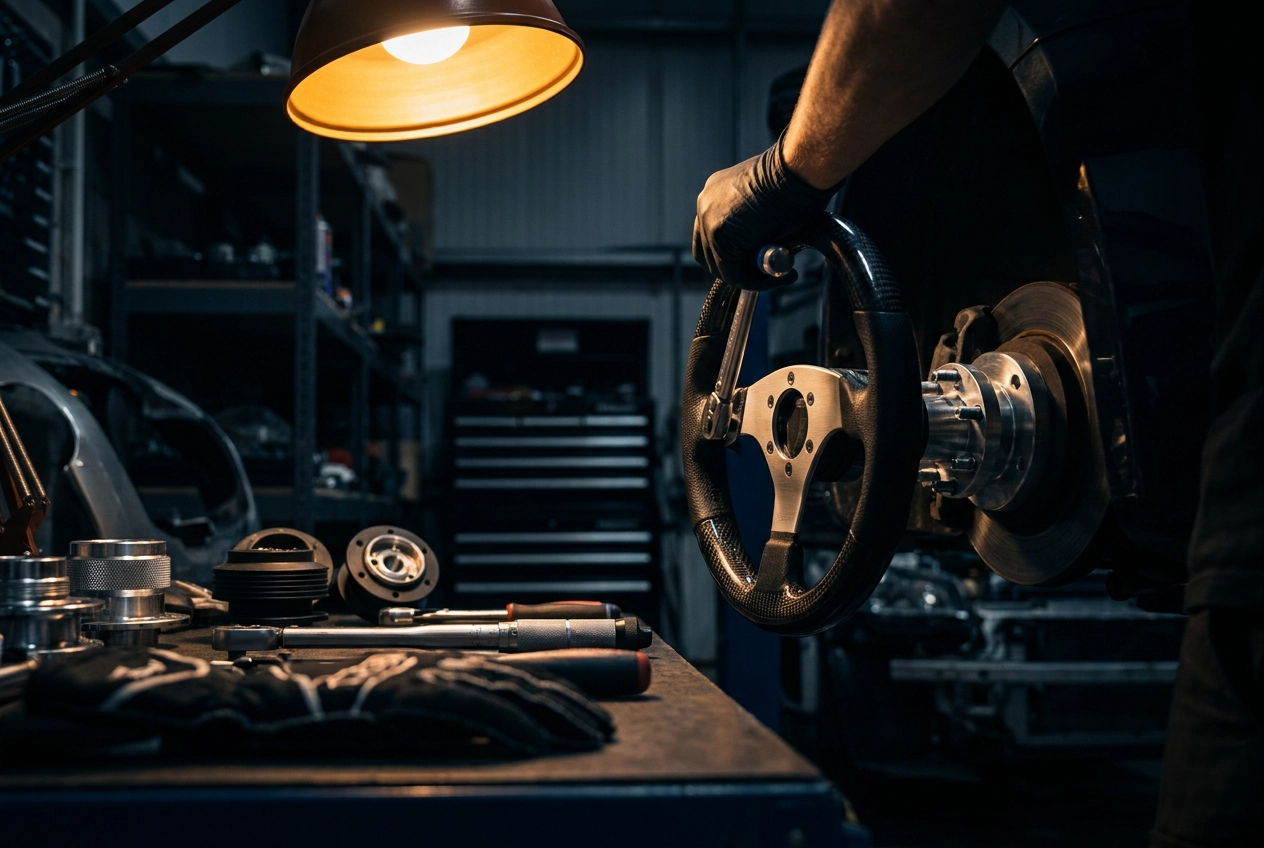
No aftermarket steering wheel connects directly to any car’s steering column. Every manufacturer uses a proprietary spline count, spline diameter and column profile, so the interface between column and wheel requires a boss kit (also called a hub adapter) that bridges the two. The boss kit connects to the column on one side and presents a standard bolt pattern on the other, allowing any aftermarket wheel to mount regardless of brand or diameter.
The critical detail most buyers miss is that compatibility is model-specific, not make-specific. Mazda MX-5 generations have changed steering column specifications across the model’s history, so confirm the exact generation before ordering. The same principle applies across every manufacturer. Buying a boss kit labelled simply “MX-5” without confirming the generation is a reliable route to a part that does not fit. For a full breakdown of generation differences across all four MX-5 variants, the MX-5 Parts UK: The Performance Owner’s Complete Guide covers fitment specifics in detail.
Popular UK performance platforms each have generation-specific requirements:
- Toyota GT86 and Subaru BRZ: Treated as the same platform mechanically, but confirm build year
- Honda Civic Type R: Honda Civic Type R generations differ in steering column specification; confirm the exact variant before purchasing
- Mazda MX-5: Four distinct generations (NA, NB, NC, ND), four different boss kits
- Nissan Z-car line: Column specifications have changed across generations; verify the specific model year
- Renault Megane RS: Boss kit requirements vary by generation; cross-reference the exact build year
Beyond fitment, the boss kit also determines wheel offset from the column, which directly affects how close the wheel sits to the driver’s chest. An incorrect offset can bring the wheel uncomfortably near the driver in a standard seating position, or push it far enough away that precise control is compromised. This is not a cosmetic concern; it affects posture and arm position during sustained driving.
The practical rule is straightforward: confirm the exact vehicle generation and build year before selecting anything, then cross-reference both the wheel and the boss kit against the manufacturer’s compatibility list. Purchasing both components together, with fitment confirmed upfront, removes the most common reason these projects stall before they start.
Road Legal vs. Track Only: The Decision That Changes Everything
Once you have the correct boss kit identified, the next decision dwarfs every other choice in the project. Before selecting a wheel, a quick-release hub, or any related component, you must decide whether this car will ever turn a wheel on a public road.
This single question determines your legal obligations, your product shortlist, and your total budget. Conflating track use and road use is the root cause of most post-purchase regret and MOT failures in steering wheel upgrades.
Track-Only Cars: Full Freedom
A car that has been SORNed or permanently deregistered operates entirely outside the MOT testing regime and the Construction and Use Regulations. There is no inspector, no compliance threshold, and no mandatory airbag requirement. Quick-release hubs, non-airbag racing wheels, and any diameter or specification of aftermarket wheel are all acceptable choices. If your car will never leave the circuit under its own power on a public road, buy whatever specification suits the application.
Road-Registered Cars: No Track Exemption
A road-registered car that attends track days must meet UK MOT standards for every public road journey, including the drive to and from the circuit. Track use creates no legal exemption whatsoever for road compliance. Under current MOT inspection criteria, removing a manufacturer-fitted airbag is classified as a major defect. A Parliament petition on this issue explicitly documented it as a barrier for motorsport-oriented owners and closed without regulatory change. The rule stands.
The Practical Dual-Use Solution
Many owners of dual-use cars run two steering wheels. The OEM wheel is refitted for MOT testing and road driving; the aftermarket wheel is fitted at the circuit gate and removed before the return journey. This approach avoids MOT failure, retains road legality, and still delivers the full track experience. It does add cost: budget for both wheels, a boss kit, and the time for the swap.
Why This Decision Comes First
Your answer to the road-legal question determines whether airbag retention matters, whether a quick-release hub belongs in the build, and which product categories are relevant. A dual-use owner needs a different setup entirely from a dedicated track car owner. Getting this wrong means buying components you cannot legally use, or compromising circuit performance to stay compliant. Settle it first, then build the rest of the specification around it.
Airbags, MOT Inspections and UK Law: What Actually Fails and Why
Once you have settled the road-versus-track question, the airbag implications become the most legally consequential part of the entire project.
As established, removing a manufacturer-fitted airbag is a major MOT defect. The airbag is classified as a primary restraint system, and its removal carries legal implications beyond the test itself. The DVSA MOT Inspection Manual covers Supplementary Restraint Systems under Section 7.1. If the SRS malfunction indicator light is illuminated on the dashboard, the tester has grounds to issue a failure, and most will. Suppressing that warning light does not resolve the problem.
SRD kits and warning light eliminators are wiring devices designed specifically to silence the dashboard airbag warning after the OEM wheel is removed. They work electrically, but they do not reinstate the airbag system. Fitting one to a road car does not make the modification compliant. The light is gone; the legal exposure is not.
The clock spring is the installation risk most buyers underestimate. Also called a spiral cable or rotary coupler, it is the coiled electrical connector behind the steering column that maintains continuity for the airbag, horn and any steering-mounted controls throughout the full rotation of the wheel. If you remove the OEM wheel without first locking the clock spring, it can rotate beyond its travel limit and permanently break. The result is an airbag fault code, a non-functioning horn and an MOT failure on both counts. Replacement can be costly on common performance platforms, and the damage is not always visible until the car starts.
For road cars where airbag retention is a genuine priority, specialist wiring adaptors exist for certain platforms. These allow an aftermarket wheel to be fitted via a standard boss kit while keeping the OEM airbag’s deployment circuit intact. They are vehicle-specific, cost more than a basic boss kit, and are not available for every model. For anyone committed to staying street-legal without running two wheels, they represent the most straightforward compliant solution available. As part of a broader set of performance parts upgrades that transform how your car drives, the steering wheel is unusual in that legality, not budget, is almost always the binding constraint.
Quick-Release Hubs: Useful on Circuit, Problematic on the Road
As covered above, the airbag and MOT implications apply equally to quick-release hubs, though the failure mechanism differs and is worth addressing separately.
A quick-release hub fits between the boss kit and the steering wheel, allowing the wheel to be detached and reattached rapidly via a push-button or pull-collar mechanism. On circuit this serves a genuine safety purpose: motorsport safety practice favours rapid driver extraction in an incident, and a toolless wheel release makes that possible. Where no airbag is present, the quick-release creates no additional safety conflict.
On a road-registered vehicle, the picture changes immediately. The DVSA MOT Inspection Manual for steering requires that all steering components present no unacceptable play, looseness or insecurity. A quick-release introduces an intentional disconnect point into the steering column. If a tester applies load to the wheel and detects movement attributable to that joint, the vehicle will fail on steering security grounds. Even a high-quality unit with tight tolerances presents this risk, because the mechanism is designed to allow separation, which is precisely what the inspection tests against.
Insurance is a compounding exposure. If a quick-release is fitted and a collision occurs in which steering integrity or airbag non-deployment becomes relevant to the claim, the insurer will require full modification disclosure. Most UK performance car policies require notification of any structural or safety system modification. Non-disclosure can invalidate the claim entirely, not merely load the premium.
The correct application is straightforward. A dedicated track car, or a dual-use car that runs the OEM wheel on public roads, has no conflict with quick-release fitment. At the circuit gate the OEM wheel comes off and the quick-release unit and aftermarket wheel go on. Wheel changes between sessions take seconds.
Selecting the right unit matters. Prioritise a quick-release with a positive locking indicator, giving visible confirmation the wheel is fully engaged before driving. Choose a steel locking collar over aluminium; the collar bears sustained rotational and lateral load across a full track day, and aluminium units wear faster under repeated use. Confirm PCD and offset compatibility across all three components: the boss kit, the quick-release hub and the steering wheel. Mismatched PCD between any two is the most common fitment error and is entirely avoidable by checking specifications before purchasing. Anyone building a performance Audi will recognise the same generation-specific fitment logic covered in this guide to sourcing Audi parts in the UK.
Installation: Steps, Risks and What Not to Skip
Once the component decisions are made, installation demands the same discipline as the research that preceded it.
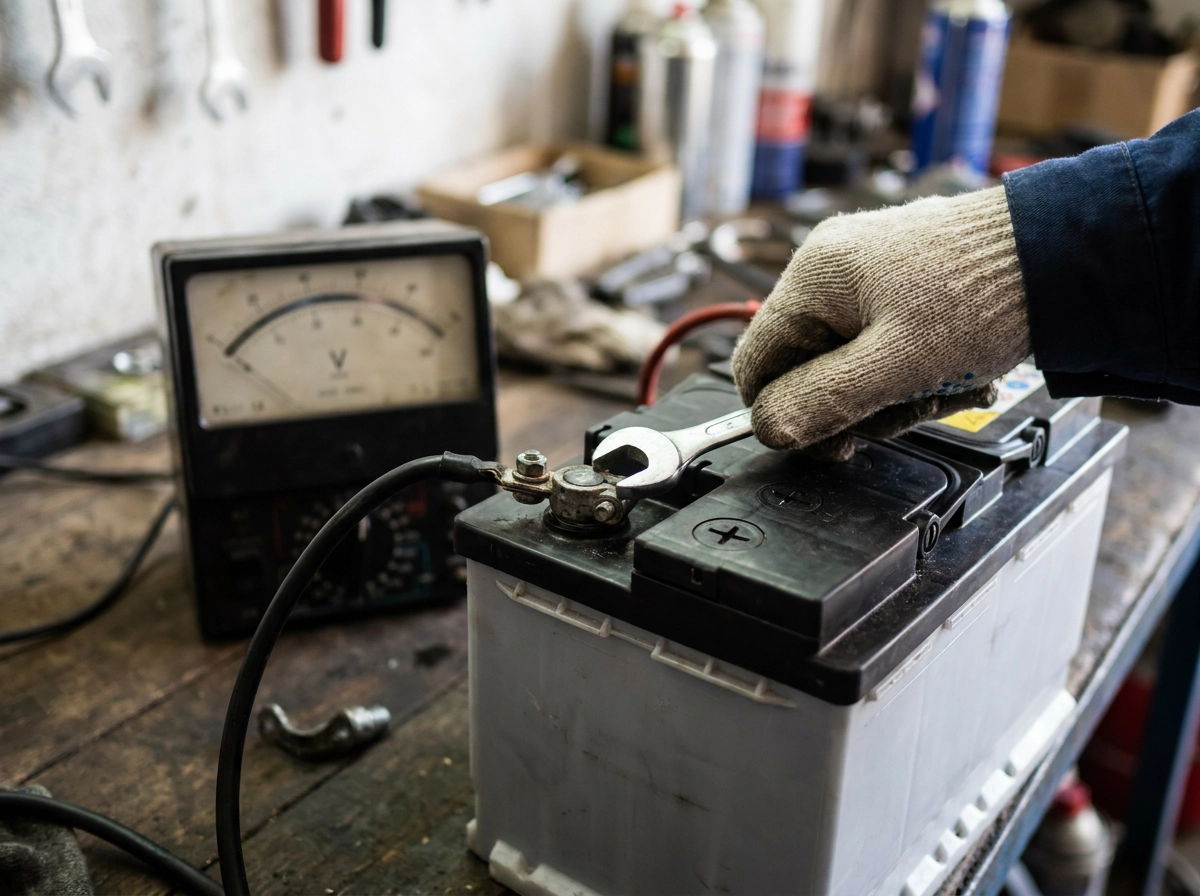
Disconnect the negative battery terminal first, then allow sufficient time for the airbag capacitor to discharge fully before touching the steering wheel on any airbag-equipped car. Consult the vehicle service manual for the manufacturer’s specified wait period. Premature deployment during removal is a documented injury risk, not a theoretical one.
Lock the clock spring before removing the OEM wheel. The procedure and consequences are covered in the airbags section above. Confirm the lock is in place before proceeding.
Torque the boss kit retaining nut to the manufacturer’s specified value, and use a torque wrench to confirm it. Under-torquing allows the wheel to move on the column under load, which is a steering control failure waiting to happen. Over-torquing strips the column spline threads, leaving the OEM wheel non-refittable. Neither error is recoverable without significant cost. The correct torque specification is in the boss kit’s installation sheet and should be cross-referenced against the vehicle service manual.
Before refitting the battery terminal, run through four checks: horn operation (confirms electrical continuity through the boss kit), wheel position at straight-ahead (confirms correct installation alignment), absence of detectable play at the rim (confirms torque and spline engagement), and a visual scan of the wheel face for any fouling or obstruction. Refit the negative terminal last, then confirm the dashboard is clear of warning lights before the car is moved.
For dual-use cars, store the OEM wheel and airbag module correctly between swaps. The airbag contains a pyrotechnic charge. Store it face-up in a secure location away from heat sources, in line with standard pyrotechnic handling guidance. Do not store it on its side, face-down, or near anything that generates sustained heat.
Steering modifications share a common thread with other performance upgrades in this regard: the installation process carries consequences that outlast the job itself. If you are approaching this as part of a broader performance build, the same disciplined approach applies elsewhere, as covered in our aftermarket exhaust systems buyer’s guide.
What to Buy: Steering Wheels, Boss Kits and Accessories for UK Performance Cars
With installation complete, the next step is selecting the right components in the first place.
Steering wheel specification for a track or dual-use car (where road legality is not the priority) should start with a suede or Alcantara-trimmed wheel in the 320-350mm diameter range. Deep-dish variants suit drivers who need extra reach; flat or shallow-dish designs bring the wheel closer for a tighter seating position. Both categories are well-represented in motorsport-focused ranges and represent the most practical choice for circuit and performance driving.
Boss kits are not optional extras. Purchase one alongside the wheel, not after. Before selecting a boss kit, confirm the exact vehicle make, model, generation and build year; successive Civic Type R generations require different kits despite sharing a nameplate. Also check whether the boss kit includes horn contacts. Budget units frequently omit these, which means a separate horn button is required to pass even basic post-installation checks.
Quick-release kits must be bought as a matched set. Confirm that the hub and wheel share the same PCD before ordering. Mixing components from different product ranges without verifying PCD compatibility is consistently the most common cause of fitment failures and returns. If a quick-release is in the plan, treat the wheel, boss kit and quick-release as a single purchasing decision rather than three separate ones.
SRD kits and airbag warning light suppressors address the electrical consequences of removing the OEM steering wheel on a track-only car. These are platform-specific products; availability varies by vehicle generation, so confirming compatibility before purchase is essential. Do not assume a suppressor listed for one platform will work on a related model or a different build year.
performancecarsparts.co.uk stocks steering wheels, boss kits and motorsport accessories across popular UK performance platforms. If the wheel upgrade is part of a broader build that includes performance suspension upgrades, it is worth confirming the full component list at the same time. For fitment queries on specific vehicle generations, or to confirm which boss kit matches a particular car, the team is contactable via WhatsApp or email before purchase.
Insurance, Disclosure and Why This Modification Needs Declaring
Once the components are selected and ordered, one final obligation sits alongside the installation itself: your insurer.
Under the Insurance Act 2015, policyholders must make a fair presentation of all material circumstances, which means disclosing anything that would influence a prudent insurer’s decision to accept the risk or set the premium. Steering wheel replacement, airbag deactivation and fitment of a non-standard boss kit all qualify. Failing to declare any of them is not a technicality; it is grounds for claim refusal or full policy invalidation, regardless of whether the modification contributed to the incident.
Road use is the trigger for disclosure. Most UK specialist performance car insurers will record a steering wheel upgrade as a declared modification and price accordingly. The exception applies to dual-use owners who refit the OEM wheel before road use and cover circuit sessions under a separate track day policy. In that arrangement, many insurers do not require disclosure of the track-only fitment for road cover purposes, but confirm this directly with your insurer in writing before assuming it applies to your policy.
Airbag deactivation carries the greatest liability exposure. If a collision claim is assessed and it emerges that the airbag did not deploy because it was removed, an insurer may argue the modification contributed to injury severity. Do not assume this is a theoretical risk.
Specialist and agreed-value policies are the appropriate cover for a performance car with declared modifications. These policies price the modification into the premium at inception rather than treating it as a voiding condition at the point of claim. Specialist policies price modifications into the premium at inception; confirm the cost with your insurer directly.
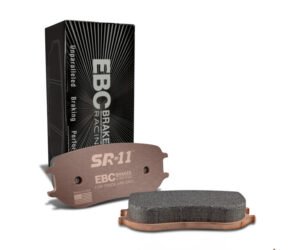
The practical steps are straightforward: declare every modification, confirm the insurer’s acceptance in writing, and keep that record alongside the vehicle’s modification log. This applies equally to steering modifications and to any other performance upgrade on the car, including changes to braking systems. For a broader understanding of how performance modifications interact with road use and track preparation, the guide to brake pad compounds for performance and track use covers a parallel set of considerations worth reviewing before your next circuit day.
Turning a Frequently Abandoned Upgrade Into a Completed One
With disclosure handled, the remaining task is sequencing the decisions correctly so the project reaches completion rather than stalling in a parts drawer.
Start with the road versus track question. Every other choice follows from it. As covered in the road-legal section above, a road-registered car remains subject to MOT requirements even when used on circuit. Answering this question first determines whether airbag retention matters, whether a quick-release hub is appropriate, and what the total project actually costs.
Confirm the correct boss kit before purchasing the wheel. As covered above, boss kits are generation-specific across virtually every popular UK performance platform. Identify the exact vehicle generation and build year, cross-reference the boss kit compatibility list, and buy both together.
Understand the airbag and clock spring implications before removing the OEM wheel. As detailed in the airbags section above, the consequences of getting either wrong are MOT-relevant and can be costly to correct. Neither risk is difficult to avoid with the right preparation.
Keep quick-release hubs off daily road cars. As covered above, a quick-release on a road-registered car introduces MOT failure risk and compounds insurance exposure; reserve it for circuit use or dual-use setups where the OEM wheel is refitted for the road.
For steering wheels, boss kits and motorsport accessories suited to popular UK performance platforms, browse the range at performancecarsparts.co.uk. For fitment confirmation on a specific vehicle generation before purchasing, contact the team directly via WhatsApp or email.
Conclusion
A steering wheel upgrade done properly transforms how a performance car feels and responds. Done carelessly, it creates MOT failures, insurance voids and safety risks that are entirely avoidable with the right preparation.
The priorities are straightforward: confirm boss kit compatibility before buying anything, understand the airbag and clock spring implications for your specific car, match your chosen setup to its intended use whether road, track or both, and declare the modification to your insurer without exception.
These steps separate a completed, legal and insurable upgrade from an abandoned project or a failed MOT.
Browse the full range of steering wheels, boss kits and quick-release hubs at performancecarsparts.co.uk. If fitment confirmation on your specific vehicle generation would help before you commit, contact the team directly via WhatsApp or email. Get it right once and enjoy every mile.