The Ford Focus ST has been one of the most popular hot hatches on UK roads for twenty years, and that means there is a huge choice of Focus ST performance parts in the UK. The trouble is that three very different cars wear the same badge. A Mk2 ST225 has a turbocharged five-cylinder, a Mk3 runs a 2.0 EcoBoost four-cylinder, and the Mk4 uses a 2.3 EcoBoost with an electronic differential and adaptive dampers. A part, a remap or even a piece of advice that suits one generation can be wrong for the next.
Owners also tend to buy upgrades in the wrong order. It is tempting to start with a remap, but on a front-wheel-drive car with more torque than the tyres can comfortably use, traction, mounts and the clutch often decide how fast the car really is on a damp British B-road.
This guide explains how the three petrol generations differ, which Focus ST upgrades make sense first for each, the weak points to check before spending money, and what UK MOT and insurance rules mean for a modified ST. It covers the petrol hatch and estate only, not the ST diesel models.
Quick Answer: Which Focus ST Upgrades Should You Do First?
For most road cars that see the odd track day, the best first step is to fix the car’s known weak points and improve traction before adding power. The table below gives a sensible starting point for each generation.
| Your car and driving | Recommended starting point | Main compromise |
|---|---|---|
| Mk2 ST225, mostly road use | Health check (boost control, cooling, oil filter housing), then a mechanical LSD and fresh bushes | Age-related repairs can swallow the budget before any tuning happens |
| Mk2 ST225, remapped or track days | Mechanical LSD, uprated clutch rated for your torque figure, brake pads and fluid for track use | Heavier clutch pedal and some diff noise or steering tug |
| Mk3 ST250, road use | Lower engine mount insert, good tyres, then a mechanical LSD if wheelspin is a problem | Firmer mounts add vibration in the cabin |
| Mk3 ST250, Stage 1 or 2 | LSD, intercooler and intake with a reputable remap, clutch checked or uprated | More heat and stress on the drivetrain; insurance premium rises |
| Mk4 ST 2.3, road and track | Brake pads and fluid, tyres, alignment; keep the factory eLSD if fitted | Suspension changes must account for the adaptive dampers |
Treat these as starting points only: the final choice always depends on the part manufacturer’s rating and confirmed fitment for your exact model year and gearbox. You can browse our limited-slip differentials and suspension parts to see what is available for your ST.
Why Focus ST Owners Are Keeping and Building Their Cars
Ford has now ended Focus production. The last Focus ST was built at the Saarlouis plant in Germany in September 2025, and the regular Focus followed later that year, as Auto Express reported when the final ST left the line. With the Fiesta ST already gone, there is no new affordable fast Ford to move on to.
That changes how many owners think about their cars. Rather than swapping every few years, more people are keeping a good ST and putting money into it: sorting the known faults, improving the chassis and adding power in a measured way. The good news is that aftermarket support for all three generations remains strong in the UK.
Know Your Focus ST: Mk2, Mk3 and Mk4 Differences
Before buying anything, confirm exactly which car you have. Facelifts, body styles and option packs all affect fitment, so check the model year and the parts catalogue rather than relying on the badge.
Mk2 Focus ST225 (2005–2010)
- 2.5-litre turbocharged five-cylinder with Volvo roots, rated at 225PS, paired with a six-speed manual.
- Offered as a three-door and five-door; a facelift arrived in 2008, and the ST500 was a limited special edition.
- An open differential as standard, so traction out of tight corners is the classic complaint.
- Ford’s own Mountune MP260 kit (larger intercooler, panel filter and remap) showed how much headroom the engine has.
The Fast Car Mk2 Focus ST buying guide lists the known issues: split cylinder liners (misfires, residue under the oil cap, white smoke), failing boost solenoids that show up as an erratic boost gauge, alternator faults and a split oil filter housing diaphragm that causes a whistle at idle. Any of these needs sorting before you add boost.
Mk3 Focus ST250 (2012–2018)
- 2.0-litre EcoBoost turbocharged four-cylinder making 250PS, with strong low-down torque and a six-speed manual.
- Hatch and estate bodies; the facelifted “Mk3.5” from late 2014 brought revised styling, infotainment and torque-steer measures.
- No mechanical limited-slip differential from the factory, so wheel hop and scrabble under hard acceleration are common.
- A huge tuning scene, with factory-approved Mountune upgrades offered when the car was new.
According to the PistonHeads Mk3 Focus ST buying guide, things to check include the ignition loom fault on early cars, a split intercooler-to-turbo pipe, water getting into the boot and headlamps, and front coil springs. The same guide warns against heavy throttle with high boost when the engine is cold or in too high a gear.
Mk4 Focus ST 2.3 (2019–2025)
- 2.3-litre EcoBoost four-cylinder based on the previous Focus RS unit, rated at 280PS (276bhp) and 420Nm, driving the front wheels.
- Six-speed manual, with an automatic also offered in some markets and years.
- Ford’s electronically controlled limited-slip differential and adaptive dampers feature on many cars, depending on trim and options.
- An optional Performance Pack added launch control, rev-matching and a Track mode, while a Track Pack brought KW coilovers and larger front brakes.
The Auto Express Mk4 Focus ST review covers the full specification. Because the Mk4 is far more electronically integrated than earlier cars, upgrades need more research: a part that ignores the adaptive damping, the eLSD or the engine management can make the car worse rather than better.
Focus ST Traction Upgrades: LSDs, Engine Mounts and Bushes
On the Mk2 and Mk3, the single most transformative upgrade for many owners is a mechanical limited-slip differential. Both cars rely on an open diff (with electronic aids on the Mk3), so the inside front wheel spins away power when you accelerate out of a bend. A helical (ATB) diff such as a Quaife biases torque to the wheel with grip, with no plates to wear and little effect on everyday driving. Plate-type diffs lock more aggressively but are usually aimed at harder track use. Our guide to plate vs helical vs Torsen differentials explains the trade-offs in more depth.
On the Mk4, most cars already have Ford’s eLSD. Check your car’s build specification first; swapping a working factory system is rarely the best use of money for a road car.
Engine mounts
The lower engine (torque) mount controls how much the engine rocks under load. A soft or worn mount lets the engine move, which adds wheel hop and makes the gear change vaguer. A polyurethane insert is a popular, relatively simple Mk3 upgrade, and PistonHeads notes that an uprated rear mount helps reduce scrabble. The trade-off is extra vibration through the cabin, which varies with the hardness of the insert.
Suspension bushes and alignment
Many Mk2 and early Mk3 cars are now well over ten years old, so the original rubber bushes may be tired. Uprated polyurethane bushes restore precision and reduce unwanted movement, but road-focused grades are usually the better choice for UK roads. After any bush or suspension work, have a proper four-wheel alignment done to the settings you want rather than relying on a quick toe check.
Focus ST Remap and Power Upgrades: Intakes, Intercoolers and Tuning
All three generations respond well to tuning, but the results depend on the fuel you use, the condition of the engine, the parts fitted and the quality of the calibration. Be wary of anyone promising a fixed figure without seeing the car on a rolling road. PistonHeads reports that a Mk3 with an intake, intercooler and remap can reach roughly 300hp, while Ford’s own Mountune kits for the Mk2 and Mk3 showed what was possible with warranty-friendly parts.
- Intake: a quality air intake kit improves induction sound and can help a remapped car breathe, but on its own the gains are usually modest.
- Intercooler: on a remapped Mk3 especially, a larger intercooler helps keep intake temperatures under control on hot days or repeated hard runs.
- Remap: the biggest single gain, but it also increases stress on the clutch, driveline and cooling. A good tuner will check the car’s health before mapping.
- Exhaust: cat-back systems are generally MOT-friendly; removing or altering catalytic converters is not (see the MOT section below).
If you are planning a staged build, our explanation of Stage 1, Stage 2 and Stage 3 tuning sets out what each stage typically needs.
Clutch, Gearbox and Driveline Reliability
The clutch is where many tuned STs show their limits first. A standard clutch that was fine at factory torque may start to slip once the car is remapped, particularly in higher gears at low revs. When choosing an uprated clutch, compare the manufacturer’s quoted torque capacity with your car’s real torque figure from a dyno, and think about how you drive. Organic friction materials are smoother on the road, while paddle or ceramic designs hold more torque but bite more sharply. Pedal weight and flywheel choice matter too, which our performance clutch and flywheel guide covers in detail.
Gear selection on a Mk3 is often described as notchy, and short-shifters are a common fix. If a gearbox is already showing synchro wear, rebuilding it with uprated synchros at the same time as fitting a diff can save paying for labour twice.
Brakes and Tyres for UK Road and Track Days
The standard brakes on every ST generation are adequate for road use, but a track day will expose standard pads and fluid quickly. Before chasing bigger callipers, most owners get further with:
- Fast-road or track-rated brake pads matched to how often you visit a circuit.
- Fresh, high-boiling-point brake fluid, bled properly before each event.
- Good-quality discs, and braided hoses if the originals are old.
- Quality performance tyres: PistonHeads notes that Mk3 owners often prefer premium replacements to budget tyres, which suit the car poorly.
Bedding-in procedures for new pads and discs vary by manufacturer, so there is no universal method; follow the instructions that come with your parts.
Focus ST Upgrades by Generation: What Owners Should Check
Use this table as a pre-purchase and pre-fitting checklist for each version of the car. It is written as checks rather than guarantees, because condition and specification vary a lot between individual cars.
| Model | Check before upgrading | Typical first upgrades to consider |
|---|---|---|
| Mk2 ST225 (2005–2008) | Signs of liner problems, boost gauge behaviour, oil filter housing whistle, tailgate leaks | Health repairs, LSD, bushes, clutch rated for planned torque |
| Mk2.5 ST225 (2008–2010) | Same engine checks; confirm part fitment for the facelift body and interior | As above, plus brake pads and fluid for track use |
| Mk3 ST250 (2012–2014) | Ignition loom fault, intercooler pipe, front springs, water in the boot and lamps | Lower engine mount insert, LSD, intake and intercooler with remap |
| Mk3.5 ST250 (2015–2018) | Same mechanical checks; confirm which parts differ from the pre-facelift car | As above; uprated clutch if mapped beyond Stage 1 |
| Mk4 ST 2.3 (2019–2025) | Which packs are fitted (eLSD, Performance Pack, Track Pack, adaptive dampers), software level, warranty status | Pads, fluid, tyres and alignment; intake; carefully chosen remap |
Examples from our range
- Quaife ATB Limited Slip Differential QDF13J for the Ford Focus ST225 and Volvo M66 gearbox.
- Powerflex Road Series Handling Pack for the Ford Focus Mk3 including ST (2011–2018).
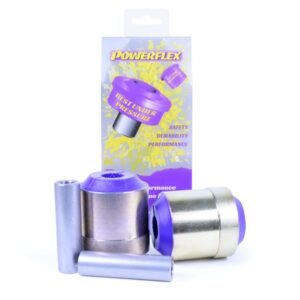
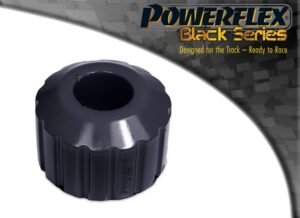
- Powerflex Lower Engine Mount Bush Insert PFF19-1821 for the Mk3 Focus ST and RS.
- Pipercross PK431 intake kit for the Mk4 Focus ST.
Always confirm fitment against your registration, model year and gearbox before ordering. If in doubt, ask us first.
Focus ST Modifications, MOT and Insurance in the UK
Most bolt-on Focus ST upgrades are road legal, but a few areas need care.
MOT
Every Focus ST was first used after September 2002, so the stricter emissions rules apply. The DVSA MOT inspection manual (section 8) says testers should fail a petrol car as a major defect if original emission control parts such as the catalytic converter are missing, obviously modified or obviously defective. The same section allows a fail for an exhaust that is unreasonably loud compared with a standard car. A decat exhaust may be sold for off-road or motorsport use, but it is not a road-legal option for an MOT.
Insurance
Tell your insurer about every change, including the remap. Which? explains that undeclared modifications can lead to a rejected claim or a void policy, and that performance upgrades typically have the biggest effect on premiums. A specialist modified-car insurer or an owners’ club scheme is often the better route for a tuned ST, and an agreed-value policy is worth considering for a well-built car.
Warranty
A later Mk4 may still be under a manufacturer or extended warranty. Modifications, especially engine software, can affect claims, so read the terms before tuning.
Focus ST Upgrade Checklist: Before You Buy and Fit
- Confirm the generation, facelift status, body style, gearbox and option packs.
- Fix known faults first: boost control and cooling on a Mk2, ignition loom and boost pipes on a Mk3, software and pack status on a Mk4.
- Get a health check or compression test before any remap.
- Prioritise traction and mounts before chasing peak power on a Mk2 or Mk3.
- Match the clutch rating to your real torque figure and driving style.
- Upgrade pads and fluid before your first track day.
- Book a four-wheel alignment after suspension or bush work.
- Keep the catalytic converters for an MOT-legal road car.
- Declare every modification to your insurer.
- Check fitment against your exact car before ordering parts.
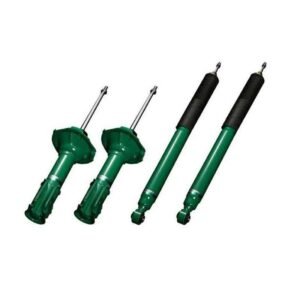
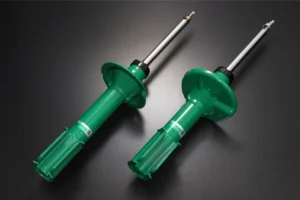
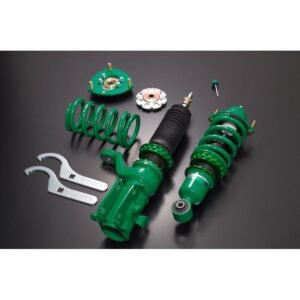
Shop Limited Slip Differentials, Suspension and Air Intakes

Conclusion
With Focus production over, a well-sorted ST is becoming a car worth keeping rather than replacing. The most rewarding builds follow the same pattern whatever the generation: fix the known faults, improve traction and chassis control, then add power that the clutch, brakes and cooling can handle. On a Mk2 or Mk3 that usually means an LSD and fresh mounts and bushes before a big remap; on a Mk4 it means respecting the factory electronics and focusing on brakes, tyres and setup.
Ready to start? Browse our limited-slip differentials range and the rest of the Focus ST parts at performancecarsparts.co.uk. If you are not sure what fits your car, contact our team on WhatsApp or by email with your registration and we will help you choose the right parts.
Shop related performance parts

Explore related products

Always check the individual product listing for your vehicle and engine before ordering.