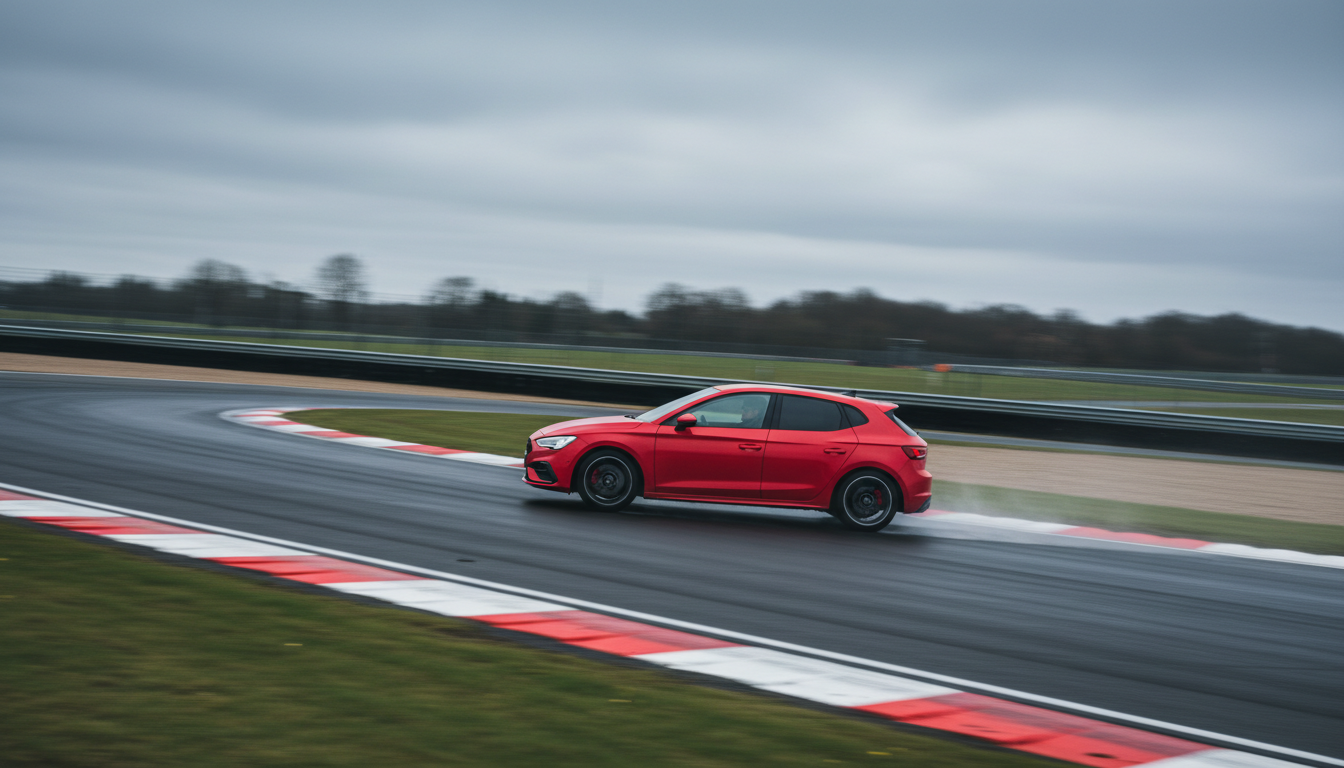
Every performance car eventually hits the same wall. You add power, sharpen the suspension and fit stickier tyres, then find the inside wheel spinning uselessly on the exit of every tight corner while the car goes nowhere. The engine is making the power. The tyres have the grip. The problem sits between them: an open differential sending drive to the wheel that can least use it.
A limited-slip differential (LSD) is the fix, and it is one of the most transformative upgrades available for a front- or rear-wheel-drive car. It is also one of the most confusing to buy. Plate, helical, Torsen, 1-way, 1.5-way, preload, bias ratio: the terminology alone stops a lot of owners before they get to a decision.
This guide works through it in order. You will learn why an open diff limits a quick car, how each type of LSD solves the problem, which suits fast road driving and which suits the circuit, and what to know about fitting, maintenance and insurance in the UK before you spend any money.
Why an Open Differential Holds a Performance Car Back
A differential exists because the outside wheel travels further than the inside wheel through a corner. Without one, the driven wheels would fight each other, scrubbing tyres and making the car reluctant to turn. An open differential solves this neatly by letting the two wheels rotate at different speeds.
The catch is how an open diff splits torque. It always sends equal torque to both wheels, which means the amount of drive available is limited by the wheel with the least grip. In a corner, weight transfers to the outside of the car and the inside wheel goes light. The moment that unloaded wheel starts to slip, the open diff happily lets it spin, and the heavily loaded outside wheel, the one with all the grip, receives no more drive than the spinning one.
On a standard road car with modest power, this rarely matters. On a modified car, it shows up everywhere:
- Inside wheelspin on corner exit, especially in tight hairpins, roundabouts and slow circuit corners
- Traction control intervention cutting power just as you want to accelerate
- Understeer under power on front-wheel-drive cars as the inside front scrabbles for grip
- Unpredictable behaviour in the wet or on broken, bumpy British B-roads where one wheel loses contact over a crest
Stiffer suspension often makes this worse, not better. A car with a firm anti-roll bar setup lifts the inside wheel more readily, which is why owners who have already fitted coilovers frequently find wheelspin becomes their next bottleneck. If that sounds familiar, our coilover setup guide explains how ride height and damping changes affect weight transfer.
What a Limited-Slip Differential Actually Does
An LSD still allows the wheels to rotate at different speeds through a corner, but it resists the extreme speed difference that occurs when one wheel starts to spin. In doing so it sends more torque to the wheel with grip. The result is a car that puts its power down earlier and more consistently, pulls itself out of corners rather than pushing wide, and feels more stable under both acceleration and, depending on the type, braking.
Every mechanical LSD achieves this goal, but the way each design generates that resistance determines how it feels, how aggressive it is and how much maintenance it needs. There are three main families you will encounter when shopping in the UK: plate (clutch-type), helical (gear-type) and Torsen. Viscous units also exist, mainly in older OEM applications, and are covered briefly below.
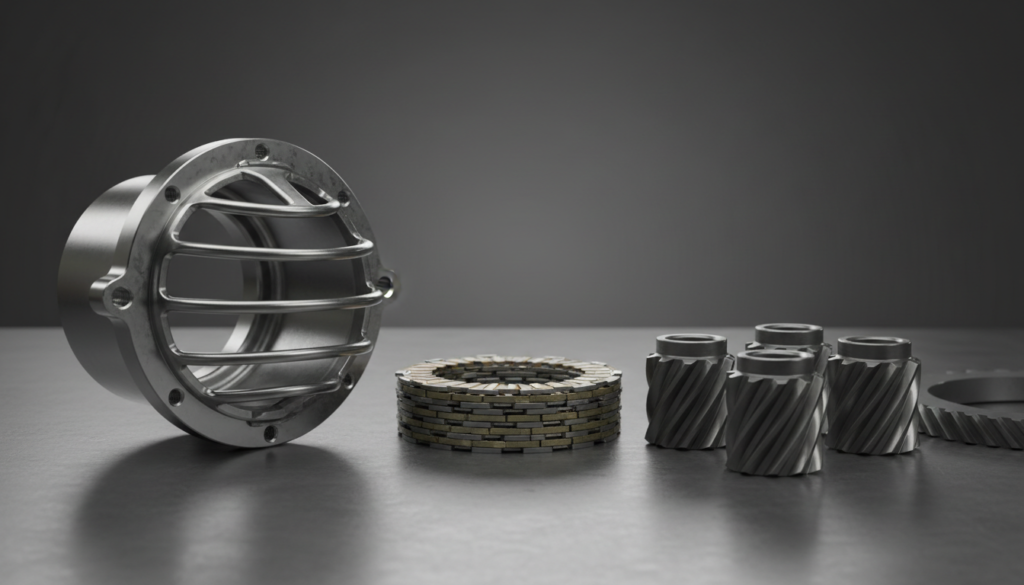
Plate (Clutch-Type) LSDs: Maximum Lock, Maximum Adjustability
A plate LSD uses stacks of friction plates, similar in principle to a small clutch, on either side of the differential. A ramp or cam mechanism squeezes those plates together as torque increases, which locks the two output shafts together to a degree set by the design. This is the type favoured by motorsport and by Japanese tuning brands such as Cusco, Kaaz and OS Giken.
1-Way, 1.5-Way and 2-Way Explained
The “way” describes when the diff locks. As this explainer on mechanical LSD types summarises, a 1-way unit works under acceleration and behaves as an open diff when you lift off or brake.
- 1-way: Locks under power only. Off throttle, the car turns in freely. This is the common choice for front-wheel-drive cars, where locking on deceleration would fight the steering on corner entry.
- 1.5-way: Locks fully under power and partially on deceleration. It adds stability on the brakes and on turn-in without the heavy-handed feel of a 2-way. This is the most popular compromise for rear-wheel-drive road and track cars, such as the MX-5, GT86 and BRZ.
- 2-way: Locks equally in both directions. It is very stable under braking and a favourite for drifting and dedicated competition cars, but it resists turn-in and can feel unwieldy on the road.
Ramp Angles, Preload and Plate Count
Within those categories, plate LSDs can be tuned. Ramp angles determine how aggressively the unit locks on drive and on coast. Preload, set by springs inside the unit, sets how much locking is present before any torque is applied. More preload makes the diff react sooner but also makes the car more reluctant to turn at low speed. The number of active friction plates sets the maximum locking percentage. Some aftermarket units, as the MFactory plated diff documentation shows, let you swap the ramp configuration and change spring count yourself to move between 1-way, 1.5-way and 2-way behaviour.
The Trade-Offs
Plate LSDs give the strongest and most predictable lock, including when one wheel is in the air. That makes them the benchmark for circuit and competition use. The downsides are real on a road car, though:
- Chatter and clunks at low speed, particularly in car parks and on full lock
- Wear: the friction plates are consumables and will eventually need inspecting and replacing
- Oil sensitivity: they need the correct LSD-rated oil, and sometimes a friction modifier, to work quietly
- Heavier steering feel on front-wheel-drive cars with high preload
Helical (Gear-Type) LSDs: The Fast Road Favourite
A helical LSD, best known in the UK through Quaife’s ATB (Automatic Torque Biasing) range, contains no friction plates at all. Instead, sets of helical pinion gears sit in pockets in the diff casing. When one wheel tries to spin faster, the gears generate thrust against the casing, and the resulting friction sends more torque to the wheel with grip. One owner’s write-up of an ATB installation describes the action as progressive and notes that it never fully locks.
That progressive behaviour is exactly why helical diffs are so popular on road cars and front-wheel-drive hot hatches:
- Silent and smooth, with no chatter or clunking in daily use
- Low maintenance, with no friction plates to wear out
- Driver-friendly on front-wheel-drive cars, pulling the nose into the apex without heavy torque steer
- Compatible with normal gearbox oil in most applications
Helical units are widely available for popular UK platforms, including the Focus ST, Golf GTI, MX-5, Civic Type R and many others. Some hot hatches, such as the Civic Type R, already leave the factory with a helical front diff, so check what your car has before buying.
The Lifted-Wheel Limitation
There is one important weakness to understand. A helical diff can only multiply torque from the wheel with less grip to the wheel with more. If one wheel has zero grip, such as when it is lifted clean off the ground over a kerb or crest, there is nothing to multiply, and the diff behaves like an open unit for that moment. The same LSD explainer notes this limitation and that some aftermarket designs add a mechanism to counter it. On a road car this rarely matters. On a stiffly sprung track car that cocks an inside wheel in slow corners, it can, and that is where a plate diff earns its keep.
A light touch on the brake while applying throttle can load the spinning wheel enough for the diff to start working again. Experienced track drivers use this technique, but it is a workaround, not a fix.
Torsen Differentials: Torque-Sensing Gears
Torsen (“torque sensing”) is a brand of gear-type differential, and in principle it works in the same family as the helical ATB. According to Torsen’s own explanation, its helical gearing creates thrust forces against the casing, and the resulting friction grows with torque, so the unit sends more drive to the wheel with grip while differentiating freely at low torque.
The key specification is the torque bias ratio (TBR): the maximum ratio of torque the diff can send to the gripping wheel compared to the slipping one. A higher TBR is more aggressive. As with any gear-type diff, the ratio multiplies whatever grip the weaker wheel has, so the lifted-wheel limitation applies here too.
Torsen units are mostly found as OEM equipment rather than aftermarket upgrades. Audi quattro models have long used them, the Mazda MX-5 has used them in several generations, and JTEKT supplies front and rear Torsen diffs for the high-performance version of the Toyota GR Yaris, sold in the UK as the Circuit Pack. If your car already has a Torsen, the usual upgrade path is either a plate diff for more lock or simply leaving it alone if it suits the way you drive.
A Note on Viscous LSDs
Viscous diffs react to the speed difference between the wheels rather than to torque, using plates in a sealed chamber of thick fluid. They were common on older performance cars and some four-wheel-drive systems. Their weakness is age: once the fluid degrades through heat and mileage, they behave more and more like an open diff, and because they are sealed they are generally replaced rather than rebuilt. If you own an older car with a viscous unit and traction feels poor, a worn viscous diff is a likely culprit and a modern helical or plate unit is a worthwhile upgrade.
Which LSD Suits Your Car and Your Driving?
The right choice depends on two things: which wheels drive the car, and how much of your driving happens on the road versus the circuit.
| Use | Front-wheel drive | Rear-wheel drive |
|---|---|---|
| Daily and fast road | Helical (ATB) | Helical or mild 1.5-way plate |
| Road plus occasional track days | Helical, or 1-way plate if wheel lift is a problem | 1.5-way plate |
| Dedicated track or competition | 1-way or 1.5-way plate | 1.5-way or 2-way plate |
| Drifting | Not applicable | 2-way plate |
For most UK owners driving on the road with the odd track day, a helical diff is the safest recommendation on a front-wheel-drive car, and a 1.5-way plate diff is the natural fit on a rear-wheel-drive car. Choose the more aggressive options only if you know you will use them, because a heavily locked diff makes a road car tiresome in town. You can browse the units we stock for popular platforms in our limited-slip differentials range.
An LSD also works best as part of a balanced build. If you have not yet sorted brakes and suspension, those usually come first. Our guide to building a track-day car on a budget covers the order that makes sense for most cars.
Fitting an LSD: What the Job Involves
Fitting an LSD is not a driveway job for most owners. On front-wheel-drive cars the diff lives inside the gearbox, so the gearbox has to come out and be split. On rear-wheel-drive cars the diff is usually removed as a unit and the new internals fitted into the existing casing or a replacement. In both cases the crown wheel has to be transferred and correctly set up.
- Use a specialist. Gearbox and diff specialists will set backlash and bearing preload correctly. Getting these wrong leads to whine and premature failure.
- Replace bearings and seals while it is apart. The labour is the expensive part, so doing these at the same time avoids paying for it twice.
- Consider a clutch at the same time on front-wheel-drive cars. With the gearbox already out, a tired clutch costs only parts to replace. See our performance clutch kits and flywheels if you are planning both jobs together.
- Confirm the exact gearbox code. LSDs are specific to the gearbox, not just the model. Two cars with the same badge can use different boxes.
- Follow the run-in procedure. New gears and plates need a gentle period before hard use, and the oil is often changed after the first few hundred miles.
Oil and Maintenance
Helical diffs usually run happily on the manufacturer’s specified gearbox or axle oil, with changes at sensible intervals and more often if the car sees regular track use. We stock gear oil and transmission fluid for this job; always check the grade against your gearbox and diff manufacturer’s specification.
Plate diffs are fussier. They need an oil rated for limited-slip use, and the oil has to strike a balance: it must be slippery enough to stop the plates chattering, but not so slippery that the diff loses its locking effect. Additives such as LSD friction modifiers are designed to be added in small amounts until chatter stops. Always follow the diff manufacturer’s oil recommendation first, since many brands specify their own oil, and change it more often on a car used on track. Plate thickness should be checked during servicing, as the plates are the wear item.
Whatever type you fit, keep an eye out for oil leaks from the diff or driveshaft seals. A leaking final drive can be noted at MOT time, and running a diff low on oil is the quickest way to destroy it.
MOT and Insurance: What UK Owners Need to Know
An LSD is not something an MOT tester inspects directly. It sits inside the gearbox or axle and does not affect emissions, lights or steering components. As long as there are no excessive oil leaks and the drivetrain is secure, fitting one will not cause an MOT failure on its own.
Insurance is a different matter. UK insurers generally expect any change from the manufacturer’s specification to be declared. Specialist broker Howden, for example, advises declaring all modifications, warning that undisclosed changes can lead to refused claims or cancelled cover. An LSD is a performance drivetrain modification and should be declared. It is not usually a heavily loaded one, since it does not add power, but the only way to know is to tell your insurer and get the confirmation in writing.
Conclusion
A limited-slip differential turns power you already have into usable speed. It cures inside wheelspin, reduces reliance on traction control, and makes a modified car feel far more composed on corner exit, whether on a wet B-road or a dry circuit.
The decision comes down to a few clear steps. Identify whether your car is front- or rear-wheel drive and what diff it already has. Be honest about how much of your driving is road versus track. Choose a helical unit for smooth, maintenance-free road manners, or a plate unit for maximum lock and adjustability on circuit. Then budget for professional fitting, the correct oil and a call to your insurer.
Browse our limited-slip differentials and the wider range of performance drivetrain and tuning parts at performancecarsparts.co.uk. If you need help confirming which LSD fits your car’s exact gearbox, contact the team via WhatsApp or email before you buy.