Cheap “genuine” parts are everywhere online, and performance parts are a favourite target for counterfeiters. A branded blow-off valve at half the usual price, coilovers that look identical to a well-known kit, or brake pads in a box that has clearly been opened before can all turn up on marketplaces and social media. Some are honest budget alternatives. Others are fakes made to look like a named brand, and those are the ones that can cost you far more than you saved.
Fake car parts in the UK are not a niche problem. The government’s Intellectual Property Office (IPO) has run a national “Fake Always Breaks” campaign on counterfeit vehicle parts, and its research found that a sizeable share of drivers have bought fakes without realising. For anyone fitting uprated brakes, suspension or turbo parts, the stakes are higher than on a standard car, because these components work harder and are often the parts that keep you on the road at speed.
This guide explains the difference between counterfeit, replica and genuine performance parts, how to spot counterfeit brake pads, replica coilovers and fake blow-off valves, what ECE R90 markings and FIA homologation labels tell you, and what to do if you think you have already bought a fake.
Quick Answer: How Do You Avoid Fake Car Parts in the UK?
Buy safety-critical parts from a retailer that can tell you where its stock comes from, check approval markings and packaging before fitting, and be suspicious of any branded part that is noticeably cheaper than everywhere else. Use the table below to decide how careful you need to be with the part you are buying.
| Part you are buying | What to check before you buy | Main risk if it is fake |
|---|---|---|
| Brake pads and discs | Sealed, tamper-evident box; ECE R90 approval mark on road pads; part number matches your car | Longer stopping distances, fade, rapid wear |
| Coilovers and suspension arms | Serial numbers, manufacturer warranty, fitting instructions and a vehicle-specific listing | Damper or mount failure, seized adjusters, poor handling |
| Blow-off and diverter valves | Authorised stockist, correct flange or adaptor for your car, manufacturer packaging | Boost leaks, sticking valve, poor running |
| Seats, harnesses and safety kit | FIA homologation label and hologram that match the FIA Technical List | Failure in a crash; rejection at scrutineering |
| Spark plugs, coils and filters | Manufacturer authenticity tools where offered, packaging quality, part numbers | Misfires, poor filtration, engine damage |
Your final choice always depends on the manufacturer’s rating and the correct fitment for your exact car. If you want a known starting point, browse our performance brake pads by vehicle. This guide is written for road cars that also do the odd track day, and it is general guidance rather than legal advice.
Counterfeit, Replica or Genuine: What Is the Difference?
The words get used interchangeably, but they mean different things, and the difference matters when you are deciding what to buy.
- Counterfeit: a part sold as a genuine branded product when it is not. It carries the brand’s name, logo or packaging without permission. Selling it is illegal and the seller is deliberately misleading you.
- Replica or “style” part: a copy of a well-known design sold under another name, or described as “replica”, “type” or “style”. It has not been through the original maker’s development or testing, and any approvals the genuine part holds do not carry over to it.
- Genuine aftermarket part: made and sold by the brand on the box, traceable back to that manufacturer, and backed by its warranty and support.
- Budget aftermarket part: an honestly branded, lower-cost part from a smaller maker. Not a fake, but quality varies, so it still needs checking.
The IPO’s consumer guidance on fake parts makes a useful point here: cheap parts are not always fake, but sub-standard parts can be just as dangerous, and both can cause problems with warranties and insurance. So the real question is not only “is this genuine?” but “what happens to my car if this part does not perform as claimed?”
That question has very different answers depending on the part. A cosmetic trim piece that fades early is an annoyance. A brake pad that loses friction when hot, a damper that lets go mid-corner or a harness that tears in an impact is a safety problem for you and everyone around you. Spend your caution where failure has the biggest consequences.
How Big Is the Fake Car Parts Problem in the UK?
Bigger than most enthusiasts assume. According to the IPO’s Fake Always Breaks campaign, OECD research estimated counterfeit vehicle parts imported into the UK were worth almost £1 billion in 2016. The IPO’s more recent business guidance puts vehicle and motorcycle sector counterfeits imported to the UK in 2021 at almost £2.2 billion.
The IPO’s survey found that around one in six motorists said they had bought a counterfeit part in the previous 12 months. Among those who had, the most common fakes were car batteries, tyres and wheels, and wiper blades, but 14% had bought fake airbags and 12% fake brake pads or discs. Many only discovered the problem after their garage found a fault.
Government guidance lists filters, brake pads and discs, spark plugs, lighting, alloy wheels, suspension components and airbags among commonly faked parts. Several of those are exactly what people upgrade on a performance car, which is why the topic matters more to modified-car owners than to the average driver.
Counterfeit Brake Pads and Discs: ECE R90 and Packaging Checks
Brakes are the most important place to get this right. Replacement brake pads for road cars are covered by ECE Regulation 90 (R90), which sets testing and approval requirements for replacement friction material, and R90 has since been extended to replacement discs for many newer vehicle types. Approved parts carry an “E” approval mark; the number after the E identifies the approving country, with E11 indicating the UK.
Things to check on any brake pad purchase:
- Sealed box: R90 requires tamper-evident packaging for replacement pads. If the box has been opened, can be opened and resealed easily, or the pads arrive loose in a bag, treat them with suspicion.
- Approval mark: road pads should show an R90 approval number. A missing, smudged or generic-looking mark is a warning sign.
- Matching numbers: the part number on the box, the pads and the listing should all agree, and should match the vehicle you are buying for.
- Finish quality: uneven friction material, poorly bonded shims, rough backing plates, or missing wear indicators where the genuine part has them all point to a problem.
- Price: brake pads have well-established market prices. A big discount on a premium brand from an unknown seller is the biggest red flag of all.
One important exception: not every legitimate performance pad is R90 approved. As EBC explains in its R90 guide, some genuine race compounds exceed the friction levels R90 allows for road use, so they are not tested to it. Those pads are not fakes; they are track parts. The problem comes when a race-only pad is sold as road legal, or when an unbranded pad is passed off as a premium compound. Our EBC brake pads guide explains how the road and track compounds differ.
It is also worth knowing that R90 approval proves a pad has met a minimum standard; it does not tell you everything, and it is not a test of noise or pad life. That is another reason to choose a recognised compound for your car rather than an unknown one that simply carries a mark.
Replica Coilovers and Suspension Parts: What to Look For
Coilovers are a popular target for copies because genuine kits are expensive and the outside of a damper reveals little about what is inside. A replica can look almost identical, with similar colours and adjusters, but the valving, seals, bearings and materials are where the money goes, and you cannot see any of them.
- Serial numbers and warranty: genuine kits from established brands usually carry serial numbers and a manufacturer warranty that a retailer can support. Ask about both before you buy.
- Vehicle-specific listing: the IPO notes that fakes tend to be “one size fits all”, whereas genuine parts are specified for a vehicle. A coilover kit that claims to fit a huge spread of unrelated cars deserves a closer look.
- Spring rates and specs: a genuine kit lists spring rates, damper adjustment range and fitment details. Vague descriptions are one of the warning signs Trading Standards highlights.
- Construction: poor thread finish, rough welds on brackets, cheap rubber where the genuine part uses a bearing, and collars that bind on day one are all signs of a copy.
- Spares and servicing: genuine kits can usually be serviced, revalved or rebuilt. Ask whether parts are available.
The same thinking applies to arms, drop links, anti-roll bars and strut braces. A cheap arm that bends or a bush that tears out at a track day can cost far more than the saving. If you are comparing kits, start from our coilover range, where listings are organised by vehicle.
Fake Blow-Off Valves and Turbo Parts
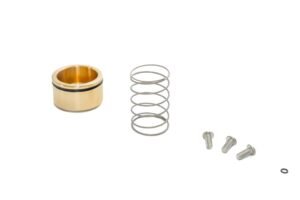
Blow-off and diverter valves are among the most copied performance parts of all. Well-known designs have been reproduced for years, and enthusiast forums are full of owners comparing knock-offs with the real thing. Some manufacturers, including GFB, publicly warn that counterfeits are being sold under their name and advise buying only from listed dealers.
A fake valve may look right but use a different spring, a poorly machined piston or an inferior seal. Depending on the design and the car, that can mean a valve that leaks under boost, sticks, or behaves inconsistently, which may show up as lost boost, hesitation or rough running. Whether it causes a problem on your car depends on boost level, valve design and the rest of the setup, so there is no single outcome to expect. If you are unsure which type of valve your car needs in the first place, our guide to blow-off valves vs diverter valves covers it.
Turbochargers themselves are also counterfeited. BorgWarner has warned that the materials in counterfeit turbos typically do not meet the temperature demands of modern petrol engines. A turbo is an expensive part to get wrong, and a failure can damage other components, so traceable supply matters even more here. For valves, see our blow-off and dump valves, which are listed with the vehicle fitments they are designed for.
Seats, Harnesses and Safety Kit: Checking FIA Labels
If you do track days or club motorsport, counterfeit safety equipment is the most serious risk on this list. Fake seats, harnesses and race clothing have been found on sale, and they have not passed the testing their labels claim. Motorsport UK’s counterfeit items guidance sets out how to check FIA-approved products:
- Check that the style of the homologation label matches what the FIA requires for that standard. The relevant FIA Technical List shows how genuine labels should look.
- Check the homologation number on the label against the FIA Technical List, and confirm it corresponds to the right manufacturer and model.
- Where a product carries more than one label, such as individual harness straps, check that the numbers match each other.
- Check that the manufacturer and validity dates are correct.
- If in doubt, ask a Motorsport UK scrutineer or the Motorsport UK technical team before you use it.
For a road car that only does track days, the organiser’s rules decide what you need. But if you do buy homologated kit, it is only worth having if it is genuine, so buy it from a specialist that stocks the brand directly and keep the paperwork that comes with it.
Fake Parts for Popular UK Performance Cars: What Owners Should Check
The cars with the biggest tuning scenes tend to attract the most copies, simply because there are more buyers. The table below lists checks rather than claims about any particular seller or product.
| Vehicle family | Parts often bought online | What to check |
|---|---|---|
| VW Golf GTI / Golf R / Audi S3 | Brake pads, coilovers, diverter valve upgrades, intakes | Pad part number for your calliper size; coilover listing for FWD or 4Motion; valve fitment for your engine generation |
| Ford Fiesta ST / Focus ST | Pads and discs, intercoolers, engine mounts | Front and rear pad numbers by model year; whether a pad is road approved or track only |
| Honda Civic Type R | Coilovers, intakes, exhausts | Correct generation (EP3, FN2, FK2, FK8, FL5); serial numbers and warranty on dampers |
| MINI Cooper S | Blow-off valves, intakes, suspension | Valve suits your engine family; authorised stockist; flange matches |
| Toyota GR86 / GT86, GR Yaris | Seats, harnesses, pads for track days | FIA labels against the Technical List; pad compound suits road or track use |
Examples from our range
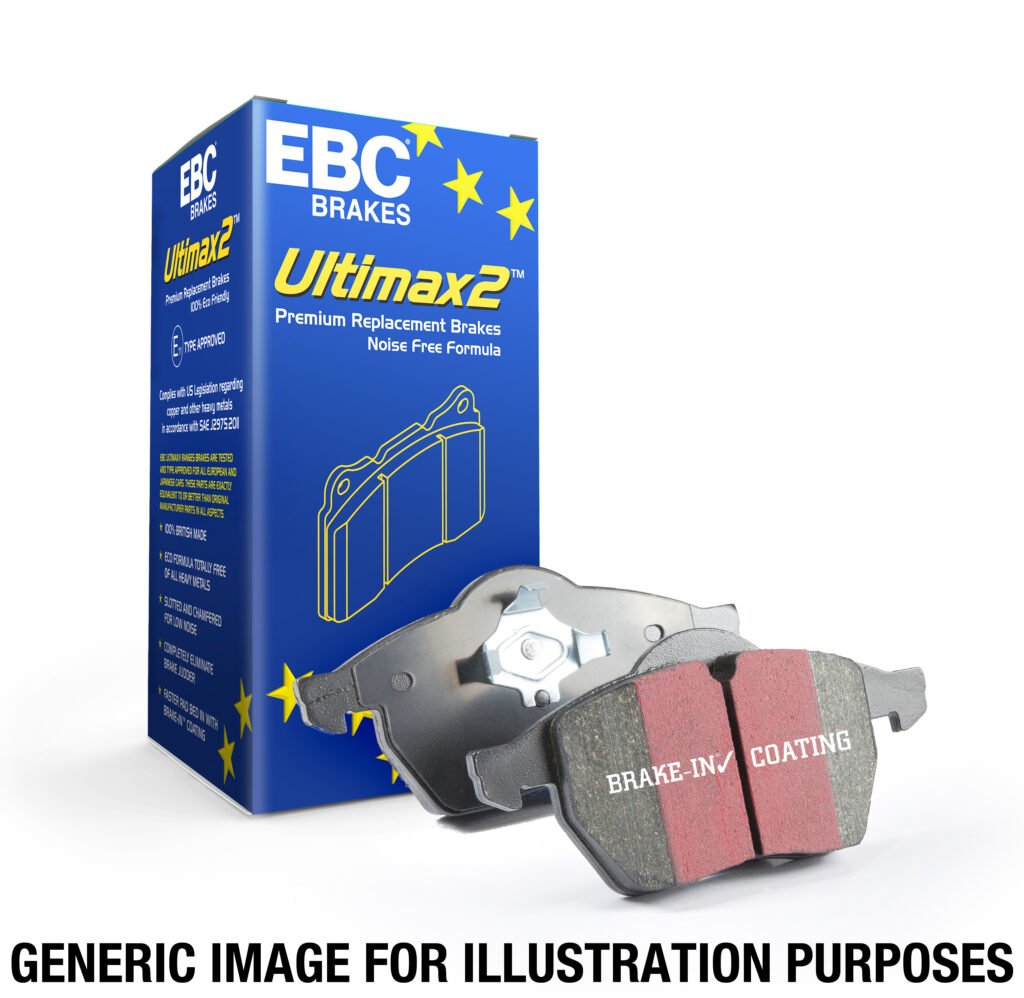
- EBC Ultimax2 Front Brake Pads DP1137 for VW Golf, Polo and SEAT Ibiza applications.
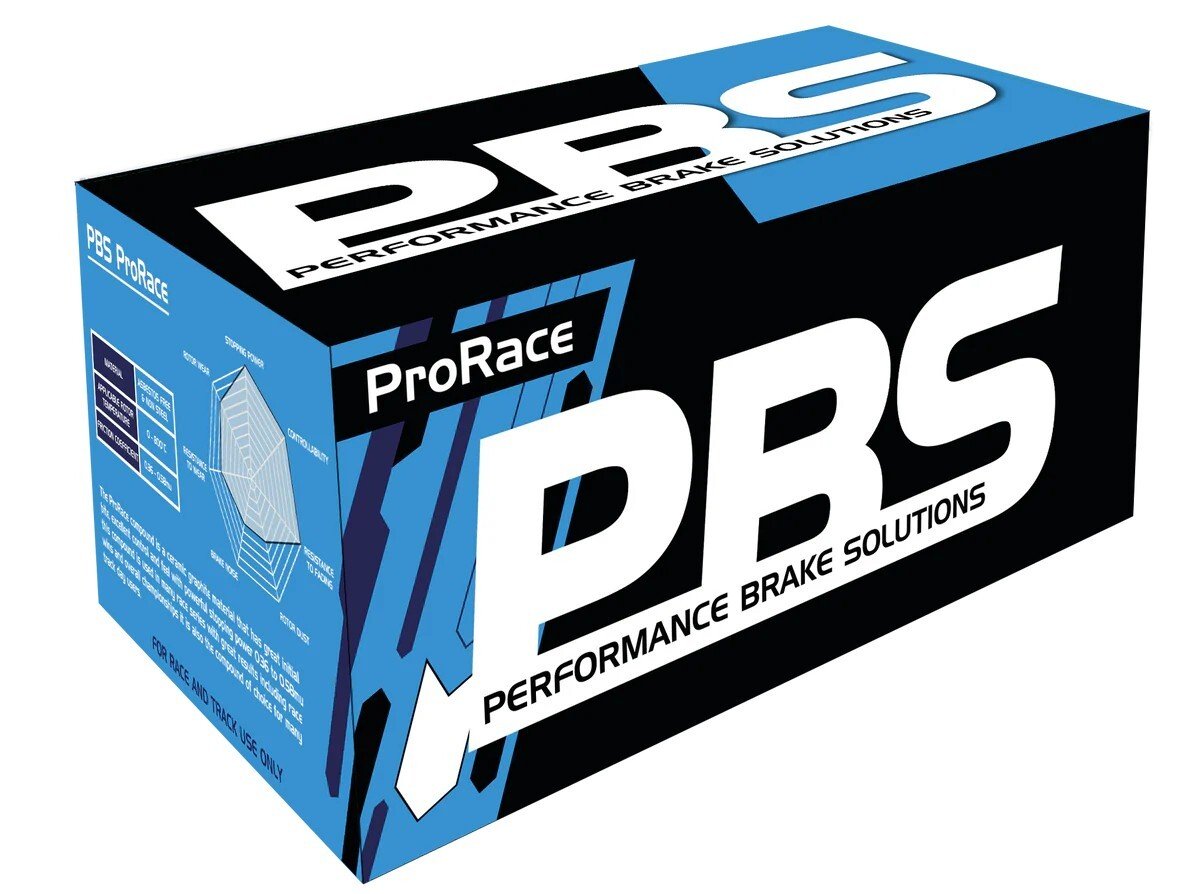
- PBS ProRace Rear Brake Pads 8171PR for the Fiesta ST Mk7 and Focus ST170; check the listing for road-use guidance before fitting to a daily driver.
- YSR Dynamic Pro Sport Coilovers for the front-wheel-drive Golf Mk7 including GTI.
- Turbosmart Kompact EM Dual Port VR10 BOV for MINI Cooper S and related Peugeot, Citroën and DS engines.
Buying Online: Red Flags and How to Check a Seller
Most fakes are bought online, often through marketplaces or social media. These are the warning signs worth taking seriously:
- A price that does not make sense: the IPO advises caution even when a branded part is only marginally cheaper from a seller you do not recognise.
- Vague descriptions: no part numbers, no fitment list, borrowed manufacturer images, and words like “type”, “style” or “replica” next to a brand name.
- Poor packaging: misspelt brand names, blurry printing, missing instructions or plain generic boxes.
- No traceability: the seller cannot say where stock comes from or whether it is an authorised stockist.
- Imports from outside the usual supply chain: the IPO notes that parts bought from outside Europe may not meet the “E” approvals for safety, function and emissions.
Many manufacturers also offer ways to check authenticity. The IPO’s business guidance lists brands with online or app-based checking tools, including Bosch, Brembo, Denso, Mahle, NGK, Textar and TRW. If the brand you are buying offers one, use it before the part goes anywhere near your car.
MOT, Insurance and Warranty: Why Fakes Are a Legal Headache Too
An MOT checks the condition and performance of your car on the day of the test; it is not an authenticity check. A car with fake pads may pass if they happen to perform adequately at the time, and the problem may only appear later under heat or hard use. Passing an MOT does not prove your parts are genuine.
Insurance and warranty are the other risks. The IPO warns that sub-standard parts can void vehicle warranties and/or insurance, and that fake parts cannot be traced or replaced through a manufacturer recall. If you modify your car, you should already be declaring upgrades to your insurer, and knowing exactly what has been fitted and where it came from makes that conversation easier. Whether a claim would be affected depends on your policy and the circumstances, so speak to your insurer if you are unsure.
Think You Have Bought a Fake? What to Do Next
- Do not fit it, or remove it if it is already on a safety-critical system such as brakes or suspension.
- Photograph the part, packaging and labels before returning anything. The IPO recommends this whether or not you get a refund.
- Contact the seller and the marketplace. Major marketplaces have processes for reporting counterfeits and requesting refunds.
- Ask your card provider about chargeback if you paid by debit or credit card and the seller will not help.
- Report it. Use the Trading Standards consumer help service, or report anonymously to Crimestoppers. You can also contact the brand that has been copied, as many have dedicated anti-counterfeit contacts.
If you bought from a UK retailer and the part is wrong or faulty rather than fake, the process is different. Our guide to performance parts returns in the UK explains your options.
Genuine Performance Parts Checklist: Before You Buy and Fit
- Is the seller an established retailer that can explain where its stock comes from?
- Is the price in line with other reputable sellers for the same part number?
- Does the listing give a clear part number and a vehicle-specific fitment?
- For road brake pads, is there an R90 approval mark and a sealed, tamper-evident box?
- For coilovers and dampers, are there serial numbers and a manufacturer warranty?
- For seats and harnesses, do the FIA labels match the Technical List?
- Does the brand offer an authenticity check, and have you used it?
- Do the packaging, print quality and finish match what the manufacturer shows?
- Have you kept photos of the part, box and labels in case of a problem?
- Have you told your insurer about the modification?
Shop Brake Pads, Coilovers and Blow-Off Valves

Conclusion
Fake car parts in the UK are a real and growing problem, and the parts performance owners buy most often, such as brake pads, suspension, turbo valves and safety kit, are among the most copied. The good news is that most fakes can be avoided with a few habits: buy from sellers who can trace their stock, be wary of prices that seem too good to be true, check R90 marks and FIA labels, use manufacturer authenticity tools, and keep records of what you fit.
Remember that cheap does not always mean fake, and genuine race parts are not always road approved. Match the part to how you actually use the car, and do not cut corners on the components that stop, steer or protect you.
Ready to upgrade? Start with our brake pads by vehicle or browse the full range at performancecarsparts.co.uk. If you want help confirming fitment or choosing between road and track compounds, contact our team via WhatsApp or email and we will help you find the right part for your car.
Shop related performance parts

Explore related products

Always check the individual product listing for your vehicle and engine before ordering.