

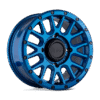
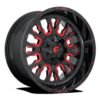





Your wheels are the single most impactful upgrade you can make to a performance car, influencing everything from handling dynamics and braking efficiency to overall aesthetics. Yet with thousands of options flooding the market, choosing the right set requires far more knowledge than most enthusiasts initially realise.
Aftermarket wheels represent one of the most technically nuanced purchasing decisions in the performance car world, particularly within the UK market where road conditions, MOT regulations, and specific homologation requirements add additional layers of complexity to the selection process.
In this guide, we break down everything an intermediate enthusiast needs to know before committing to a purchase. You will learn how to decode wheel specifications including PCD, offset, and load ratings, understand the differences between casting methods and alloy compositions, navigate UK legal requirements, and identify which manufacturers consistently deliver quality for popular performance platforms. Whether you are chasing lap times, improving daily drivability, or simply want a sharper stance without compromising structural integrity, this guide will give you the technical foundation to make a confident, informed decision from the start.
Wheel Materials Explained: Cast, Flow-Formed, Forged, Magnesium and Carbon Composite
Choosing the right aftermarket wheel starts with understanding how each type is manufactured, because the construction method determines weight, structural integrity, cost, and suitability for your specific application far more than aesthetics alone.
1. Cast Alloy Wheels
Cast wheels are produced by pouring molten aluminium into a mould and allowing it to solidify. This is the most common and affordable manufacturing process in the wheel industry, making cast alloys the default fitment for daily drivers seeking a visual upgrade without significant financial outlay. The structural compromise is inherent to the process: the cooling cycle produces a less uniformly aligned grain structure, so engineers must use additional material to achieve the required load ratings. That added material translates directly into higher wheel weight, which is a meaningful disadvantage for any performance-focused build where unsprung mass reduction is a priority. Cast wheels remain entirely appropriate for style-first or light-use applications, but they are not the optimum choice once handling precision becomes a design goal.
2. Flow-Formed Wheels
Flow-formed wheels, also marketed as flow-forged or spun-rim depending on the manufacturer, begin life as a conventional cast blank. The barrel section is then heated and stretched under high roller pressure, a process that compresses and realigns the aluminium grain structure without the full cost of billet forging. The practical result is a thinner, lighter barrel with measurably better impact resistance than a standard cast equivalent. As explained by industry sources, flow-forming delivers strength approaching forged quality at a considerably lower price point, making these wheels the most technically defensible option for street-driven enthusiast cars where budget is a real constraint.
3. Forged Aluminium Wheels
Forged wheels are machined from a single billet of aluminium subjected to extreme compressive force, producing a dense, porosity-free grain structure that maximises strength per unit of mass. This manufacturing process, examined in detail across performance wheel comparisons, yields the highest strength-to-weight ratio available within the aluminium tier. For track-day and motorsport applications, forged wheels are the standard specification precisely because unsprung mass directly influences suspension response, steering feel, and braking performance. The cost premium is substantial, but on a circuit where every kilogram at each corner has measurable effects on lap time and tyre behaviour, that premium is an engineering investment rather than an indulgence.
4. Magnesium Wheels
Magnesium alloy wheels weigh approximately 30% less than aluminium equivalents and around 70% less than steel, delivering the most significant unsprung mass reduction available outside of carbon composite technology. That weight advantage has made magnesium the material of choice in historic Formula 1 and endurance racing, as well as on low-volume road cars where cost is secondary to performance. The practical barriers for regular road use are considerable: magnesium is susceptible to galvanic corrosion, requires protective coatings, and commands acquisition costs well above forged aluminium. For a dedicated track car or a road car built without compromise, magnesium remains a technically valid option; for daily-driven performance builds, the maintenance demands are difficult to justify.
5. Carbon Composite Wheels
Carbon composite wheels represent the current frontier of lightweight wheel technology. OEM fitments on vehicles such as the Ford GT and certain Porsche 911 variants have demonstrated real-world credibility, and the technology is increasingly appearing in GT3 and GTE racing homologation. Weight savings over forged aluminium are substantial, and rotational inertia reductions produce measurable improvements in acceleration response and braking. Current retail pricing, frequently exceeding five figures per set, places carbon composite firmly outside the mainstream aftermarket. Pricing accessibility is improving incrementally, and these wheels are worth monitoring as production volumes increase through the latter part of this decade.
6. Why Unsprung Mass Matters
The performance case for upgrading from cast to any higher-specification wheel construction rests on the physics of unsprung mass. Unsprung components, including wheels, tyres, and brake assemblies, must be accelerated and decelerated by the suspension on every road surface irregularity. Reducing this mass allows the suspension to respond more accurately, improves contact patch consistency, shortens braking distances, and reduces the gyroscopic forces acting through the steering column. Even a saving of 1 kg per corner produces measurable handling improvements on a performance car, which is why construction method selection deserves the same level of scrutiny as tyre compound or brake specification.
Understanding Fitment: PCD, Offset (ET), and Centre Bore
With wheel material and construction now understood, fitment specifications are where the real technical precision begins. Getting these measurements wrong does not merely result in a wheel that looks out of place; it can cause structural failures, tyre contact with bodywork, and handling that actively works against you at speed.
1. PCD: Matching the Bolt Pattern Exactly
PCD, or Pitch Circle Diameter, describes both the number of lug holes and the diameter in millimetres of the imaginary circle passing through their centres. The notation follows a standard format: 5×114.3 means five bolts arranged on a 114.3mm circle. For UK performance cars, three patterns appear most frequently. 5×114.3 covers the Honda Civic Type R (up to FK2), Nissan 350Z and 370Z. 5×120 applies to BMW M-series on E and F-chassis platforms, along with select Vauxhall VXR models. 5×10⁸ was used on the Ford Focus ST and RS up to the Mk3 generation. None of these patterns are interchangeable without wheel adaptors, and even then, adaptor use carries real implications for offset geometry, insurance validity, and MOT compliance in the UK. Always treat PCD as a hard constraint, not a starting point for negotiation.
2. ET Offset: Width, Track, and Clearance
ET, from the German Einpresstiefe, measures in millimetres how far the wheel’s mounting face sits from its centreline. On a wheel with a positive ET value such as ET35, the mounting face is positioned toward the outside face of the wheel, causing it to sit further inward toward the suspension strut. A lower or negative ET moves the mounting face toward the inside of the wheel, pushing the rim further outward and widening the track. That wider stance may look aggressive, but running an ET that is too low risks tyre contact with the wheel arch under compression or lock. An ET that is too high risks the inner rim fouling on brake calipers or suspension components. A useful working formula: subtract the new ET from the OEM ET, then multiply by two to find the total change in track width in millimetres. Use this to assess clearance margins before ordering. Refer to a complete guide to PCD and bolt pattern fitment for cross-referenced offset data by vehicle.
3. Centre Bore and Spigot Rings
Centre bore is the diameter of the central circular aperture machined into the wheel. For a hub-centric fit, this measurement must match the hub diameter on your vehicle exactly. When an aftermarket wheel carries a larger centre bore than the hub, a spigot ring fills the gap and restores proper centring. Without a spigot ring, the wheel becomes lug-centric, meaning the lug nuts alone carry the centring load. This introduces vibration and wheel runout at speed, which is felt through the steering and can accelerate bearing wear. Budget wheel packages frequently omit spigot rings, so verify whether they are included and confirm the bore dimensions against your hub specification independently.
4. Load Rating and Variant-Specific Verification
Load rating is a safety-critical figure that must meet or exceed your vehicle’s gross axle weight rating. This becomes particularly relevant with lightweight forged wheels, where the visual impression of reduced mass can create false confidence about structural capacity. A wheel that fits perfectly in terms of PCD, ET, and centre bore can still be underspecified for the load it is being asked to carry, especially on modified or heavier performance cars.
Beyond load rating, always verify fitment data against the specific model year and regional variant, not just the model name. BMW’s own transition from 5×120 on E and F-chassis models to 5×112 on the current G-generation illustrates how significantly hub specifications can change within a single nameplate. UK-spec and JDM variants of the same car can carry different hub diameters even within the same production generation. Check the alloy wheel fitment guide covering PCD, offset, and centre bore as a reference point, and cross-check against your vehicle’s specific build sheet or VIN-decoded specifications. If any uncertainty remains, the team at Performance Car Parts offer fitment support directly via WhatsApp and email, allowing you to confirm all critical specifications against your car’s exact configuration before committing to a purchase.
Rim Size and Width: Finding the Right Balance for Street and Track
The 16 to 18-inch rim size segment commands 52.8% of the global aftermarket wheel market in 2025, and that dominance is no accident. This range represents the engineering sweet spot for performance street cars, delivering a combination of broad tyre availability across multiple compounds and brands, manageable unsprung weight, sufficient sidewall height for road compliance, and enough rim diameter to clear larger brake assemblies. For most performance platforms running factory-spec or lightly upgraded brakes, an 17 or 18-inch rim provides the best balance without forcing compromises elsewhere in the chassis setup.
Plus-sizing is one of the most commonly misunderstood upgrade paths. The principle involves fitting a larger-diameter rim paired with a lower-profile tyre to maintain the same overall rolling diameter. The shorter sidewall reduces lateral flex under cornering loads, sharpening steering response and improving turn-in precision. However, that reduced sidewall also strips away the tyre’s capacity to absorb road surface irregularities. On UK roads, where pothole density continues to increase year on year according to Asphalt Industry Alliance reporting, the ride compliance penalty and heightened risk of rim and tyre damage are genuine practical concerns, not theoretical ones. Every millimetre of sidewall height you remove shifts impact loading directly into the wheel structure and suspension components.
Wheel width deserves equally careful consideration. A wider rim supports a broader tyre contact patch, which improves lateral grip in cornering. However, wider wheels carry greater rotational inertia; the resistance to acceleration and deceleration increases proportionally, blunting throttle response and marginally extending braking distances on road-biased setups. Tyre wear patterns also become uneven when a tyre is run outside its published approved rim width range. It is worth consulting tyre manufacturer specifications directly before selecting rim width, as running a tyre outside its approved band degrades geometry and handling rather than enhancing it.
For track-day use, the “wider is faster” assumption frequently misleads. According to best wheel specifications for track driving, optimised track setups prioritise weight savings and tyre temperature management above raw contact patch size. Many experienced drivers run a dedicated set of narrower, lighter wheels with appropriate soft-compound rubber, keeping tyre temperatures within the optimal operating window far more effectively than a heavy, wide road setup can.
Beyond 19 or 20 inches, diminishing returns accelerate sharply for road applications. Brake caliper clearance becomes a binding constraint with many big-brake kits, wheel arch fitment requires careful offset calculation, and speed bump clearance on lowered cars turns from a minor inconvenience into a recurring problem. The performance gain from additional diameter at this point rarely justifies the added weight, reduced tyre choice, and elevated pothole vulnerability.
Finally, always recalculate speedometer calibration whenever overall tyre diameter changes. UK regulations require speedometers not to under-read, and MOT testers can flag significant deviations from the manufacturer’s specified rolling circumference as an advisory or failure point. Even a seemingly minor change in aspect ratio can alter rolling circumference enough to push the reading outside acceptable tolerances, so confirm the numbers with a rolling circumference calculator before committing to a new tyre specification.
UK Road Legal Requirements: MOT Compliance, PAS 71, and JWL/TUV Certification
Fitting aftermarket wheels to a road car in the UK is not purely a technical exercise in fitment and material selection. There is a parallel compliance layer that carries real legal and financial consequences if ignored.
PAS 71 is the British Standard specification covering road wheels fitted to passenger cars. Published by the British Standards Institution, it defines dimensional tolerances, mechanical strength requirements, and fatigue performance thresholds that a wheel must meet to be considered fit for road use in the UK. Wheels sold specifically for road use should conform to PAS 71 or an internationally recognised equivalent. This is not a discretionary quality marker; it is the baseline against which road-legal wheels are evaluated in the UK market.
Internationally, JWL (Japan Light Alloy Wheel standard) and the associated VIA (Vehicle Inspection Association) third-party verification mark are the most widely encountered compliance stamps on alloy wheels manufactured in Japan and across Asia. JWL sets the dimensional and performance standard; VIA independently confirms that a given wheel has passed it. TUV certification, originating from Germany’s Technischer Uberwachungsverein, carries equivalent credibility in the European and UK market. TUV approval is vehicle-specific, not generic; each wheel style is tested at the correct width, offset, and load rating for each target vehicle. The manufacturer’s facility must also pass a TUV audit every three years, making it a rigorous and traceable approval process. You can verify a genuine TUV certificate at tuv.at certificate search, which is important given that false TUV claims are a known issue in the aftermarket industry. For a thorough overview of what TUV approval means in practice, Wheelwright’s TUV certification guide provides a useful reference point.
From an MOT perspective, Section 4 of the DVSA MOT Inspection Manual requires examiners to fail a vehicle if wheels are cracked, seriously buckled, or of a type not designed for road use. Motorsport-only wheels, or uncertified wheels without appropriate road-use markings, fall directly into that failure category.
Insurance exposure is equally significant. Most UK motor insurance policies contain modification declaration clauses. Fitting non-road-legal or undeclared aftermarket wheels without notifying your insurer can void a claim entirely, regardless of fault.
Spacers and hub-centric adaptors, often used when an aftermarket wheel’s bore or offset requires correction, introduce their own compliance requirements. Spacers must be hub-centric, correctly torqued, and rated for the vehicle’s load. Poorly specified or incorrectly fitted spacers are a recognised MOT advisory item and a source of progressive wheel bearing wear.
When purchasing aftermarket wheels from any online retailer, product listings should explicitly state the relevant certification marks, whether PAS 71 compliant, JWL/VIA stamped, or TUV approved. If a listing does not clearly confirm road-use certification for UK fitment, treat that as a reason to clarify before purchasing, not after.
Track Day and Motorsport-Specific Wheel Options
Once the fitment specifications and road-legal compliance requirements are understood, the focus shifts to what is possible when the road-legal constraints are removed entirely. Track-day and motorsport builds operate under a different set of priorities, and the wheel choices available to circuit competitors reflect that.
1. Multi-Piece Wheels for Custom Fitment Precision
Two-piece and three-piece split-rim designs are the dominant choice for serious track-day builds because they separate the centre and barrel into independently configurable components. This means offset, barrel width, and lip depth can each be specified to hit exact clearance targets or achieve a defined contact patch width, without being constrained by whatever a manufacturer has cast as a fixed geometry. For builds running aggressive suspension geometry, increased track width, or brake packages with specific caliper clearance requirements, this level of configurability is functionally essential rather than merely cosmetic. The structural and design differences between one, two, and three-piece wheel formats are well documented and directly influence which configuration is appropriate for a given build.
2. Centre-Lock Systems and Hub Conversion Requirements
Centre-lock wheels, fixed by a single large-diameter nut rather than a multi-bolt pattern, are a standard feature of professional motorsport primarily because they allow complete wheel and tyre changes in seconds. In club motorsport and trackday use, centre-lock systems require a compatible hub conversion to be fitted to the vehicle. This is a dedicated hardware modification and is not a reversible swap between sessions. Centre-lock wheels are generally not considered road-legal in the UK without specific individual vehicle approval, which makes them a track-only proposition for the vast majority of users.
3. Forged Monoblock Construction for Circuit Loads
For circuit use, forged monoblock wheels consistently outperform cast equivalents across the metrics that matter most at speed. The forging process produces a denser, more uniform grain structure than casting, delivering higher tensile strength at lower weight. That weight reduction directly reduces rotational inertia, which is the resistance the drivetrain must overcome to accelerate the wheel and the resistance the brakes must overcome to decelerate it. At lap time level, the cumulative effect across dozens of braking and acceleration events is measurable. Spoke geometry also contributes here; designs with minimal cross-sectional mass concentrated toward the barrel reduce the gyroscopic forces generated at high speed.
4. Running Dedicated Track Wheels Alongside a Road Set
The two-wheel-set approach is standard practice among club motorsport competitors. Keeping a dedicated set of track wheels with circuit-specific tyres mounted means the road setup is never subjected to the aggressive heat cycles, kerbing loads, and abrasive surface contact that a circuit generates. Tyre compounds optimised for road use degrade rapidly under sustained track temperatures, and the cost of prematurely cycling through road tyres far exceeds the cost of a second set of wheels over a season.
5. Weight Distribution and Gyroscopic Effects at Speed
Mass positioned toward the outer barrel of a wheel sits at the furthest point from the rotational axis, which amplifies its contribution to gyroscopic forces as wheel speed increases. A heavier outer lip generates greater resistance to changes in steering angle, which is directly perceptible as reduced turn-in response. This is precisely why lightweight forged designs with open spoke structures and minimal material in the outer section are favoured for timed competition, where every aspect of steering response is relevant to lap time.
6. Certification Status and Road Use Restrictions
Motorsport-specific wheels frequently do not carry PAS 71 or JWL certification. As covered in the road-legal compliance section of this guide, those certifications are what demonstrate a wheel meets the structural standards required for MOT approval and insurance validity on UK public roads. Running uncertified competition wheels on the road exposes the vehicle to MOT failure and, more critically, creates a basis for an insurer to reject a claim following an incident. Motorsport wheels should be transported to and from circuit venues on a separate road set, stored between events, and never used on public roads.
EV and High-Performance Application Considerations
The shift toward electric vehicles introduces a distinct set of engineering demands that sit outside the parameters covered by conventional combustion-car wheel selection. Understanding these differences is not optional for performance EV owners; it is a prerequisite for safe and legal fitment.
Load Ratings and Battery Mass
EVs are substantially heavier than their combustion equivalents, typically adding 300 to 500 kg due to battery pack mass alone. This elevated kerb weight places correspondingly greater stress on each wheel’s structural capacity. Where a combustion-engined performance car might demand a per-wheel load rating of 650 to 750 kg, a comparable performance EV may require ratings approaching 900 kg or above. Buyers must verify the gross axle weight rating (GAWR) from the vehicle’s technical data and confirm that each aftermarket wheel meets or exceeds the per-wheel load requirement derived from that figure. EV-specific forged wheels validated against recognised test standards, including VIA/JWL and the equivalent European ECE R124 approval relevant to UK buyers, are the appropriate specification response to this requirement.
Brake Thermal Management and Spoke Geometry
Regenerative braking significantly reduces rotor and pad heat in everyday driving, which has led some EV owners to assume thermal management is a low priority when selecting wheels. That assumption does not hold under performance conditions. A performance EV driven on a track or subjected to repeated hard braking events still generates substantial rotor and caliper temperatures; spoke geometry and back-face aperture area must still permit adequate convective airflow to dissipate that heat. Open-spoke and semi-open designs offer a genuine thermal advantage in these scenarios that more aerodynamically enclosed designs cannot fully replicate.
Aerodynamics, Range Efficiency, and the Design Trade-Off
Independent analysis suggests that wheel and tyre interaction can account for up to 25% of a vehicle’s total aerodynamic losses. Conventional open-spoke cast designs have been shown to increase drag coefficient by up to 5 to 7% compared to aero-optimised alternatives, and even modest improvements in wheel Cd translate directly into measurable range gains at motorway speeds. This makes aerodynamic wheel design a practical efficiency consideration for EV owners rather than a purely aesthetic one. The trade-off is that partially or fully enclosed wheel faces compromise the convective airflow discussed above, so performance EV owners driving on track should prioritise thermal clearance over aerodynamic closure. Owners focused primarily on road range efficiency face the opposite priority. For a current technical perspective on how forged aero-disc construction addresses this balance, the Aerochi EV wheel engineering overview provides detailed context.
Caliper Clearance with Uprated Brake Kits
Brake caliper clearance is one of the most frequently encountered and most avoidable fitment errors when combining aftermarket wheels with upgraded brake hardware. Performance EVs often leave the factory with physically large brake assemblies, and the preference for lower-profile, tighter-spoke aesthetic designs makes spoke-to-caliper interference a realistic risk. The correct protocol is to confirm caliper-to-spoke clearance before purchasing either component separately, ideally using manufacturer-provided caliper dimension data cross-referenced against the wheel’s internal spoke geometry. This is particularly relevant when sourcing a brake kit and a set of wheels as part of the same upgrade, as noted by EV owners encountering this issue across multiple platforms, including the Mustang Mach-E owner community.
TPMS Compatibility and Emerging Smart Wheel Technologies
Factory-fitted TPMS sensors are not universally compatible with all aftermarket wheel barrels, and sensor protocols vary by manufacturer and model year across common UK EV platforms. Buyers should confirm sensor reusability or identify compatible replacement sensors before finalising a wheel purchase. Looking further ahead, embedded load-monitoring and smart pressure-sensing systems represent the next product development horizon across the 2026 to 2033 timeframe; selecting wheels with standard valve stem configurations and forward-compatible bore diameters is a reasonable precaution for buyers making longer-term investments.
The UK’s accelerating EV transition, with global EV sales projected at 22.7 million units in 2026 and rising sharply toward 40 million annually by 2030, means the aftermarket is adapting fast. However, supplier diligence on load ratings, thermal clearance, caliper fitment, and sensor compatibility cannot yet be assumed to be uniform across the market. Buyers should treat each of these parameters as a discrete verification step rather than a default guarantee.
Price Segmentation: Budget, Mid-Range, and Premium Aftermarket Wheels
With the technical and compliance groundwork established in earlier sections, the practical question most buyers reach next is straightforward: how much should you actually spend, and what does each price bracket genuinely deliver?
Budget Cast Alloy Wheels (Under £100 to £150 Per Corner)
Gravity-cast alloys at this price point serve a specific and legitimate purpose. They are entirely appropriate for purely cosmetic refreshes on a daily driver or, more practically, as a dedicated winter wheel set where you want to protect your premium fitments from road salt, grit, and pothole damage during colder months. The trade-off is weight; cast construction produces a denser wheel with thicker walls than flow-formed or forged alternatives, so dynamic performance gains are minimal. Quality variation within this tier is considerable, and certification verification is non-negotiable. Look for JWL, VIA, or TUV markings on the wheel itself, confirming the product has been tested against recognised structural load and impact standards. Buying uncertified budget wheels from unverified sources introduces genuine safety risk and potential MOT complications, as covered in the compliance section above.
Mid-Range Flow-Formed Wheels (£150 to £350 Per Corner)
Flow-formed wheels represent the strongest value proposition for most road-focused performance car owners. The manufacturing process takes a cast blank and applies heat and pressure rollers to spin and stretch the barrel, realigning the aluminium grain structure and reducing wall thickness without a full forging cycle. The result is a meaningfully lighter wheel than a comparable cast design, with improved structural rigidity, at a price point that remains accessible. This is also the segment that best aligns with the dominant 16 to 18-inch rim size bracket, which commands 52.8% of the global aftermarket wheel market in 2025, according to automotive wheel market data. For road cars where weight reduction improves steering feel, braking response, and ride quality without demanding a track-day budget, flow-formed wheels are the logical choice.
Premium Forged Wheels (£350 and Above Per Corner)
Forged wheels, machined from a single compressed billet of aluminium alloy, justify their cost in specific applications: dedicated track builds, high-powered road cars where unsprung mass reduction directly affects handling precision, and increasingly, electric vehicles where rotational weight affects both range efficiency and the management of instant torque delivery. Bespoke or well-regarded brand-name forged options can exceed £600 to £800 per corner, and that expenditure is rational where performance margins are the primary objective.
Pricing Transparency and Total Cost of Ownership
Online-only retailers carry structurally lower overheads than traditional fitment centres and franchised dealerships, and that overhead difference translates directly into pricing. The operating model at performancecarsparts.co.uk passes those savings to the buyer without the margin layers built into high-street pricing. The global aftermarket wheel market is forecast to grow from USD 3.84 billion in 2026 to USD 5.08 billion by 2034, with e-commerce identified as a primary distribution channel driving that expansion; competitive online pricing is becoming standard practice across the sector.
One critical planning point: the per-corner wheel price is not your total outlay. Tyre fitment and balancing charges apply per corner at any fitting centre. If the aftermarket wheel’s centre bore is larger than your hub bore, spigot rings are required to eliminate vibration and maintain hub-centric load transfer. Offset changes may introduce the need for hub-centric spacers. Build all of these line items into your budget from the outset to avoid post-purchase surprises.
How to Buy Aftermarket Wheels Online Safely: A Pre-Purchase Checklist
With fitment parameters, compliance requirements, and budgeting addressed in earlier sections, the final step before committing to a purchase is working through a structured pre-purchase checklist. Buying aftermarket wheels online is efficient and cost-competitive, but the process rewards preparation.
1. Lock in your four core fitment parameters first
Before you search a single listing, have your PCD, ET offset, centre bore, and stud thread pitch confirmed in writing. These four figures define whether a wheel is physically compatible with your vehicle; no aesthetic preference or price point overrides them. Your PCD must match exactly. Your ET offset determines wheel position relative to the hub face, and even a small mismatch can cause tyre contact with suspension components or the inner arch. Centre bore must match or exceed your hub diameter; if the wheel centre bore is slightly oversized, a hub-centric spigot ring corrects this inexpensively. Stud thread pitch governs whether your existing lug nuts will seat correctly under load. All four figures are available in your owner’s handbook, via a VIN lookup, or through a reputable fitment guide such as this ultimate wheel fitment guide.
2. Verify certification before purchasing
Any wheel listed for road use in the UK should state its applicable certification explicitly: PAS 71, JWL, VIA, or TUV. If the product description omits this detail, contact the retailer directly before ordering. Uncertified wheels carry real consequences; they can invalidate your insurance policy and may result in an MOT failure if an examiner identifies non-compliant fitment.
3. Check the load rating against your axle load
Your vehicle’s permitted axle load is printed on the door sill plate or listed in the owner’s handbook. The wheel’s load rating must meet or exceed this figure. This is a straightforward cross-reference, but it is frequently skipped when buyers focus primarily on aesthetics and offset.
4. Use available fitment support channels
Standard fitment guides do not always account for lowered suspension, big-brake kit clearance, or other modifications. Performance Cars Parts offers support via email and WhatsApp, which is directly useful for confirming compatibility on modified vehicles where a generic fitment chart falls short.
5. Review delivery lead times and return logistics before checkout
Wheel sets are heavy and expensive to return. Confirm whether stock is available for immediate dispatch or made to order, clarify who bears return freight costs, and establish whether the retailer accepts returns on correctly ordered but unwanted items. Confirming fitment before purchase is considerably more cost-effective than a return and reorder cycle.
6. Understand your Consumer Rights Act 2015 protections
UK buyers purchasing from a UK-based online retailer are covered by the Consumer Rights Act 2015. Familiarise yourself with the retailer’s process for reporting defective goods on delivery, requesting replacement or refund for items not as described, and the timeframes for raising a complaint. Importantly, statutory protections apply to goods that are faulty or not as described; ordering the incorrect specification removes that remedy, which is precisely why completing steps one through five before checkout matters.
Key Takeaways Before You Buy
Selecting the right aftermarket wheels follows a clear hierarchy: confirm fitment parameters first (PCD, ET offset, centre bore, and load rating), then evaluate material and weight, then finalise rim size, then verify certification, and only then assess price. Skipping steps or reversing this order is how costly compatibility errors happen.
The 16 to 18-inch range commands 52.8% of the global aftermarket wheel market for a reason. It delivers the optimal balance of tyre sidewall compliance, unsprung mass control, and brake clearance for performance street applications. Unless your build has specific track or OEM requirements pulling you outside this range, it remains the most technically sound default.
UK road legality is non-negotiable. PAS 71, JWL, or TUV certification directly protects your MOT status and insurance validity. No wheel is worth the financial or legal exposure of running uncertified.
performancecarsparts.co.uk stocks a curated aftermarket wheel catalogue with customer support available via email and WhatsApp. Use the fitment tools before purchasing, contact the support team with any compatibility questions, and browse the full wheel range at performancecarsparts.co.uk to find the right upgrade for your application.
Conclusion
Choosing the right aftermarket wheels comes down to mastering a handful of critical factors: understanding your specifications, selecting the appropriate construction method, staying compliant with UK regulations, and investing in reputable manufacturers proven to deliver quality.
Get these fundamentals right and your upgrade will transform both the performance and appearance of your car. Get them wrong and you risk compromised handling, failed MOTs, or worse, a safety incident.
Before you commit to a purchase, revisit your PCD measurements, confirm your offset requirements, and verify that any wheel you consider carries the appropriate load rating for your vehicle.
Ready to start shopping with confidence? Browse our curated selection of UK-approved aftermarket wheels, or speak with one of our specialists who can match the perfect set to your exact build. Your ideal setup is closer than you think.