
Power is heat. Every extra horsepower a remap, bigger turbo or freer exhaust gives you also turns into extra heat that the cooling system has to get rid of. On a commute along the M25 you will rarely notice. On a hot July track day at Brands Hatch or Snetterton, sitting at high revs for twenty minutes, the story changes: coolant temperature creeps up, oil temperature climbs faster still, and many modern cars quietly pull power to protect themselves long before a warning light appears.
That is why engine cooling upgrades sit in a strange place on most UK build lists. They are not glamorous, they rarely add power on a dyno sheet, and on a standard road car they are often unnecessary. But on a tuned car that sees circuit time, an uprated radiator, an oil cooler or a set of silicone hoses can be the difference between consistent lap times and a car that limps back to the paddock.
This guide explains how each part of the cooling system works, how to tell whether you actually have a heat problem, when an aluminium radiator upgrade makes sense, when an oil cooler kit is the better first step, and what to check on popular UK performance cars before you spend money. We also cover MOT and insurance points, plus a checklist to run through before you buy and fit anything.
Quick Answer: Which Engine Cooling Upgrade Should You Choose?
If your car is standard or mildly tuned and only sees the road, start by making sure the existing system is healthy: fresh coolant, no leaks, good hoses and a clean radiator. If you track the car or have raised power significantly, log your temperatures first, then fix whichever fluid is running hottest. For many turbocharged hot hatches that is coolant; for many naturally aspirated track cars it is oil. Our performance radiator range and oil cooler kits cover the most common UK platforms.
| Your car and driving | Recommended starting point | Main compromise |
|---|---|---|
| Standard or Stage 1 car, road use only | Healthy OEM system: fresh coolant, inspect hoses, clean radiator fins | No real compromise; upgrades here are often unnecessary |
| Stage 2 turbo car, road plus occasional track | Uprated aluminium radiator, plus coolant and oil temperature monitoring | Cost and fitting time; check sensor and fitting compatibility |
| Naturally aspirated car doing regular track days (e.g. GT86, MX-5, S2000) | Thermostatic oil cooler kit | More plumbing and potential leak points; needs careful routing |
| Older car with perished rubber hoses | Silicone hose kit and quality clamps | Does not add cooling capacity on its own |
| Dedicated track or high-power build | Radiator, oil cooler and ducting planned as one system | Highest cost; may need bumper or crash-structure changes |
Final choice always depends on the manufacturer’s fitment list and your car’s exact engine code. This guide covers water-cooled petrol road cars; browse all heating and cooling parts to check what fits yours.
How a Car Cooling System Works (and Where It Runs Out)
A water-cooled engine has two fluids carrying heat away from the combustion chambers: coolant, which circulates through the block and head, and engine oil, which lubricates the bearings, cools the pistons and (on turbo cars) flows through the turbocharger. Each has its own path to shed that heat.
- Radiator: hot coolant passes through thin tubes surrounded by fins, and air flowing through the core carries the heat away.
- Thermostat: a valve that keeps coolant away from the radiator until the engine reaches operating temperature, so it warms up quickly.
- Water pump and hoses: move coolant around the circuit; a collapsed or soft hose restricts flow when you need it most.
- Fans and ducting: pull or push air through the radiator, especially at low speed or in the pit lane.
- Oil cooling: many cars rely on the sump and a small oil-to-water heat exchanger; some performance models have a dedicated air-to-oil cooler from the factory.
Manufacturers size all of this for the car as sold, with a margin for hot climates and towing. What they do not usually plan for is sustained full-throttle running with extra power. The system rarely fails outright; it simply reaches the limit of the heat it can reject, and temperatures keep rising lap after lap.
Do You Actually Have an Overheating Problem? How to Find Out
Before you buy anything, measure. Many modern dashboards show a coolant gauge that is deliberately damped to sit in the middle across a wide range, so it will not tell you much until something is badly wrong. A cheap OBD reader with a phone app, or a dedicated gauge, gives you the real figures.
- Log coolant and oil temperature over a full track session, not just one lap. Note ambient temperature too.
- Watch for power reduction. Many ECUs reduce boost or ignition timing as temperatures rise, so a car that gets slower each lap may be heat-limited rather than worn.
- Compare against the manufacturer’s guidance. There is no universal “too hot” figure; acceptable oil and coolant temperatures depend on the engine design and the oil you run. Your handbook, the manufacturer or your tuner should be the reference.
- Look for which fluid rises first. If oil temperature climbs while coolant stays stable, an oil cooler is the logical fix. If coolant rises, look at the radiator, fan, airflow and thermostat.
Rule out the basics too. Old coolant, an airlock after a previous repair, bent radiator fins, a slipping or failed fan, or a sticking thermostat can all produce symptoms that look like a capacity problem. Fixing those first costs far less than a new radiator. If you are planning a circuit build from scratch, our guide to building a track-day car on a budget shows where cooling fits among brakes, tyres and safety kit.
Aluminium Radiator Upgrade: When It Makes Sense
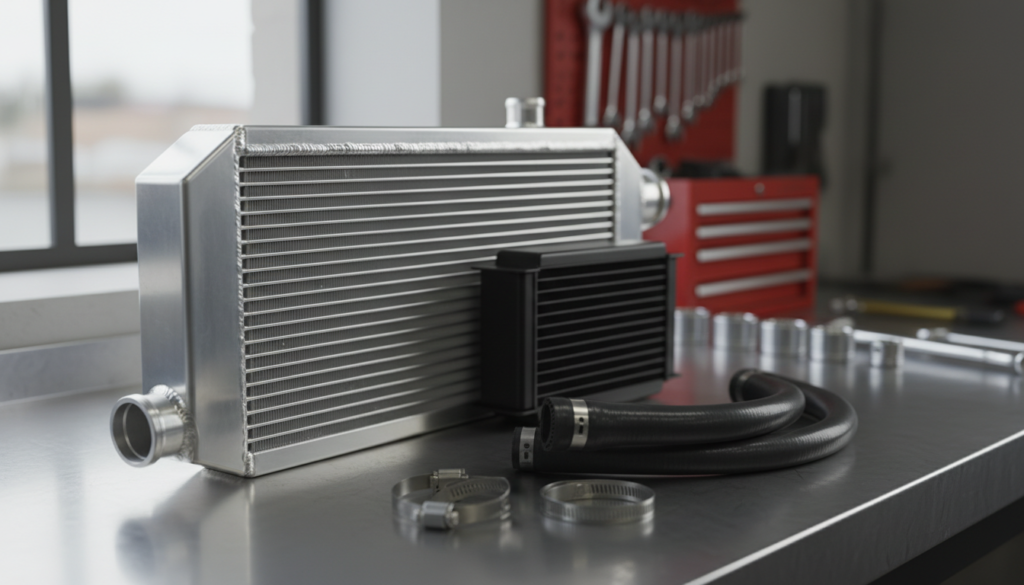
Most factory radiators use an aluminium core crimped to plastic end tanks. That construction is light and cheap to build, and it is fine for normal driving. The weak points are the plastic tanks and the crimped joint, which can crack or weep with age and repeated heat cycles. An aftermarket all-aluminium radiator typically uses welded or brazed aluminium tanks and a thicker core.
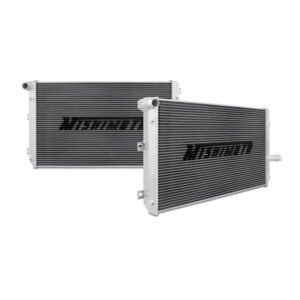
As an example, Mishimoto describes its MK7 Golf radiator as replacing a thin-core, plastic-tanked original with a fully aluminium unit using a 42 mm core, and quotes a substantial increase in core volume and fin surface area over stock. Those are the manufacturer’s own figures; how much lower your temperatures run will depend on airflow, ambient temperature, power level and how the car is driven.
Good reasons to fit an uprated radiator
- You have logged coolant temperatures rising steadily during track sessions with a healthy OEM system.
- Your tune has raised power substantially, especially on a turbo engine that also dumps heat into the coolant through the turbo and intercooling.
- The original radiator is old, leaking at the end tanks or has damaged fins, so you need a replacement anyway.
- You have fitted a larger front-mount intercooler that now sits in front of the radiator and reduces its airflow.
What an uprated radiator will not fix
- A failing water pump, stuck thermostat or blown head gasket.
- Poor airflow from a blocked grille, missing undertray or badly sealed ducting.
- High oil temperatures on an engine where oil, not coolant, is the limiting fluid.
Airflow deserves a special mention. A bigger intercooler in front of the radiator pre-heats the air reaching it, so intercooler and radiator upgrades are best planned together. Our front-mount intercooler guide covers sizing and packaging in more detail. When you are ready, browse aluminium radiators by vehicle.
Oil Cooler Kits: Why Oil Temperature Matters on Track
Engine oil does more cooling work than many owners realise. It carries heat from the pistons and bearings, and on turbo engines it also cools the turbo’s bearing housing. As oil gets hotter it thins, which reduces the protective film between moving parts, and sustained high temperatures can speed up oil breakdown.
Some popular track cars are known for this. HKS states that the GR86 and BRZ see oil temperatures above 130°C during laps of the Fuji short course, which is the reason it developed a dedicated kit. That is one manufacturer’s test on one circuit, but it illustrates why naturally aspirated cars that rev hard for long periods are common oil cooler candidates.
Why a thermostatic oil cooler matters in the UK
Overcooling is a real risk in a British winter. Oil that never reaches operating temperature stays thicker, adds friction and does not boil off moisture and fuel contamination effectively. Good kits solve this with a thermostatic sandwich plate between the oil filter and the block. Mishimoto explains that its thermostatic plate blocks flow to the cooler until the oil reaches activation temperature, with a standard 85°C thermostat and optional 71°C or 93°C alternatives. Other brands use different opening temperatures, so check the specification for the kit you choose.
Choosing an oil cooler kit
- Vehicle-specific kits include brackets, lines and an adapter designed for your engine, which makes fitting far simpler and routing safer.
- Universal coolers come in different row counts and fitting sizes; they suit custom builds but need careful planning of lines, mounting and airflow.
- Core size should match the heat you need to remove. Bigger is not automatically better on a road car that also does cold commutes.
- Location needs clean airflow and protection from stones, and lines must stay clear of exhaust, steering and suspension parts.
- Oil grade still matters. A cooler does not replace the right viscosity; see our guide to engine oil viscosity grades before you change oil.
Remember to add the extra oil capacity of the cooler and lines when you first fill and check the level after a short run. You can browse vehicle-specific and universal oil cooler kits in our range.
Silicone Radiator Hoses, Clamps and Thermostats
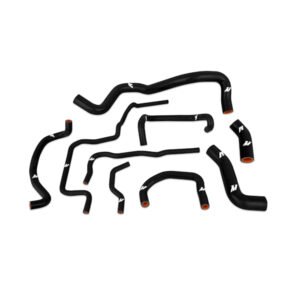
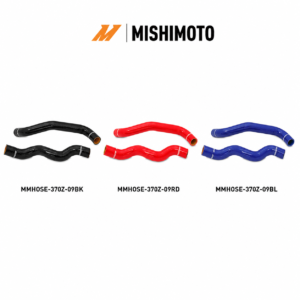
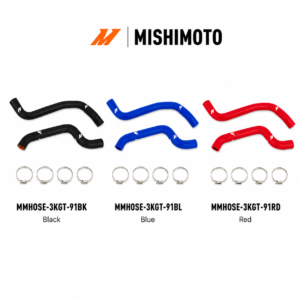
Rubber coolant hoses harden, swell and crack with age, and a soft hose can collapse under suction at high revs. Silicone hose kits are a popular replacement because silicone handles heat cycles well and is available in reinforced, multi-ply constructions. On their own they do not add cooling capacity, so treat them as a reliability upgrade rather than a temperature fix.
- Clamps: silicone can need different clamping than rubber. Many kits recommend T-bolt or quality worm-drive clamps; follow the hose maker’s advice and re-check tightness after the first few heat cycles.
- Fitment: check that the kit matches your exact engine and whether it covers heater and expansion-tank hoses as well as the main radiator hoses.
- Low-temperature thermostats: these open earlier and can help on some older engines and track cars, but they do not raise the system’s maximum heat rejection. On engines with electronically mapped thermostats or temperature-based fuelling, check compatibility with your tuner before changing it.
Coolant Choice and Additives
Coolant is easy to overlook. It does three jobs: it raises the boiling point, stops the system freezing and protects aluminium and other metals from corrosion. For UK road cars, use the coolant specification and mix ratio given by the manufacturer, and do not mix incompatible coolant types.
Some track drivers use wetting-agent additives, which are designed to improve heat transfer between metal and coolant. Products vary, so read the instructions closely: Motul, for example, specifies that its MoCool additive is mixed at a low ratio with distilled water and warns that it provides no antifreeze protection, which makes it unsuitable as a year-round solution for most UK road cars. Some race series also restrict what can be used in the cooling system, so check your championship regulations first.
Cooling Upgrades for Popular UK Tuned Cars
Every platform behaves differently, and fitment varies by year and engine code. Use the table below as a list of things to check rather than a promise of what your car needs.
| Vehicle family | What owners should check |
|---|---|
| VW Golf GTI / R Mk7, Audi S3 8V (EA888) | Condition of the original plastic-tanked radiator, coolant temperatures after Stage 2 tunes, and whether an uprated intercooler is restricting radiator airflow |
| Honda Civic Type R FK2 / FK8 / FL5 | Coolant and oil temperatures on longer sessions, hose condition on older cars, and whether the kit is listed for your exact generation |
| Toyota GT86 / GR86, Subaru BRZ | Oil temperature during track sessions, especially on newer 2.4-litre cars; thermostatic oil cooler options |
| Mazda MX-5 ND | Oil temperature on extended circuit use and kit compatibility with your model year |
| Ford Fiesta ST / Focus ST | Coolant temperature after remaps, hose condition, and thermostat housing condition on older models |
Examples from our range
- Mishimoto Performance Aluminium Radiator for the VW Golf MK7 TSI, GTI and R
- Tegiwa Aluminium Alloy Radiator for the Honda Civic Type R FK8
- COBB Radiator Hoses for the Honda Civic Type R FL5
- Mishimoto Oil Cooler Kit for the Toyota GT86 and Subaru BRZ
Always confirm the listed fitment against your car’s model year and engine code before ordering. If you are unsure, our team can check it for you.
Fitting Tips: Bleeding, Leaks and Bedding In
A cooling upgrade is only as good as its installation. Bleeding procedures and torque settings vary by manufacturer, so there is no universal process; follow the workshop manual for your car and the instructions supplied with the part.
- Bleed thoroughly. Trapped air causes hot spots and erratic gauge readings. Many cars have bleed screws or a specific heater-on, idle-and-top-up procedure.
- Re-use or replace sensors carefully. Make sure temperature sensors, fan switches and quick-release fittings transfer correctly to the new part.
- Check every joint after the first drive and again after the first few heat cycles. Silicone hoses and new clamps can settle.
- Protect the core. Front-mounted radiators and oil coolers are exposed to stones; mesh grilles help on track cars.
- Dispose of old coolant responsibly at a local recycling centre rather than down a drain.
MOT and Insurance: What UK Owners Need to Know
Cooling upgrades are generally low risk at MOT time, but leaks are still checked. The DVSA MOT inspection manual (section 8.4.1) states that coolant and screenwash leaks are not in themselves reasons for failure, but excessive leaks of fluids likely to harm the environment or pose a safety risk are a major defect, and continuous leaks posing a serious road-safety risk are dangerous. A weeping oil cooler line or fitting, for example, could fall under that, so fix leaks before your test.
Insurance is the other consideration. Insurers define modifications differently, and Auto Express reports that broker body BIBA advises drivers to tell their insurer if in doubt, because undisclosed modifications can put cover at risk. An OEM-style replacement radiator may not need declaring, but an oil cooler kit, front-end ducting changes or anything fitted alongside an engine tune almost certainly should be. Check with your insurer before fitting.
Engine Cooling Upgrade Checklist: Before You Buy and Fit
- Log coolant and oil temperatures over a full session to find which fluid is the problem.
- Rule out basics: old coolant, airlocks, damaged fins, failing fan, sticking thermostat or worn water pump.
- Confirm the part matches your exact model year, engine code and gearbox where relevant.
- Choose a thermostatic oil cooler for a car that also covers cold UK road miles.
- Plan radiator, intercooler and ducting together if you have a front-mount intercooler.
- Budget for fresh coolant, the correct oil quantity, clamps and any sensors or adaptors.
- Follow the manufacturer’s bleeding procedure and re-check for leaks after the first heat cycles.
- Declare the modification to your insurer if there is any doubt.
Frequently Asked Questions About Engine Cooling Upgrades
Is an aluminium radiator better than a standard radiator?
An aftermarket aluminium radiator can offer better durability and extra cooling capacity, depending on its core design, airflow and fitment. A larger radiator is not automatically necessary on a standard road car, though. It is most useful when the original cooling system is struggling under sustained load.
Do I need an oil cooler for a Stage 2 tuned car?
Not every Stage 2 car needs an additional oil cooler. Base the decision on measured oil temperatures, how you drive and the engine manufacturer’s recommendations. Regular track use makes an oil cooler more worthwhile than occasional road driving.
Do silicone radiator hoses improve cooling performance?
Silicone radiator hoses are mainly a durability and reliability upgrade. They replace ageing rubber hoses and cope well with repeated heat cycles when properly specified, but they do not directly increase cooling capacity or engine power.
Can a bigger radiator stop an engine overheating?
A larger radiator can help if the existing one cannot reject enough heat during sustained driving. It will not fix a failed water pump, trapped air, a faulty thermostat or a blocked cooling system, so diagnose the cause of overheating before buying upgrades.
Should I choose a thermostatic oil cooler for UK driving?
For a car that does both road and track miles, a thermostatic oil cooler is generally worth considering because it helps stop the oil running too cold in winter and normal driving. Choose a kit with the correct thermostat specification, fittings and compatibility for your engine.
Shop Radiators, Oil Coolers and Silicone Hoses
Pick the group that matches the problem you found in your temperature logs. The products below are examples for popular UK cars; always check the listed fitment against your model year and engine code.
Radiators: coolant temperature management

Shop all performance radiators
Oil cooler kits: track-focused oil cooling
Browse all engine oil cooler kits
Silicone hoses: reliability upgrades
Conclusion
Engine cooling upgrades are about consistency, not headline power. Measure first, fix the basics, then upgrade the part of the system that is actually running out of capacity: an aluminium radiator for coolant-limited turbo cars, a thermostatic oil cooler for oil-limited track cars, and silicone hoses where reliability is the concern. Planned this way, the work protects your engine and keeps the car performing on the last lap of the day as well as the first.
Browse our full range of heating and cooling upgrades at performancecarsparts.co.uk. Not sure which radiator or oil cooler fits your car? Contact our team on WhatsApp or by email with your registration and engine code, and we will help you choose the right parts.
Shop related performance parts

Explore related products
Always check the individual product listing for your vehicle and engine before ordering.