If your car feels vague through corners, moves around under braking or has ageing suspension bushes, replacing those small rubber components can make a surprisingly noticeable difference.
Powerflex bushes UK buyers will usually come across two main questions: are polyurethane suspension bushes better than standard rubber bushes, and which Powerflex range is right for a road, fast-road or track car?
This guide from Performance Car Parts UK explains what suspension bushes actually do, how polyurethane differs from conventional rubber, the advantages and compromises involved, and how to choose between Powerflex Road Series, Heritage Collection and Black Series products.
If you are already planning a handling upgrade, browse our performance suspension parts alongside this guide.
What Are Suspension Bushes?
Suspension bushes are flexible mounting components positioned between suspension arms, subframes, anti-roll bars, trailing arms and other chassis components.
Their job is more complicated than simply holding parts together. A bush has to locate the suspension component accurately while still allowing a controlled amount of movement. It also helps isolate vibration and harshness before those forces reach the vehicle body.
Factory bushes are commonly manufactured from rubber because it provides a useful balance of comfort, noise isolation, controlled flexibility and long service life in normal road use.
The compromise is that rubber can deform under load. As bushes age, crack or soften, that movement can increase and the suspension geometry may become less tightly controlled.
What Are Polyurethane Suspension Bushes?
Polyurethane suspension bushes, often called poly bushes, replace selected rubber bushes with components manufactured from polyurethane compounds.
Polyurethane can be formulated with different levels of stiffness. That means a manufacturer can design one compound for normal road use and another for much more demanding track or motorsport applications.
Powerflex says its road bushes are engineered to provide greater suspension control than normal rubber components while still retaining noise-absorbing properties. The manufacturer states that correctly engineered polyurethane bushes can be around 25–30% stiffer than new rubber equivalents in relevant applications. You can read Powerflex’s explanation on its official Why Polyurethane? page.
Polyurethane vs Rubber Bushes: Quick Comparison
| Feature | Standard Rubber Bushes | Polyurethane Bushes |
|---|---|---|
| Factory-style comfort | Excellent | Depends on compound and location |
| Suspension movement control | Designed with more compliance | Usually tighter |
| Steering and chassis response | Factory feel | Can feel sharper and more direct |
| Noise and vibration | Usually lowest | Can increase with harder compounds or certain mounting locations |
| Resistance to age-related softening | Rubber can deteriorate over time | Designed as a durable replacement |
| Fast-road use | Suitable | Often a popular upgrade |
| Track use | Can allow more movement | Harder performance compounds are available |
| Installation | Varies by vehicle | Varies by vehicle and bush design |
What Are the Benefits of Polyurethane Bushes?
1. Better Control of Suspension Geometry
When a suspension arm moves because the bush is flexing, the wheel’s alignment can change under load. A firmer bush can reduce unwanted movement and help keep the suspension closer to its intended geometry during cornering, acceleration and braking.
2. Sharper Steering Response
Replacing worn or very soft bushes can make steering inputs feel more immediate. This is particularly noticeable where bushes locate front lower arms, wishbones or other components that directly influence wheel position.
The improvement will depend on the original design and condition of the car. Replacing severely worn standard bushes with new standard rubber bushes can also produce a large improvement, so the comparison should not assume every polyurethane upgrade is replacing perfect new rubber.
3. More Consistent Behaviour Under Braking
Braking loads can place substantial force through front suspension and control-arm bushes. If those bushes deform excessively, the wheel can move relative to the chassis. A correctly specified performance bush can reduce that compliance and make the car feel more stable under hard braking.
If braking is another priority for your build, see our performance brake upgrades UK guide.
4. Improved Chassis Feel on a Fast-Road Car
On a well-maintained performance car, bushes are part of the connection between the driver, tyres and chassis. Firmer locations can help the car feel less delayed during quick direction changes, particularly when combined with suitable tyres, dampers and wheel alignment.
5. Useful Upgrade While Replacing Worn Bushes
If a suspension arm already needs to be removed because the original bush is worn, upgrading the bush at the same time can make financial sense. You are already paying for much of the labour required to remove and refit the component, so the difference in parts cost may be relatively small compared with doing the job twice.
What Are the Drawbacks of Polyurethane Bushes?
Polyurethane is not automatically the best material for every mounting point or every driver.
Potential Increase in NVH
NVH means noise, vibration and harshness. A stiffer mounting transmits forces differently from a soft rubber bush. Depending on the bush location, compound and vehicle, you may notice more road texture, drivetrain vibration or noise entering the cabin.
For a dedicated track car this may be acceptable. For a luxury daily driver, it may not be.
Incorrect Compound Choice
A common mistake is assuming the hardest bush is automatically the best. Suspension systems are designed with controlled movement. Eliminating compliance in the wrong place can reduce comfort and may not improve grip on uneven roads.
Installation Can Require Specialist Tools
Some bushes are straightforward to replace, while others require removal of the suspension arm and use of a press or specialist removal tools. Corroded bolts, seized sleeves and older suspension hardware can also increase installation time.
Always follow the manufacturer’s fitting instructions and torque specifications for the exact vehicle and component.
Powerflex Road Series vs Black Series
One of the most important decisions when buying Powerflex bushes is choosing the correct range.
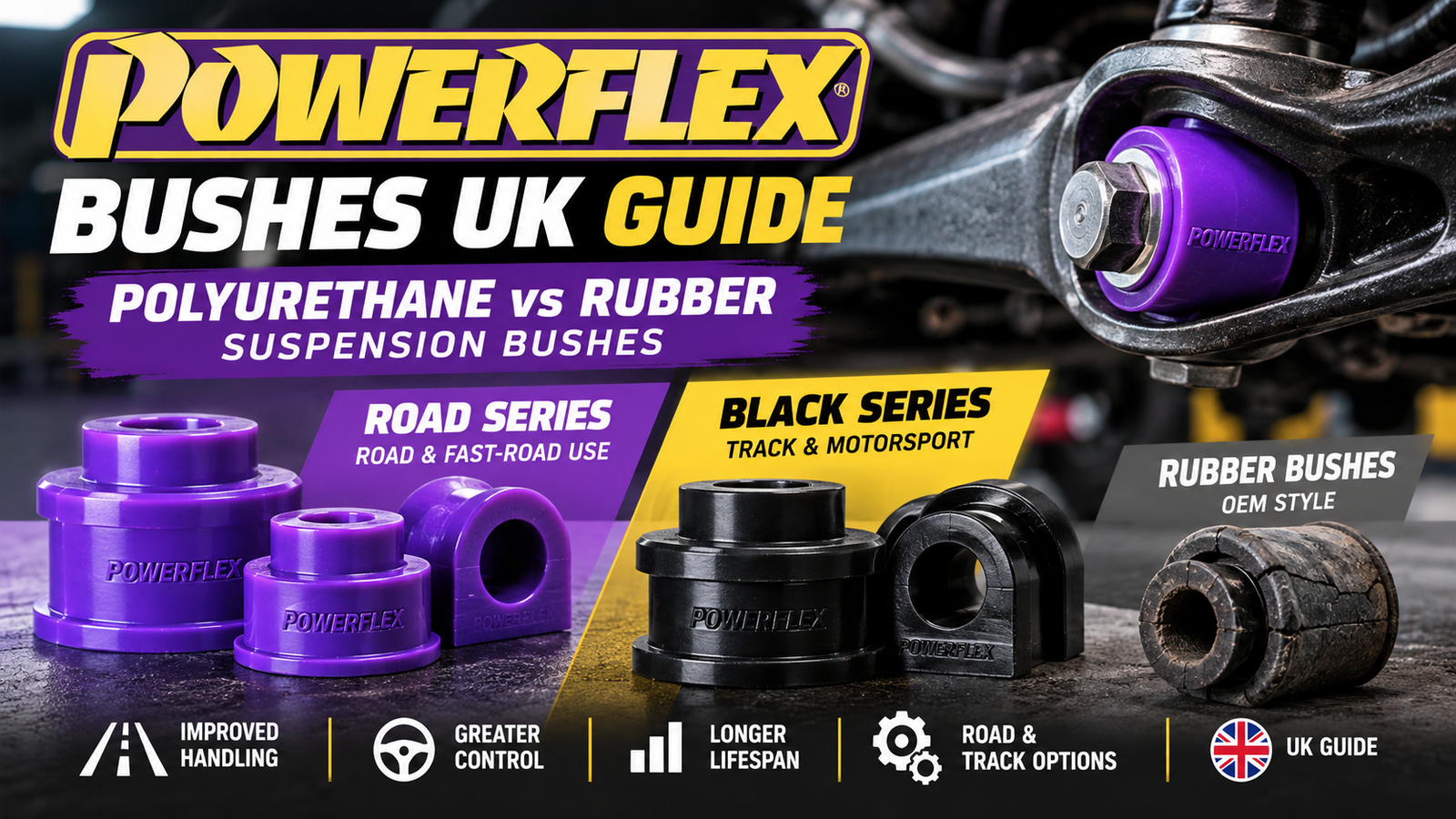
Powerflex Road Series
For most Powerflex bushes UK customers building a road or fast-road car, Road Series is the logical place to start.
Powerflex describes its Road Series as being designed for road and fast-road use.
The objective is improved control of unwanted suspension flex without turning a road car into a competition-only setup. Road Series is therefore the range most buyers should start with for daily-driven performance cars, fast-road cars, modified hot hatches, weekend sports cars and road cars receiving a suspension refresh.
Powerflex Black Series
Powerflex positions Black Series for track and motorsport use. The manufacturer states that the range uses a Black 95 Shore A compound to maximise control of chassis geometry.
That makes Black Series more relevant for track-day cars, race cars, time-attack builds, competition vehicles and cars where maximum geometry control takes priority over refinement.
You can compare the manufacturer descriptions of Road Series and Black Series on the official Powerflex website.
Powerflex Heritage Collection
The Heritage Collection is aimed at modern classics and collector vehicles. Powerflex uses a dark-grey appearance so the bushes look closer to conventional rubber while using modern polyurethane material. This can appeal to owners who want to improve or restore an older car without bright-coloured components changing the original-looking presentation.
Which Suspension Bushes Should You Upgrade First?
You do not always need to replace every bush on the car at once. For a road or fast-road build, targeting the bushes that most influence wheel location and chassis movement can provide a more cost-effective upgrade path.
Front Control Arm Bushes
Front control-arm or wishbone bushes can have a noticeable effect on steering response and braking stability because they help locate the front wheels. They are often a sensible place to start where the original bushes are worn or the vehicle is being prepared for harder road use.
Rear Trailing Arm Bushes
Trailing-arm bushes help control rear-wheel movement relative to the chassis. Worn rear bushes can contribute to a loose or delayed feeling from the rear of the car. A suitable polyurethane replacement can make the rear axle or suspension feel better located.
Anti-Roll Bar Bushes
Anti-roll bar mounting bushes are often relatively affordable and can be useful when the originals are worn. Because the anti-roll bar relies on its mounts to transfer force, excessive movement at the mounting points can reduce the immediacy of its response.
Subframe Bushes
Subframe bushes can produce a substantial change because they locate a large section of the suspension assembly. However, they can also require significantly more labour and may transmit more vibration depending on the design and material used.
Do Polyurethane Bushes Make a Car Handle Better?
They can improve the precision and consistency of the suspension, but it is important to understand what the bushes are actually doing.
Polyurethane bushes do not create additional tyre grip by themselves. Instead, they can reduce unwanted component movement so the tyres and suspension geometry work more consistently.
The complete handling package still depends on tyres, wheel alignment, springs, dampers, anti-roll bars, ride height and the general condition of the chassis.
If you are deciding what to upgrade first, read our Best First Car Mods UK guide.
Should You Fit Polyurethane Bushes With Coilovers?
Polyurethane bushes and coilovers do different jobs, but they can work together.
A coilover controls springing, damping and ride height. A bush controls how accurately suspension components are located at their mounting points.
Installing expensive coilovers while retaining severely worn suspension bushes can prevent the chassis from responding as precisely as it should. Equally, fitting very hard bushes to a car with poorly set-up dampers will not solve the underlying suspension problem.
If you are planning a suspension package, see:
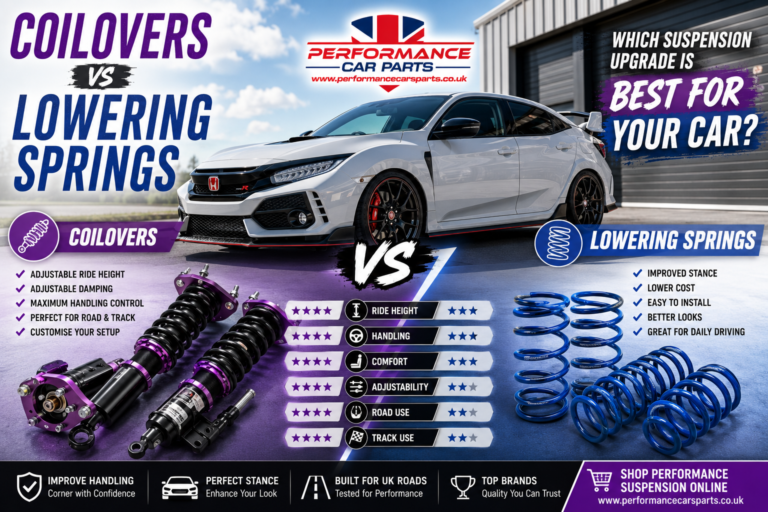
- Coilovers vs Lowering Springs UK
- Coilover Setup Guide: Ride Height, Damping and Corner Weights
- Shop Performance Suspension Parts
How Do You Know When Suspension Bushes Are Worn?
Possible symptoms include clunking or knocking over bumps, vague steering, movement under braking, uneven tyre wear, unstable wheel alignment, excessive visible movement in a suspension arm or joint, or a loose feeling from the rear suspension.
These symptoms are not unique to bushes. Ball joints, track-rod ends, wheel bearings, dampers, top mounts and other components can create similar behaviour, so the vehicle should be properly inspected before parts are ordered.
Can Worn Suspension Bushes Fail an MOT?
Yes, excessive wear can become an MOT issue.
The current GOV.UK MOT inspection manual includes suspension joints, pins and bushes within the suspension inspection. It states that an excessively worn suspension pin, bush, joint or bearing is a Major defect, while a component likely to become detached is classified as Dangerous.
The manual also makes an important distinction: compliant movement in a rubber or synthetic bush is not automatically a failure. Testers are instructed to assess serious deterioration and excessive wear rather than rejecting a correctly functioning flexible bush simply because it moves.
For the official requirements, see the GOV.UK MOT suspension inspection manual.
Do You Need a Wheel Alignment After Replacing Suspension Bushes?
It is sensible to check the alignment whenever bushes that locate suspension arms are replaced, particularly if the vehicle’s geometry can be adjusted.
Removing control arms, changing bush compliance or disturbing eccentric alignment bolts can change the final wheel position. A professional alignment is particularly important on a performance car because incorrect toe or camber can quickly undo the benefit of upgraded suspension components and can accelerate tyre wear.
Are Powerflex Bushes Worth It for a Daily Driver?
For the right application, yes.
A Road Series bush can be a sensible upgrade where you want more controlled suspension movement while retaining a car that is still primarily used on the road.
They are particularly worth considering when your original bushes are already worn, you are refreshing an older performance car, you have upgraded suspension and want tighter geometry control, or you want sharper response without turning the car into a dedicated race build.
For a comfortable standard road car with healthy original bushes, replacing every mounting with the hardest polyurethane option is unlikely to be necessary.
Are Powerflex Black Series Bushes Suitable for Road Cars?
Some Black Series applications may physically fit road-going vehicles, but fitment and suitability are not the same thing.
Powerflex explicitly positions Black Series for track and motorsport use. A harder compound can transmit more noise and vibration, and the additional stiffness may provide little advantage on a normal daily driver.
For most fast-road builds, Road Series is the more logical starting point unless there is a specific reason to use the motorsport compound.
Polyurethane Bushes vs Solid Mounts
Polyurethane bushes should not be confused with solid aluminium or spherical-bearing mounts.
A polyurethane bush still provides controlled compliance. A solid mount removes far more movement and can transfer considerably more vibration and impact into the chassis.
Solid or spherical mounting solutions can be appropriate in competition applications where geometry control outweighs comfort and service-life considerations, but they are not automatically a better choice for a road vehicle.
How to Choose the Correct Powerflex Bush
Always check the exact vehicle and suspension application before ordering. Similar models can use different control-arm designs, anti-roll bar diameters, subframes, bush dimensions, chassis revisions and performance packages.
For anti-roll bar bushes in particular, measure or verify the bar diameter rather than assuming every version of the vehicle uses the same size.
Use the product fitment information on Performance Car Parts UK, check the Powerflex application data and confirm the SKU where possible.
Powerflex bushes UK applications vary significantly between models, so always confirm the exact part number before ordering.
Frequently Asked Questions
Are polyurethane bushes better than rubber bushes?
They are better for some objectives, particularly reducing unwanted suspension movement and improving chassis response. Rubber usually offers greater compliance and refinement. The best material depends on the vehicle, bush location and intended use.
Do polyurethane bushes make the ride harsh?
They can increase noise or harshness depending on the compound and mounting location, but not every polyurethane bush produces a dramatic comfort penalty. Road-focused compounds are specifically designed to balance control with everyday usability.
Do Powerflex bushes need greasing?
Installation requirements vary by product. Use the lubricant and fitting method specified in the instructions supplied with the exact Powerflex bush rather than applying a generic rule to every component.
How long do polyurethane suspension bushes last?
Service life depends on vehicle use, installation, contamination, bush design and operating conditions. Polyurethane is widely chosen as a durable replacement material, but every suspension component should still be inspected periodically.
Are Powerflex Road Series bushes good for daily driving?
Yes. Powerflex specifically positions Road Series for road and fast-road use, making it the logical range for most daily-driven performance cars.
What is the difference between Powerflex Road Series and Black Series?
Road Series is intended for road and fast-road use. Black Series uses a harder motorsport-focused compound and is designed for track and competition applications.
Will new bushes fix uneven tyre wear?
Only if worn bushes are contributing to unwanted geometry movement. Uneven tyre wear can also result from incorrect alignment, tyre pressure, worn ball joints, damaged suspension or other faults. The cause should be diagnosed before parts are replaced.
Should I replace all suspension bushes at once?
Not necessarily. Many owners upgrade the most worn or influential locations first. A full refresh can make sense on an older restoration or dedicated performance build, but it increases cost and may change the car’s overall refinement.
Powerflex Bushes UK: Final Verdict
Powerflex bushes can be an effective suspension upgrade when they are chosen for the correct vehicle, mounting position and type of driving.
For a daily or fast-road performance car, Road Series is generally the most appropriate place to start. It is designed to reduce unwanted suspension movement while remaining suitable for road use.
For track and motorsport builds where maximum geometry control takes priority, Black Series offers the harder competition-focused alternative. Owners of modern classics can also consider the Heritage Collection where a more original-looking finish is desirable.
The key is not to replace every rubber component with the hardest bush available. Build the suspension as a system and choose each component according to how the car will actually be used.
Browse our performance suspension range, explore more performance car upgrades, or visit the Performance Car Parts UK shop to find parts for your next road, fast-road or track build.