Most performance air intake purchases get decided by sound. That is not a criticism; it is just an observation from years of watching enthusiasts choose a cone over a sealed box because the induction roar simply feels faster. But sound does not survive a fifth lap on track, two hours of stop-start summer traffic, or a proper data log. The deeper question is how your chosen setup handles heat, because heat soak may be what separates a setup that stays consistent from one that slowly fades.
This guide is not going to crown a single best air intake. There is no such thing. Instead, we will examine sealed cold-air and airbox setups, short ram and ram air cones, and panel filters through the lens of use case and verifiable data. You will learn what intake air temperature actually changes, how heat soak is proven versus merely plausible, how to log intake temperatures yourself, and what mapping, MOT, noise and insurance considerations apply in the UK. By the end, you should be able to match the intake to how you drive, not to how you hope the dyno sheet will look.
Why There Is No Best Air Intake, Only a Best Fit
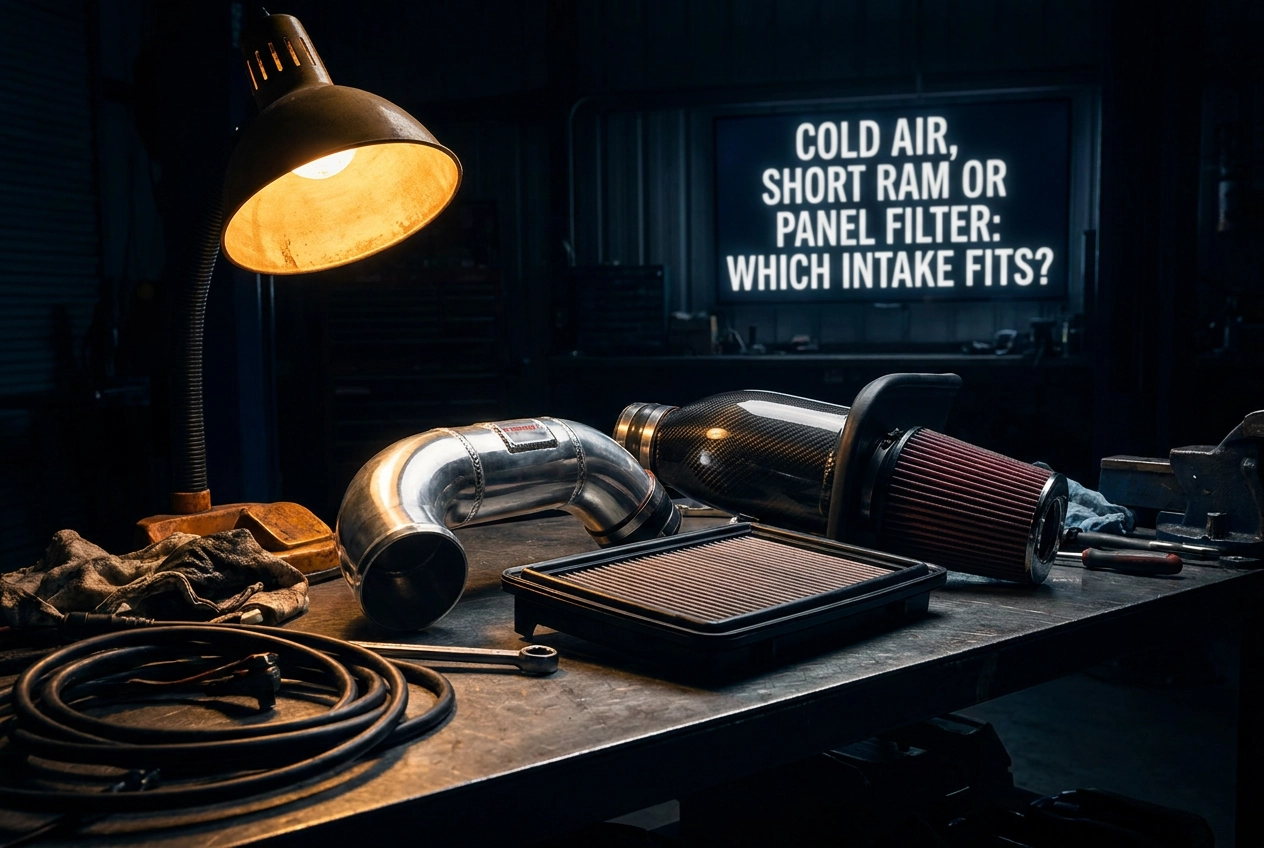
There is no best air intake, only a best fit for your duty cycle. A 20 minute commute, a summer queue on the M25 and a wet track evening place different demands on the same engine bay. The three candidates are a sealed cold-air airbox with a ducted feed, a short-ram or open cone with an exposed element, and a drop-in panel filter retained inside the factory airbox. This guide decides between them using four inputs: time spent stationary in traffic, track-day use, whether a remap follows, and whether you can log intake air temperature yourself. Sound often drives the purchase. Sound is a legitimate reason to spend money, but it is not a performance metric, and this guide keeps the two separate. It will not crown a winner, quote power figures it cannot verify, or pretend a dyno chart exists where it does not. It picks up where the earlier cold-air guide stopped and decides by use case and evidence. If you choose an oiled filter, follow the re-oil instructions precisely.
What Intake Air Temperature Actually Changes
Intake temperature is a recognised combustion variable. A 2025 SAE paper heated intake air to roughly 95°C in a light-duty CNG-diesel RCCI engine: CO and THC fell at low load but not intermediate load, NOx rose, stability improved, and low-load high-speed running triggered end-gas auto-ignition oscillation (SAE 2025-32-0003). Petrol research also studies charge temperature: a 2023 Scientific Reports paper examined intake temperature effects on NH3/gasoline co-combustion in a naturally aspirated high-compression engine. Heat is not always the enemy. A 1972 SAE paper (720935) describes quick-heat manifolds evaporating fuel after cold start and cutting CO before catalyst is hot; cold-start and hot-lap demands pull opposite ways. Heat accumulation is studied in engineering generally for economy and reliability, not for intake systems specifically. Mechanism: hotter air is less dense, so swept volume holds less oxygen mass. Check that mechanism on your own car rather than chasing a power figure; published tests of boxes, cones and panel filters are thin. The cold air intake vs short ram intake choice still needs your own temperature logs.
Sealed Cold Air and Airbox Setups: Consistency You Can Log
A sealed cold air setup is an enclosed filter housing fed by a duct routed away from the radiator and exhaust, usually from behind the front bumper or wing liner, so the air intake filter never breathes engine-bay air directly. Its real strength is repeatability: a shielded feed should hold intake temperature closer to ambient across a session, which is what separates lap one from lap five. It also tends to run quieter and look closer to factory.
The trade-offs are honest: higher cost than a panel filter, more fitting work (bumper removal, duct routing, bracket fitting), and some kits flow less at the very top of the rev range than a large open cone.
Before buying, check the Cold Air Intakes and Induction Kits range for lid and duct sealing, clamp and bracket rigidity, service interval, and whether the feed can swallow standing water or road spray. A low feed behind an unshielded arch liner is a winter liability.
Short Ram and Ram Air Intake Cones: Sound, Response and Heat Soak
The open-cone alternative trades that consistency for theatre: an exposed element on a short or medium tube, often ducted. The “ram air” name only means something if the kit has a forward-facing intake; otherwise it describes the look, not the physics.
Sound is the purchase justification, and that is legitimate. Induction roar, intake honk and dump-valve chatter change how a car feels more than a few horsepower. The trade-off is structural: an open element draws hot bay air once heat soaks during idling, queuing and slow laps. A cheap OBD reader can log the rise in twenty minutes.
Genuine ram pressure needs a forward-facing intake and builds with road speed, so at UK limits its contribution is likely small. A cone without ducting is not a ram air filter in any useful sense.
Fitting: check bonnet clearance and bracket rigidity, keep the MAF housing diameter standard unless you will rescale it, and add a heat shield plus feed pipe to approach sealed-airbox behaviour. Supra owners can start with the Toyota GR Supra A90/A91 performance parts page. Short and long tubes shift the torque curve slightly; neither fixes heat soak.
Panel Filters: The Honest Cheap Gain From a Performance Air Filter
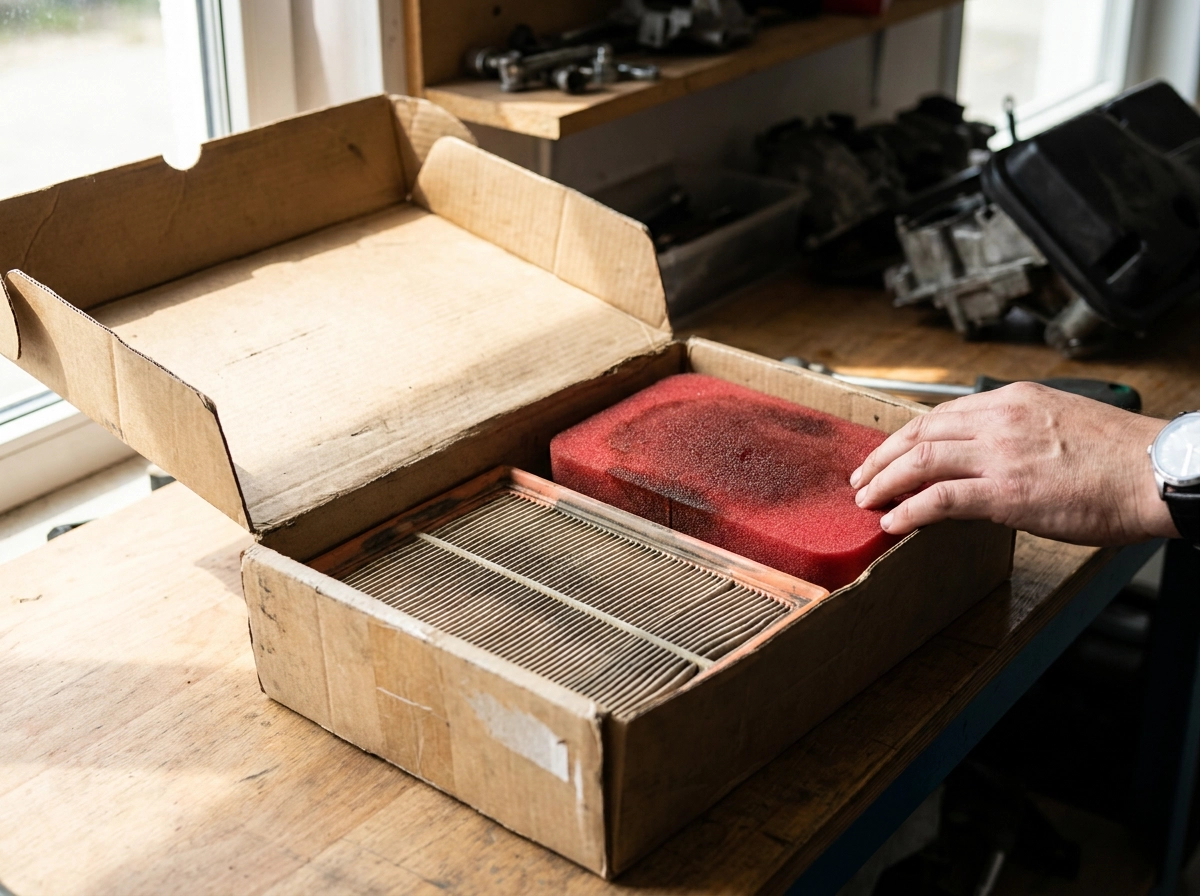
If the open cone’s heat-soak trade-off does not suit your driving, the panel filter is the low-risk alternative. It is a drop-in cotton-gauze or foam element that reuses the factory airbox, lid and cold feed, so you keep the sealed housing’s temperature behaviour for the price of a performance air filter. The gain is modest: you are improving flow through an element that was already adequate, while the airbox and intake tract remain the restriction. Expect a small airflow improvement, not a transformation. No independent dyno figure is quoted here. For a tight-budget daily driver, it is a defensible low-cost choice and the easiest to reverse. Maintenance matters more than marketing: over-oiling can foul a hot-film or hot-wire MAF sensor, causing rough running or fault codes. Follow re-oil instructions precisely and clean the MAF housing if idle quality changes. Best fit: standard looks, regular traffic, no remap, and a cheap-to-explain declared modification.
Choosing by Use Case: UK Roads, Summer Traffic and Track Days
Panel filter is the low-risk default; the rest depends on duty cycle. For UK commuting and summer traffic, choose the sealed cold-air airbox or keep the panel filter, since idling is where the open cone suffers most, as covered above.
On fast B roads, a cone with a heat shield and ducted feed is defensible; shielding and ducting separate a sorted setup from an impulse buy. For track days, favour the sealed feed. Session five matters more than session one, and a feed drawing outside the bay is designed to resist a rising intake temperature. Check the venue’s static and drive-by noise limits before booking.
If a remap follows, tell the mapper which intake is fitted; a calibration written for a sealed feed will not suit a bare cone, and a resized MAF housing needs rescaling. If you can log intake air temperature, buy from data. If not, default to sealed. Vauxhall owners can follow the Vauxhall performance parts guide for platform-specific upgrade paths. Performance Cars Parts lists force induction and engine parts and answers fitment questions by email and WhatsApp.
Heat Soak: What Is Proven, What Is Plausible, What Is Unverified
Having picked by duty cycle, separate what is evidenced from what is assumed for this comparison. The combustion effect of intake temperature and the cone’s exposure to bay heat are covered above, but thermal soak is measured in engineering generally, not in this exact comparison. Unverified: power loss, lap time and dyno figures for cold-air boxes, cones or panel filters are not established in published tests. The lap-five claim is a hypothesis, not a finding. It still matters because charge temperature can plausibly affect how much headroom a calibration has, which is why logging intake temperature before and after matters. Be fair to the cone: a well-ducted, shielded open element is closer to a sealed airbox than a bare filter on the throttle body. Outside air reaching the element matters more than the label. This is the test behind does a cold air intake make your car faster?.
Logging Intake Air Temperature to Prove Your Setup
Before you trust any number, find your sensor. Its location varies by car, and a basic OBD2 reader displays it as live intake air temperature data. Some cars report a modelled value rather than a measured one, so confirm what yours actually exposes before drawing conclusions.
Run the same route twice: a 10 to 15 minute loop ending with three minutes of stationary idling, where heat soak shows most clearly. Control the conditions, keeping ambient temperature, traffic and fuel load similar across runs.
Read three numbers, not one. How far intake temperature climbs at idle, how quickly it returns near ambient once moving, and the gap between intake and ambient after five minutes at a steady speed. That third figure is the cleanest single measure of whether your feed is doing its job. If it stays wide, the front-mount intercooler upgrade guide explains when charge cooling becomes the better spend.
On track, log the whole session and compare the first and last five minutes. A steady climb is the heat soak signature, and it turns an online argument into a decision about your own car.
Mapping and ECU Calibration After an Air Intake Change
Your logs tell you whether the feed works; calibration decides whether the ECU can exploit it. Without a remap, the standard calibration will usually cope with small airflow changes, so a panel filter or a well-behaved cone may need little calibration work. The gain stays small because the ECU is coping, not exploiting. With a remap, the file assumes an intake tract. Fit a different one and load calculations can shift, especially if MAF housing diameter or signal character changes, so tell your mapper exactly what is fitted. MAF scaling is not optional on kits that resize the housing. Skip it and you risk lean or rich running, poor drivability and fault codes that masquerade as sensor failures. The charge-temperature headroom discussed above is what a sealed feed protects. Fit the intake, drive it, log it, then map. Mapping around a soaked cone bakes in a compromise. Ask whether the file is intake-specific or a generic stage file.
MOT, Noise and Insurance Checks for UK Induction Changes
Once the calibration is settled, a few practical checks decide whether the setup is usable on UK roads and track.
MOT: check current gov.uk guidance on vehicle modifications and speak to your testing station before fitting anything, especially anything that relocates or removes emissions hardware. Emissions equipment should remain functional and intact.
Noise: venues may set static and drive-by limits. An open cone can add to whatever your exhaust produces, so measure before booking and keep the standard airbox if you are close to a limit.
Insurance: tell your insurer about the modification and check your policy wording, since undeclared changes can cause problems with a claim.
Never remove, bypass or disable an emissions control device to make an intake fit, and reject any kit that requires it. Keep low-level feeds clear of standing water, as noted earlier.
Clear those checks before finalising the specification.
The Decision Framework: Match the Intake to How You Drive
With compliance settled, choose by duty cycle, as set out in Choosing by Use Case.
- Track days or heavy summer traffic: sealed cold-air airbox with a ducted feed.
- Sound is the goal and you will do the supporting work: open cone with a proper heat shield and cold-air pipe.
- Honest cheap gain, standard looks, tight budget: panel filter in the factory airbox, maintained properly.
Conclusion
There is no universal best air intake, only the setup that matches your duty cycle, so log intake temperatures on your normal route and let your own data settle what the internet cannot.
Shop related performance parts

Explore related products
Always check the individual product listing for your vehicle and engine before ordering.