







Few cars inspire the kind of devoted ownership that the Mazda MX-5 does. Whether you’re chasing sharper lap times, rebuilding a high-mileage roadster, or simply keeping your pride and joy running at its best, knowing where to source quality MX-5 parts is one of the most valuable skills you can develop as an owner.
The UK market offers a surprisingly broad landscape of suppliers, specialists, and performance brands, but navigating it without guidance can mean wasted money, fitment headaches, and components that fall short of expectations. That’s where this guide comes in.
We’ve put together a comprehensive breakdown covering everything from trusted mx5 parts suppliers and OEM replacements to performance upgrades worth your investment. You’ll discover how to identify reputable sources, understand the difference between budget and premium components, and make smarter purchasing decisions that genuinely improve your driving experience. Whether you own an NA, NB, NC, or ND, this guide gives you the practical knowledge to spend confidently and build the MX-5 you’ve always wanted.
Understanding MX-5 Generations: NA, NB, NC, and ND
The Mazda MX-5 has been in continuous production since 1989, and understanding which generation you own is the single most important step before sourcing any mx5 parts. The four generations are clearly defined: the NA ran from 1989 to 1997, the NB from 1998 to 2005, the NC from 2005 to 2015, and the ND from 2015 to the present. Each represents a distinct chassis architecture, engine family, and parts ecosystem. Treating them interchangeably when ordering components is one of the most common and costly mistakes an MX-5 owner can make, leading to fitment failures and the inconvenience of returns.
A critical consideration for UK buyers is that all four generations were sold in right-hand drive (RHD) configuration across the British market. This matters because many aftermarket parts catalogues, particularly those from US-based suppliers, are built around left-hand drive Miata specifications. Steering racks, column assemblies, engine bay ancillaries, and exhaust routing can differ between RHD and LHD applications. Always confirm explicit RHD compatibility before completing any purchase. You can explore generation-specific guidance at the Miata community forums to better understand how these differences play out in practice.
The NA and NB are often described by enthusiasts as essentially the same car underneath, sharing Mazda’s B-series four-cylinder engine family and broadly similar suspension geometry. This means a meaningful number of performance upgrades, including certain suspension components and drivetrain parts, cross over between these two generations. The NC, however, was built on a completely different platform shared with the RX-8, making it incompatible with NA and NB parts. The ND sits on Mazda’s Skyactiv platform and is equally independent.
With model years catalogued from 2003 through to 2026, parts demand spans an impressively wide vintage range. The aging NA and NB fleet, now between 21 and 37 years old, is driving particularly strong demand for preventive maintenance components such as cooling system parts, ignition components, and suspension bushings. Before purchasing anything, confirm your exact generation, model year, and trim level. This one step consistently saves time, money, and avoidable frustration.
Suspension and Handling Upgrades
The suspension system is where the MX-5’s legendary handling character either flourishes or falls flat, and targeted upgrades here deliver some of the most satisfying improvements you can make to the car.
1. Coilovers
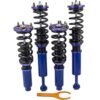
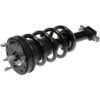
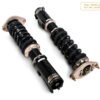
Coilovers represent the single most impactful handling upgrade available across all four MX-5 generations. By allowing independent adjustment of ride height and damping force, a quality coilover kit lets you tailor the car’s behaviour precisely to your intended use, whether that is a comfortable fast road setup or an aggressive track configuration. Generation-specific fitment is well established in the aftermarket, with dedicated kits available for NA/NB and separate units engineered for the NC and ND chassis. Brands such as Bilstein, KW, and BC Racing all produce MX-5-specific options that account for the different suspension geometry across generations. Upgrading your Miata’s suspension transforms how the car responds mid-corner, reducing body roll and improving driver confidence considerably.
2. Uprated Anti-Roll Bars
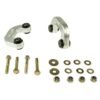
Uprated anti-roll bars are particularly effective on the NA and NB, where the standard setup is notably soft by contemporary standards. Fitting a stiffer front bar reduces body roll through corners without the ride quality penalties associated with simply raising spring rates. A common street-oriented approach is to fit an uprated front bar while retaining a milder rear bar, preserving the MX-5’s natural balance without tipping it into aggressive oversteer territory.
3. Strut Tower Braces
On older NA and NB models, body flex is a measurable factor that softens steering precision over time. A strut tower brace ties the front suspension turrets together, stiffening the front chassis and delivering a more consistent, direct steering response. The improvement is immediately noticeable on tighter corners where chassis rigidity matters most.
4. Polyurethane Bush Kits
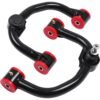
High-mileage NA, NB, and NC cars almost universally suffer from worn rubber bushes that introduce vagueness into the steering and suspension response. Replacing these with polyurethane alternatives restores the original suspension geometry and eliminates the imprecision that accumulates over years of road use. The range of Miata suspension kits and components available confirms that bush replacement is well supported across all generations.
5. Road vs. Track: Getting the Setup Right
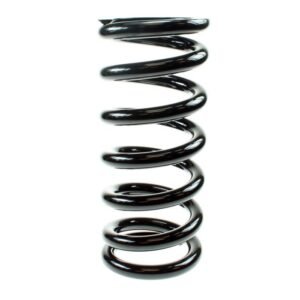
For UK drivers, the intended use case should drive every suspension purchasing decision. Daily road use on British B-roads calls for softer spring rates and more compliant damper settings, while a predominantly track-focused build benefits from stiffer rates that suit smooth circuit surfaces. Spring rates in the range of 6 to 8 kg/mm front and rear are commonly cited as a balanced fast road starting point for the NA and NB, whereas dedicated track builds often run significantly higher. Define your use case clearly before specifying components, as the wrong setup will compromise both performance and comfort simultaneously.
Brake Upgrades for the MX-5
The braking system on any MX-5 deserves the same attention you would give suspension or engine upgrades, particularly if the car sees any track or spirited road use. Fortunately, there is a logical upgrade path that suits every budget and use case across all four generations.
1. Uprated Brake Pads
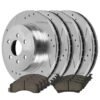
Performance brake pads are consistently the highest-value entry point for any MX-5 owner. Compared to standard OEM compounds, quality performance pads maintain friction levels far more effectively under repeated hard braking, where heat build-up causes stock pads to fade noticeably. For NC owners running sprints or occasional track days, compounds such as Gloc and PFC08 are well regarded within the community. The key is choosing a pad that suits the intensity of your driving rather than simply selecting the most aggressive compound available.
2. Grooved Performance Brake Discs
Slotted or grooved discs work alongside upgraded pads to manage the heat generated during hard use. The slots allow gas and debris to escape from the pad-to-disc interface, maintaining consistent bite and reducing fade under sustained braking. This is a known weak point on NC and ND models pushed hard on track days, where standard discs struggle with repeated heavy stops. Fully drilled discs, while visually popular, carry a higher risk of thermal cracking under track conditions; slotted is the more reliable format for performance use. You can find detailed guidance on choosing between these options in The Ultimate NA & NB MX-5 Brake Upgrade Guide.
3. Braided Stainless Steel Brake Lines
Rubber brake lines expand under high pedal pressure, introducing vagueness and inconsistency into the braking response. On NA and NB cars, where original rubber hoses may be over 20 years old, degradation adds further risk through potential cracking. Braided stainless steel lines eliminate expansion entirely, delivering a firmer and more predictable pedal feel from the first press. This is one of the most cost-effective upgrades available and a sensible safety measure on any aging MX-5.
4. Big Brake Kits for NA and NB Track Use
For owners taking NA or NB cars into more demanding track environments, a big brake kit offers a step-change in thermal capacity and stopping consistency. Larger callipers with forged aluminium construction reduce unsprung weight compared to cast-iron OEM units while enabling more precise threshold braking. Before purchasing, always verify calliper clearance against your wheel diameter and spoke design, as larger callipers require sufficient spoke clearance to fit without fouling.
5. Matching Compound to Use Case
This is the most overlooked element of any brake upgrade. A high-friction track compound requires sustained heat to reach its operating window. On cold UK public roads, that temperature is rarely achieved, meaning the compound delivers less grip than standard pads during everyday driving and can noticeably extend stopping distances. Always select a road compound for daily or mixed use, and reserve aggressive track compounds for cars used exclusively or predominantly on circuit. The Mazda MX5 Owners community discussion on cost-effective brake setups reinforces this point clearly, with experienced drivers consistently emphasising use-case matching over outright compound specification.
Exhaust Systems and Headers
The exhaust system is one of the most rewarding areas to upgrade on any MX-5, combining genuine performance gains with a more characterful driving experience. Understanding the distinct upgrade options available, and how they apply to your specific generation, will help you make an informed purchasing decision.
Cat-back exhaust systems represent the most popular exhaust upgrade across all four MX-5 generations, and with good reason. A cat-back replaces everything from the catalytic converter outlet rearward, improving exhaust flow without touching the emissions equipment. The result is a more purposeful exhaust note, a modest improvement in power delivery through the rev range, and no requirement for engine management recalibration. UK owners discussing options on the MX5 Owners Club forum consistently highlight brands such as Scorpion, Cobra Sport, Cobalt, and Racing Beat as the most respected choices for street use. Budget realistically: credible quality in the UK market sits in the £450 to £630 range, with sub-£300 options generally considered poor value by experienced owners.
Performance headers, also known as exhaust manifolds, attack exhaust gas scavenging directly at the engine. By improving the efficiency with which spent gases are drawn out of the cylinders, a well-designed performance header delivers the largest power gains available from any single exhaust modification. Installation is more involved than a cat-back fitting, typically requiring the removal of heat shielding and careful torquing to avoid gasket failure, so factor in professional fitting costs if you are not confident working close to the engine. For ND owners specifically, a header-back exhaust system from the 2016+ Miata catalogue covers the full exhaust run from the manifold outlet rearward, representing the most comprehensive single exhaust upgrade available.
Decat pipes remove the catalytic converter entirely, freeing up exhaust flow significantly. This modification is strictly for dedicated track cars. Removing a catalytic converter from a road-registered vehicle renders it non-compliant with UK emissions regulations and will result in an MOT failure, so this option should only be considered if the car will never again be used on public roads.
RHD fitment compatibility is a critical purchasing consideration that UK buyers frequently overlook. The exhaust routing geometry on right-hand-drive MX-5s differs from JDM and USDM market variants in certain generations, meaning a system listed generically as fitting a particular model year may not align correctly without modification. Always confirm explicitly that any exhaust component is specified for right-hand-drive fitment before purchasing. The BOFI Racing Mk1 and Mk2 exhaust compatibility guide is a useful reference point for NA and NB owners navigating this compatibility landscape.
NC and ND owners benefit from a broader range of aftermarket exhaust options than their NA and NB counterparts, a direct consequence of higher global production volumes for the later generations. That said, the classic generations retain solid aftermarket support from specialist suppliers, meaning no MX-5 owner should struggle to find quality exhaust components suited to their car.
Engine and Ignition Components
Keeping the engine and ignition system in good health is fundamental to the MX-5 experience, and this is an area where proactive maintenance pays genuine dividends, especially on higher-mileage NA and NB examples.
1. Ignition Coils
Ignition coil failure is one of the most widely discussed issues among MX-5 owners running older generations. On NA and NB models, degraded coils produce familiar symptoms: persistent misfires, noticeable power loss across the rev range, and worsening fuel economy. The NB facelift coil pack is particularly noted within the community as a weak point, with forum members consistently flagging it as a priority replacement on cars beyond 80,000 miles. A useful comparison of NA versus NB ignition coils illustrates how compatibility between model years is frequently misunderstood, making correct part identification essential before purchasing. Proactive replacement, rather than waiting for a failure, is the sensible approach for any high-mileage car. Community discussion confirms that OEM sourced units can command significant premiums, reinforcing the value of a quality aftermarket alternative from a trusted UK supplier.
2. Spark Plugs
Spark plugs should be treated as a regular service item rather than an afterthought. On cars driven enthusiastically, upgrading to iridium-tipped plugs is a worthwhile step, as the finer electrode delivers more consistent spark ignition across the full rev range and maintains performance for longer intervals than standard copper plugs. NGK and Denso both produce well-regarded iridium options suited to BP and MZR engines across all four MX-5 generations.
3. Sensors: CAS, Cam, and Oxygen
Crankshaft angle sensors, cam position sensors, and oxygen sensors are frequent culprits behind rough running and check engine lights on NA and NB cars. Symptoms often overlap with coil or plug faults, complicating diagnosis. Sourcing replacement sensors from a reputable UK-based supplier such as Performance Cars Parts ensures you avoid the inconsistent tolerances and premature failures associated with low-grade pattern parts.
4. Induction Kits and High-Flow Air Filters
High-flow air filters and short ram or cold air induction kits are among the most accessible modifications available across all MX-5 generations. They reduce intake restriction, sharpen throttle response, and typically deliver modest but real power gains without requiring specialist tools or tuning. They represent an ideal starting point for owners new to modifying.
5. NC VVT Components
On NC models equipped with the 2.0-litre MZR engine, the variable valve timing solenoid is a recognised service item. Sluggish low-rpm response and hesitation on light throttle are the clearest indicators of a solenoid beginning to fail. Inspecting and replacing this component as part of a scheduled service prevents the more significant running issues that develop when it is left unaddressed.
Cooling System Parts
The cooling system is one of the most age-sensitive areas of any MX-5, and neglecting it carries real consequences across all four generations.
1. Thermostats (NA and NB)
On NA and NB models now well into their second and third decades, the original thermostat should be treated as a time-limited component rather than a fit-and-forget part. A stuck-open thermostat prevents the engine from reaching proper operating temperature, hurting fuel economy, oil performance, and wear rates. A stuck-closed unit is more immediately dangerous, causing rapid overheating that can warp the cylinder head. Sourcing OEM-spec replacements for 1.6-litre and 1.8-litre engines requires care, as the thermostat gasket is a separate item and must be ordered alongside the main unit. Keeping a spare thermostat on the shelf is increasingly sensible given how old these cars now are.
2. Performance Radiators (NC and ND Track Use)
Factory radiators on the NC and ND are adequate for road use but can struggle under the sustained thermal load of track driving. A performance radiator with an increased core thickness improves heat rejection capacity meaningfully, giving greater headroom before coolant temperatures become a concern. This is a worthwhile investment for any MX-5 used regularly at circuit days.
3. Coolant Hoses (NA and NB)
Coolant hoses on first and second-generation cars are now over 20 years old in most cases. Inspect for cracking, swelling, and softness at fittings as a minimum. At 80,000 miles or above, or where age is the primary concern, replacing the full hose set in one job is strongly recommended. The BOFI Racing cooling guide for NA/NB MX-5s covers this in useful detail and is worth consulting before purchasing.
4. Water Pump (NA and NB)
Water pump failure is a well-documented cause of overheating on high-mileage NA and NB cars. Because the water pump shares a service interval with the timing belt, replacing it during that job adds little additional labour cost while eliminating a significant failure risk. Community consensus is clear on this point: if the timing belt is coming off, the water pump should come out with it.
5. Oil Cooler Kits (All Generations, Track Use)
During extended high-rpm track sessions, oil temperatures can rise to a point where viscosity degrades noticeably, increasing wear across the engine. An oil cooler kit addresses this directly, maintaining stable oil temperatures regardless of how hard the car is being driven. This upgrade is relevant across all generations and is particularly worthwhile on any MX-5 built specifically for circuit use.
Force Induction: Supercharger and Turbo Options
Forced induction is one of the most transformative upgrades available to any MX-5 owner, and the platform rewards this type of modification well when the build is approached methodically. The NA and NB generations, running the 1.6-litre and 1.8-litre B-series engines, remain the most popular foundations for forced induction conversion. Specialist suppliers offer dedicated turbocharger and supercharger kits for these platforms, with the B-series engine’s relatively simple architecture and established tuning knowledge base making it a forgiving canvas for either route. The NB MK2.5 variant with the VVT head is particularly noted within the community for its strong gas flow and low-down torque, though its higher compression ratio does demand careful management of boost pressure to preserve reliability.
The choice between supercharging and turbochargingis not simply about peak power figures. Supercharger kits are widely regarded as the more road-friendly option, delivering smooth, linear power from low rpm without the pronounced power band associated with turbo setups. This characteristic suits the MX-5’s balanced, driver-focused nature, keeping throttle response predictable and progressive whether you are navigating a B-road or covering motorway miles. For owners who want meaningful performance gains without fundamentally altering the car’s drivability, a supercharger conversion is typically the more refined choice.
Turbocharger conversions, by contrast, tend to produce higher peak power figures on the B-series engine, with purpose-built turbo kits available for NA, NB, NC, and ND models targeting outputs from 250bhp upward depending on specification. However, this power increase comes with greater demands on the supporting hardware. Fuelling, intercooling, and cooling upgrades are not optional additions; they are prerequisites for a reliable build. Running insufficient fuel delivery under boost is one of the most common causes of engine damage in forced induction conversions, making component selection critical.
Regardless of which route you choose, the same core supporting parts list applies to any forced induction build. An uprated fuel pump, larger fuel injectors sized appropriately for your target power output, a front-mount or top-mount intercooler, and a capable engine management solution are all essential. Whether you opt for a standalone ECU or a piggyback system, accurate fuelling calibration under boost conditions is non-negotiable. Supercharger kits for the ND platform are also now available, with outputs reaching up to 250bhp from specialist-developed kits, though ND owners must approach this with additional caution. The 2.0-litre Skyactiv-G engine in the ND operates to tighter manufacturing tolerances than the B-series, with a more complex fuelling and management architecture. Professional installation and calibration are strongly advisable for any ND forced induction project, as the margin for error is considerably narrower than on earlier generations.
MX-5 Preventive Maintenance Parts by Mileage
Preventive maintenance is where MX-5 ownership becomes a long-term investment rather than a series of costly surprises. Structuring your parts replacement around clear mileage milestones takes the guesswork out of keeping the car in peak condition.
At 50,000 Miles
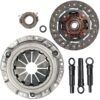
This is the first major service checkpoint where multiple systems converge. Brake pads and discs should be inspected and replaced as necessary, and a full brake fluid flush is non-negotiable at this stage; DOT 4 fluid absorbs moisture over time, reducing the boiling point and creating real fade risk under hard driving. Spark plugs fall due around 60,000 miles, so inspection at 50,000 is prudent, and fitting NGK or Denso OEM-specification plugs at this point eliminates any risk of misfiring or catalytic converter damage from incorrect heat range. The air filter should be renewed, as a restricted filter measurably reduces power on the MX-5’s naturally aspirated engines. Coolant hoses are worth a careful visual inspection here; early cracking or softness at the joints is a reliable indicator that replacement should not be deferred. Clutch wear is also worth assessing, particularly on higher-revving examples driven enthusiastically, as catching a worn clutch before complete failure avoids a significantly larger repair bill.
At 80,000 Miles
This milestone is critical for NA and NB owners and should be treated with absolute seriousness. Both generations use interference engines, meaning a failed timing belt causes immediate valve-to-piston contact and catastrophic internal damage. Mazda’s official interval for the NB is 80,000 miles or 8 years, whichever arrives first, and independent specialist costs typically run between £350 and £500 for the full job. Because the labour to access the timing belt also exposes the water pump, tensioner, and idler pulley, replacing all three components simultaneously is standard practice; the incremental parts cost is modest relative to the labour already committed. Coolant hoses should be replaced as a full set at this interval, and the thermostat renewed while the cooling system is already disturbed. A differential inspection for leaks or unusual noise rounds out this service. NC and ND owners can note that both generations use timing chains, removing this particular deadline from their schedule.
At 100,000-Plus Miles
A full suspension bush refresh delivers the most noticeable improvement to chassis feel on any high-mileage MX-5. Both polyurethane and OEM rubber options are viable; polyurethane offers greater longevity and precision, while OEM rubber preserves the original compliance. Ignition coils on NC models are a known wear item and should be replaced preventively at this mileage rather than waiting for a misfire fault. Any sensor with a fault history logged against it should be renewed as a matter of course. A full brake system overhaul, including the fitment of braided stainless steel brake lines, is a worthwhile investment at this point, improving pedal feel and eliminating the risk of rubber hose degradation causing pressure loss. You can review Mazda’s official scheduled maintenance guidance for generation-specific intervals as a baseline reference.
Age Matters as Much as Mileage
For NA and NB owners in particular, calendar age should run alongside the mileage schedule. Rubber components, coolant hoses, and seals degrade through oxidation and heat cycling regardless of distance covered. A low-mileage NA that has sat for years may have hoses and seals in worse condition than a well-maintained higher-mileage example. In 2026, with UK repair culture firmly favouring keeping vehicles on the road longer, the economics of proactive parts replacement are clear; spending on quality preventive maintenance components costs a fraction of breakdown recovery and emergency engine repair combined.
Buying MX-5 Parts in the UK: What to Check Before You Order
Sourcing mx5 parts in the UK involves more than finding the right component at the right price. Getting the buying process right before you order saves time, money, and the frustration of receiving a part that simply does not fit.
1. Always Confirm RHD Fitment
UK-specification MX-5s are right-hand drive, and while a large proportion of performance and maintenance parts are side-agnostic, several categories are not. Steering column assemblies and associated brackets, certain exhaust systems where routing differs between LHD and RHD configurations, and specific engine bay brackets all require RHD-confirmed fitment. The risk is particularly relevant when sourcing from retailers whose default market is left-hand drive. A reputable UK-based retailer will state RHD or universal fitment clearly on each product listing, removing any ambiguity before you commit to a purchase.
2. OEM Versus Aftermarket: Know Where It Matters
For safety-critical components, established aftermarket brands with published test data and clear fitment specifications are the reliable choice. Brakes and suspension are the two categories where brand provenance and documented performance data matter most, especially on a car driven with enthusiasm on track or fast roads. Cheap unbranded pattern parts carry meaningful quality risk in these areas. For non-structural components such as rubber trim seals or interior clips, the calculus is different, and budget options are broadly acceptable.
3. Live Stock and Fast UK Dispatch
The 2026 UK aftermarket standard is real-time stock visibility combined with next-day or two-day delivery. Buying from a UK-based online retailer such as performancecarsparts.co.uk avoids the extended lead times and potential import duty complications that come with sourcing parts from outside the UK. When a car is off the road awaiting a part, extended customs delays are a genuine operational problem, not just an inconvenience.
4. Verify Generation and Model Year Compatibility
Parts are not interchangeable across NA, NB, NC, and ND generations, and there are meaningful year-by-year specification changes within individual generations. Always cross-reference your specific model year and engine code before ordering. Use a supplier whose catalogue includes clear compatibility information at the listing level rather than requiring you to verify fitment through a separate enquiry.
5. Customer Support Quality
MX-5 owners regularly have technical fitment questions, particularly around cross-generation compatibility and RHD-specific applications. Access to knowledgeable, direct support via email or WhatsApp, as offered by performancecarsparts.co.uk, is a practical advantage. Generic ticketing systems with slow response times add unnecessary delay when you need a clear answer before placing an order.
Keeping Your MX-5 at Its Best: Key Takeaways
- Know your generation before you buy. Whether you own an NA, NB, NC, or ND, confirming your exact model year and RHD fitment compatibility is the essential first step. UK-spec cars have specific requirements that differ from US or Japanese domestic market vehicles, and skipping this check is the most common cause of fitment errors.
- Focus your budget on high-impact upgrades first. Suspension, brakes, and exhaust consistently deliver the most noticeable performance improvements relative to cost across all MX-5 generations. These three areas transform how the car feels and behaves before you consider engine or forced induction work.
- Follow a mileage-based maintenance schedule. NA and NB models are now over 20 years old, making proactive replacement of cooling components, ignition parts, and sensors essential to avoid preventable failures. Age-based deterioration compounds quickly on cars used regularly.
- Buy from a specialist with clear compatibility data and live stock information. Accessible technical support protects your investment and eliminates guesswork at the point of purchase.
- Browse the full MX-5 parts range at performancecarsparts.co.uk, covering brakes, suspension, exhaust, engine, and cooling components, with UK dispatch and direct support available via email and WhatsApp.
Conclusion
Owning an MX-5 is a rewarding experience, and keeping it performing at its best starts with making smart parts decisions. To recap the key takeaways: always prioritise reputable UK suppliers with proven track records, understand the difference between OEM, OEM-equivalent, and budget components before buying, invest in performance upgrades that genuinely suit your driving goals, and never overlook fitment compatibility across NA, NB, NC, and ND generations.
The knowledge you bring to every purchase directly impacts your safety, performance, and enjoyment behind the wheel.
Now it is time to put this guide to work. Browse trusted MX-5 specialists, compare your options carefully, and start building the roadster you have always wanted. Your perfect MX-5 is only a few quality parts away.
