You have had the car remapped, perhaps added a downpipe or an intercooler, and it pulls harder than ever. Then, a few weeks later, it starts to stutter at the top of third gear, the engine light flickers, or the idle feels lumpy on a cold morning. On a tuned turbo engine, the ignition system is often the first thing to show it is working harder than the factory intended, and the humble spark plug sits right at the centre of that story.
Choosing spark plugs for tuned engines is not just a case of buying the most expensive iridium set you can find. Heat range, gap, condition, installation torque and the health of the ignition coils all play a part, and the right answer depends on how much power you are making, how the car is mapped and how you drive it. Get it right and the engine stays crisp and consistent. Get it wrong and you can end up with misfires, fouled plugs or, in the worst case, a plug running hot enough to cause engine damage.
This guide explains what heat range really means, when a colder spark plug makes sense, how the spark plug gap for boost is usually approached, when uprated ignition coils are worth it, and what a misfire after a remap means for your MOT and insurance in the UK.
Quick Answer: Which Spark Plugs Does Your Tuned Engine Need?
For most mildly tuned road cars, fresh plugs of the correct type and heat range, gapped and torqued to specification, are the priority. As power and boost climb, a plug one step colder and a tighter gap are common starting points, and coils become worth checking. Use the table below as a starting point and confirm the final choice with your tuner.
| Your car and driving | Recommended starting point | Main compromise |
|---|---|---|
| Standard or Stage 1 remap, mostly road use | New plugs of the original specification, correct gap and torque, replaced on time or a little earlier | Few downsides; just do not stretch the service interval |
| Stage 2 with downpipe/intercooler, regular hard driving | Ask your tuner whether one step colder is advised; check gap; inspect coils for wear | Colder plugs can foul more easily with lots of short, cold journeys |
| Big turbo, high boost or ethanol blend | Colder plug specified by the tuner, gap set to their figure, uprated coils if misfires appear | Shorter plug life and more frequent inspection |
| Track days on a tuned car | Plug choice agreed with your mapper, checked before and after each event | More maintenance between sessions |
Final choice always depends on the plug manufacturer’s application data, your engine code and your tuner’s advice. Browse our performance spark plugs and check fitment carefully. This guide covers petrol, spark-ignition engines only.
Why Tuning Changes What Your Spark Plugs Need
A spark plug has two jobs: deliver a spark that reliably lights the mixture, and get rid of heat from its firing tip into the cylinder head. A tune changes both. More boost and more fuel mean higher cylinder pressures and higher combustion temperatures, so the plug tip runs hotter and the spark has a harder job jumping the gap.
NGK’s guidance on modified and performance engines explains that plugs work best within a temperature window of roughly 450°C to 870°C. Below the lower end, carbon deposits do not burn off and the plug can foul. Above the upper end, the insulator can blister and the ground electrode can melt, and an overheated tip can become a source of ignition in its own right.
That is why plug selection belongs in the same conversation as the rest of your tune. If you are moving through the stages, our guide to Stage 1, Stage 2 and Stage 3 tuning explains how supporting hardware changes as power rises. The ignition system is one of those supporting areas, alongside fuelling and cooling.
Spark Plug Heat Range Explained
Heat range describes how quickly a plug transfers heat away from its tip. It has nothing to do with how hot the spark itself is. A “hot” plug has a longer insulator nose, so heat has further to travel and the tip stays warmer. A “colder” plug has a shorter path, so it sheds heat faster and stays cooler under heavy load.
Reading the numbers
- On NGK plugs, a higher heat range number means a colder plug. NGK’s own example moves from a BPR5ES to a BPR7ES for a turbocharged conversion.
- Other manufacturers use their own scales, and some run in the opposite direction, so never assume a number from one brand translates directly to another.
- Many factory turbo engines already use relatively cold plugs, so the step from standard may be smaller than you expect.
When a colder spark plug makes sense
NGK’s general rule of thumb is to go one heat range colder for roughly every 75 to 100 hp added, or when compression is raised significantly. It also stresses that this is a starting point to test rather than a guarantee, and that forced-induction changes must be matched by appropriate timing, fuelling and fuel quality. In other words, the plug cannot fix a map that is too aggressive.
Going colder is not automatically better. A plug that is too cold for the way the car is used may never reach its self-cleaning temperature, particularly on cars that do lots of short, cold UK commutes. The result can be sooty deposits, rough running and misfires that feel very similar to the problems you were trying to cure.
Spark Plug Gap for Boost: Why Smaller Is Often Safer
Under boost, the air-fuel mixture in the cylinder is much denser at the moment of ignition. That makes it harder for the spark to bridge the electrodes. If the ignition system cannot supply enough voltage, the spark can be “blown out” and the cylinder misfires, usually at high load and high rpm, which is exactly where a tuned car spends its most exciting moments.
Tuners commonly reduce the gap on boosted engines so the coil needs less voltage to fire it reliably. There is no single correct figure; it depends on the engine, the ignition system, the boost level and the fuel. Some specialists sell plugs pre-gapped for their own software. Mountune, for example, supplies an iridium spark plug set for the Mk3 Focus RS that is one step colder than standard and pre-gapped for tuned use, noting that higher boost can wear plugs faster and open up the gap over time.
Checking and adjusting the gap properly
- Use a round wire or pin-type gauge rather than a flat feeler blade, especially on fine-wire plugs.
- Adjust only the ground (side) electrode, and never lever against the centre electrode or its fine tip.
- NGK’s installation advice suggests limiting adjustment to about 0.008 in (roughly 0.2 mm) either side of the factory gap. If you need to go further, a different plug is usually the better answer.
- Recheck every plug in the set; “pre-gapped” plugs can be knocked in transit.
Iridium Spark Plugs vs Platinum vs Nickel for Tuned Cars
Most modern turbo petrol engines leave the factory with precious-metal plugs, usually iridium or platinum. These materials resist electrode wear, which helps keep the gap stable for longer and allows a finer centre electrode that needs less voltage to fire.
- Iridium spark plugs: the common choice for modern tuned road cars, because they combine a fine electrode with good wear resistance.
- Platinum: also long-lasting and widely used as original equipment; often fine for lightly modified cars when that is what the engine was designed for.
- Nickel racing plugs: some motorsport plugs use nickel or other ground-electrode designs for specific high-output applications. They can suit dedicated builds but may need replacing far more often.
Material alone does not decide whether a plug suits your engine. Heat range, thread reach, seat type and the plug’s design all have to match, which is why vehicle-specific application data matters more than marketing labels.
Uprated Ignition Coils: When Are They Worth It?
The coil generates the voltage the plug needs. As gaps wear and cylinder pressure rises, the coil has to work harder, and coils also age. A tired coil can cause hesitation, rough idle and stored misfire codes long before it fails outright.
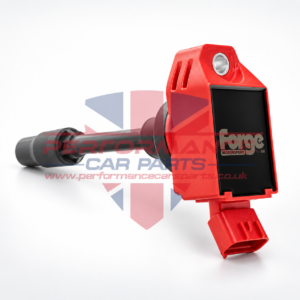
Aftermarket coils are designed to give a stronger, more consistent spark. UK tuner RacingLine, for instance, describes its high-output ignition coils for VW Group engines as delivering around 10% more output energy than the factory parts and aimed at preventing misfires on tuned engines running more boost or timing. Whether you need them depends on your power level, the condition of your original coils and whether misfires actually appear.
Signs your coils may need attention
- Misfire counts or codes that follow a coil when you swap it to another cylinder.
- Stuttering under full boost that persists with new, correctly gapped plugs.
- Cracked coil bodies, damaged boots or signs of tracking on the plug insulator.
- A tuner’s datalog showing ignition-related misfires at high load.
Always change plugs first or at the same time. New coils will not cure a worn-out gap, and fitting coils to plugs that are overdue simply moves the weak point. Browse our ignition upgrades for coil packs and related parts, and check the listing for your exact engine code.
Misfire After a Remap: Plugs, Coils or Something Else?
A misfire after a remap is common enough that many owners blame the plugs straight away. Often that is right, but not always. Ignition problems can look very similar to fuelling and boost problems, so it pays to diagnose before buying parts.
- Plugs: worn or wrongly gapped plugs are the most common cause on a freshly tuned car, especially if the originals were already mid-way through their life.
- Coils: weak or failing coils often reveal themselves once cylinder pressure rises.
- Fuelling: a pump or injectors at their limit can lean the mixture out under load. Our fuel pump and injector upgrade guide explains the warning signs.
- Boost leaks and sensors: split hoses, loose clamps or a faulty sensor can all upset the mixture.
- The map itself: if timing is too aggressive for the fuel or conditions, no plug will make it safe.
Reading used plugs is a useful first clue. NGK describes very white, clean insulator noses after full-throttle driving as a sign of a plug running too hot, while heavy black, sooty deposits point to a plug running too cool or a rich mixture. Treat this as one piece of evidence and combine it with fault codes and datalogs.
Fitting Spark Plugs Correctly: Torque, Anti-Seize and Care
Many plug problems are created during fitting rather than by the plug itself. Torque matters because the thread and seat are how the plug passes heat into the cylinder head. Too loose and the plug can run hot; too tight and you risk stretching the shell or damaging threads in an aluminium head.
- There is no universal torque figure. It varies with thread size, seat type (gasket or taper) and the head material, so always use the vehicle manufacturer’s or plug manufacturer’s specification.
- NGK specifically advises against anti-seize or lubricant on its plugs, because its plated threads are designed to be fitted dry and lubrication can change effective torque by up to 20%.
- Fit plugs by hand first to avoid cross-threading, and only remove them from a cool engine.
- Blow debris out of the plug wells before removal so nothing falls into the cylinder.
- Check coil boots for splits and fit them fully home.
How Often Should You Change Plugs on a Tuned Car?
Factory intervals are set for standard power and typical driving, and they vary widely between manufacturers and engines. Once you raise boost, plugs often wear faster, as Mountune notes for the EcoBoost. There is no single tuned interval that applies to every car, so the sensible approach is to:
- Fit fresh plugs at the time of the remap unless they were changed very recently.
- Follow your tuner’s recommended interval, which is often shorter than the factory one for higher stages.
- Inspect plugs before and after track days and replace any that show heavy wear or damage.
- Keep a note of the date, mileage and gap so you can spot wear trends.
Spark Plug and Coil Upgrades for Popular UK Tuned Cars
The table below lists what owners of popular UK performance cars should check. These are checks to discuss with your tuner, not guaranteed fixes, and the correct parts depend on the exact engine code and year.
| Vehicle family | Typical engine | What to check |
|---|---|---|
| VW Golf GTI / Golf R, Audi S3, Cupra | 2.0 TSI EA888 Gen 3 | Plug heat range and gap your tuner specifies for the stage; coil condition on higher-output maps |
| Ford Focus ST / Focus RS | 2.0 and 2.3 EcoBoost | Plug wear on remapped cars; whether your tuner recommends colder plugs; coil health if misfires appear |
| BMW M135i / M140i / M240i, Mini Cooper S / JCW | B48 / B58 (and earlier N-series) | Correct plug for the engine variant; coil condition; any datalogged misfires under load |
| Hyundai i30 N | 2.0 T-GDi | Plug spec and interval after tuning; coil condition |
| Mitsubishi Evo IX / X | 4G63 / 4B11 | Plug heat range and gap matched to boost and fuel; frequent inspection on track cars |
Examples from our range
- RacingLine High Output Ignition Coil Pack (MQB style) for EA888 Gen 3 VW Group engines
- Mishimoto Ignition Coil for the Ford Focus ST 2012-2018
- BMW and Mini B38, B48, B58 Performance Ignition Coil Pack
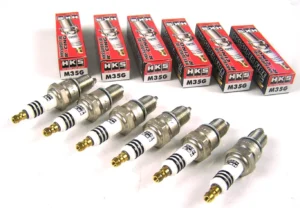
- NGK LTR7IX-11 iridium spark plug, the part number Mountune lists for its Mk3 Focus RS set
UK MOT and Insurance: What Plugs and Coils Mean for You
Changing plugs or coils is normal maintenance and is not, in itself, an MOT issue. The problems come from what happens when ignition goes wrong. The MOT inspection manual lists an engine malfunction indicator lamp that is lit or not working as a major defect for petrol cars first used from 1 July 2003. A persistent misfire can trigger that light, and unburnt fuel from a misfire can upset emissions readings and harm the catalytic converter.
If you have upgraded the exhaust as well, our downpipe upgrade guide covers the separate MOT points around catalysts and emissions equipment.
For insurance, the bigger issue is usually the tune rather than the plugs. The Financial Ombudsman Service says performance changes such as ECU remaps should be declared, and it has upheld insurers’ decisions to void policies where a remap was not disclosed. Whether a like-for-like coil or plug change needs declaring depends on your policy wording, so if in doubt, ask your insurer and keep the answer in writing.
Spark Plug Upgrade Checklist: Before You Buy and Fit
- Confirm your exact engine code, model year and current plug part number.
- Ask your tuner which heat range and gap they want for your map and fuel.
- Check the plug’s thread reach, seat type and hex size match the original.
- Buy a full set, never mix old and new plugs.
- Use a pin-type gauge to check every gap and adjust only the ground electrode.
- Fit dry, by hand first, then torque to the published specification.
- Inspect coil boots and coils; consider uprated coils if misfires persist.
- Clear any fault codes, road test and recheck for misfires.
- Record date, mileage and gap for future comparison.
- Declare any remap or performance modifications to your insurer.
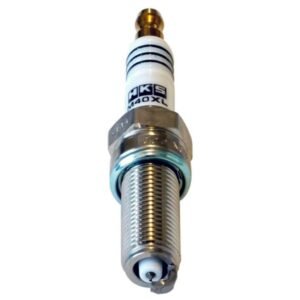
Shop Spark Plugs and Ignition
Conclusion
The right spark plugs for tuned engines come down to matching the plug to the job: the correct heat range for your power and driving, a gap that the ignition system can fire reliably under boost, and careful fitting to the right torque. A colder spark plug is a sensible step on many higher-output builds, but it is not a cure-all, and uprated ignition coils only make sense once plugs, fuelling and the map are in good shape.
Treat plugs as a regular service item on a tuned car, check them after hard use, and work with your tuner rather than guessing. Ready to refresh your ignition? Browse our spark plugs range at performancecarsparts.co.uk, and if you are not sure which plug or coil suits your engine, contact our team on WhatsApp or by email for fitment help.
Shop related performance parts

Explore related products


Always check the individual product listing for your vehicle and engine before ordering.