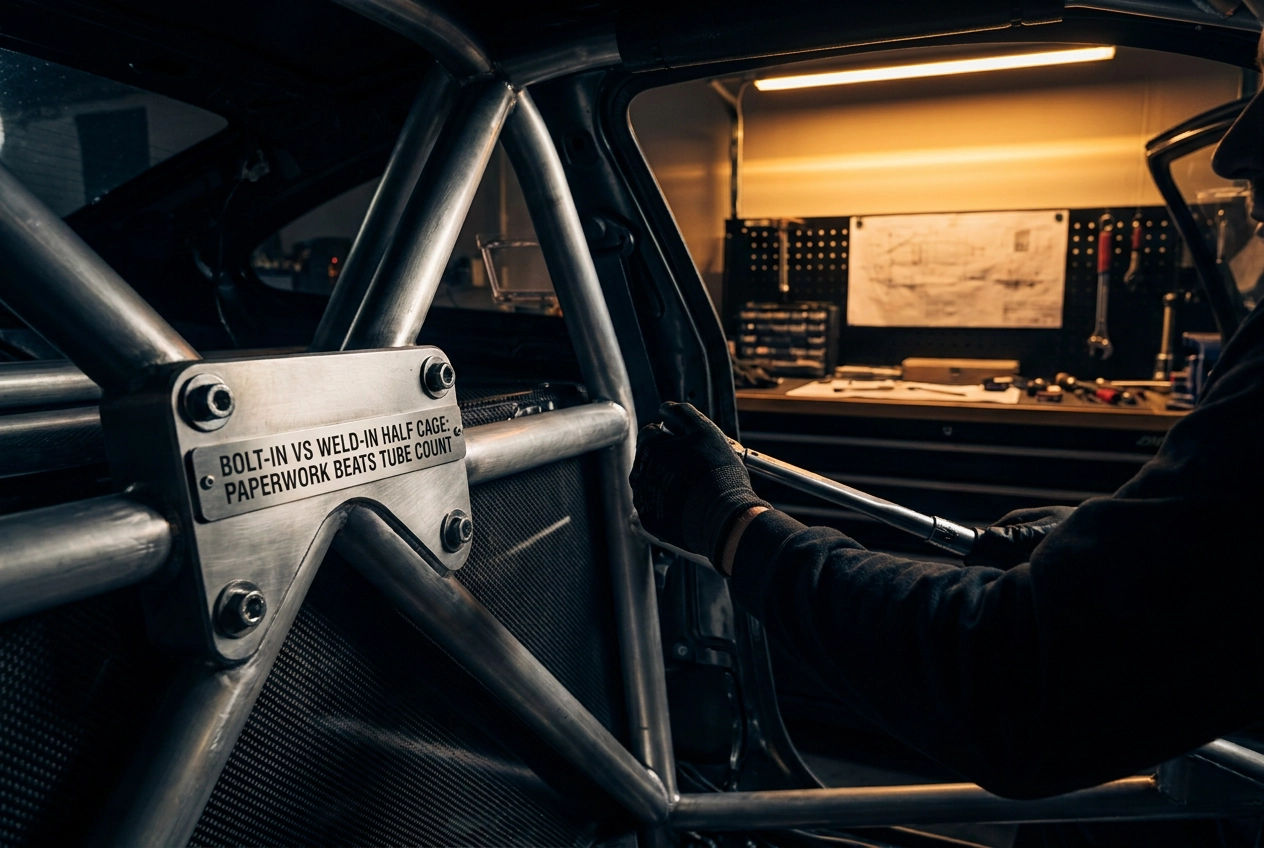
Buying a half cage based on tube count is like choosing a helmet by the number of vents. It sounds technical, but it tells you almost nothing about what you are actually getting. The real decision comes down to three things: the installation commitment, whether a scrutineer will accept it at the events you enter, and how your insurer will view tubes running through the cabin. A bolt-in half cage is a compromise, not a roll cage. The stiffness and protection gains are real but modest, and the paperwork matters far more than the number of tubes.
This guide ranks those practical realities ahead of marketing specs. You will learn why tube count is the wrong place to start, what bolt-in versus weld-in really commits you to, and what the rulebook defines as a cage. We also cover what a scrutineer actually checks, which weight and stiffness claims are worth trusting, and where the money goes. Then there is the FIA homologation question, how insurance views cabin tubes, and what reversibility means for resale. By the end, you will be equipped to choose a cage that fits your specific shell and the events you genuinely attend.
Why Tube Count Is the Wrong Place to Start
Half cages sell on tube count and visual bulk, but the Motorsport UK Safety (K) section asks four questions: designed for the particular vehicle, sound construction, adequate mountings, close fit to bodyshell. None reward a busier cabin.
Rank the decision in three stages: installation commitment (drilled, cut, welded, painted, trimmed shell); event acceptance (scrutineer pass under championship regulations); paperwork (FIA documentation, insurer notification, resale). Cost and weight sit below all three.
Those secondary factors matter, but no verified figures for weight, stiffness, insurance cost or resale appear in the sources behind this piece. Treat a seller’s specific number as a claim to evidence, not a specification.
“Half cage” is not defined in the Motorsport UK or FIA extracts used here. It is a market description; do not assume the label carries regulatory status.
Start with the commitment you will make, then work backwards to the product. The wider question of performance parts that transform your car can wait until that is settled. Buyers who begin with tube count usually end with a structure that fits poorly or suits events they never enter.
Bolt-In vs Weld-In: What Installation Really Commits You To
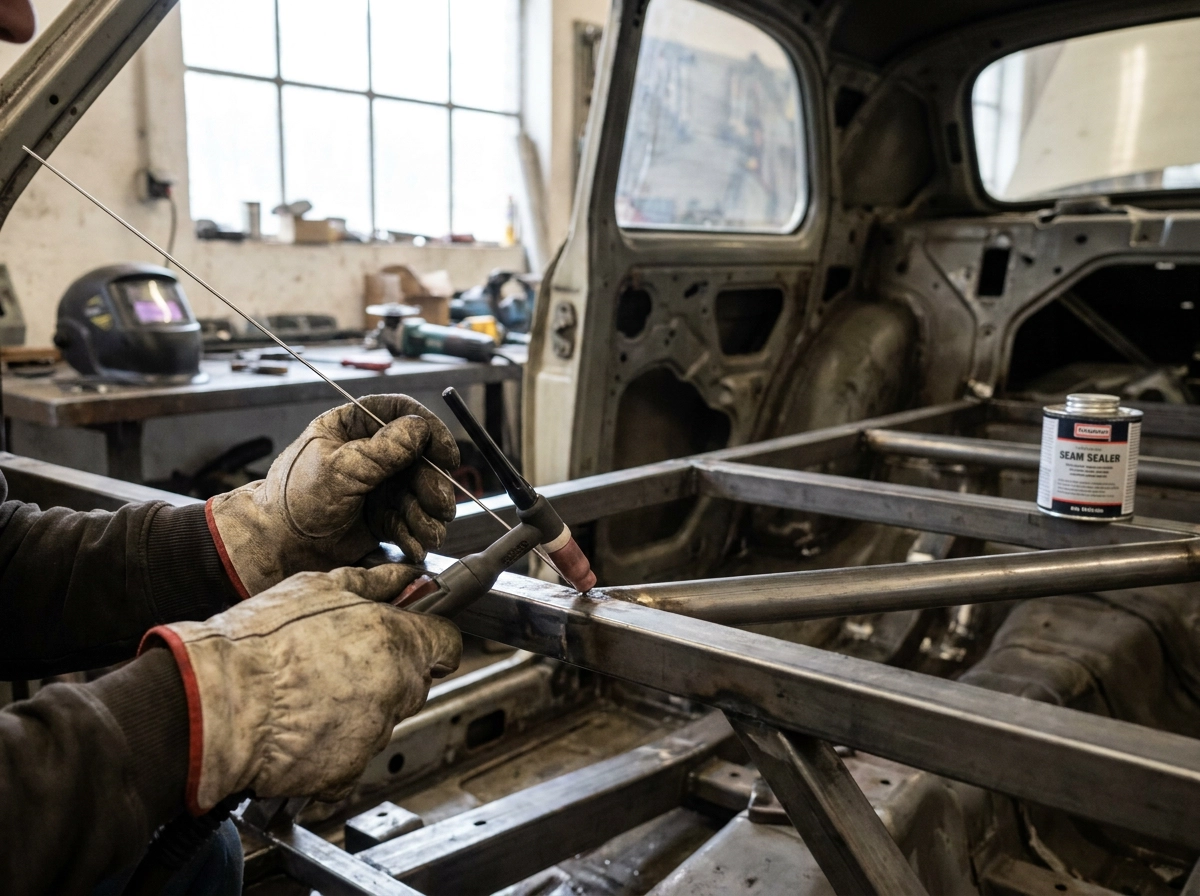
With tube count set aside, the first real decision is how much shell you will alter. A bolt-in cage is fixed by plates and fasteners, or to existing mounting provision, so it disturbs less of the shell and suits a car that must keep working on the road. A weld-in cage has plates welded to the shell and tubes to those plates. Expect dashboard, side trim and rear seat removal, then repainting, seam sealing and an interior refit.
A bolt-in stands or falls on plate size, fixing quality and the cage-to-shell interface, which is its weak point, so torque checks matter more than tube layout. The fit and mounting tests above apply regardless. Members may pass through the dashboard, side trim and rear seats, so trimming is planned, not an event-week surprise.
Commitment is not only workshop time. Welding is far harder to undo than bolting, so decide that before anyone picks up a grinder.
What the Rulebook Calls a Cage, and What It Does Not
With installation commitment settled, next comes what you have bought. Motorsport UK’s Safety (K) section defines a rollcage as a main rollbar, front or lateral rollbar, connecting members, one diagonal member, backstays and mounting points; a rollbar is a frame or hoop with mounting points (K section). Older FIA wording is historic background, not a standard. Neither defines a half cage. At scrutineering it may be judged as a rollbar, a rollcage or under an event’s supplementary regulations. That classification drives tube termination limits, so knowing your structure can decide whether you pass or argue. If you plan harness bars or seats, our guide to aftermarket seats for track cars covers the road-legality side, but settle the classification first. The Motorsport UK extract is dated and shows red amendments without indicating which clauses changed. Confirm wording via 2026 NCR and read your event’s supplementary regulations before buying.
Event Acceptance: What a Scrutineer Will Actually Check
A scrutineer judges the mounting engineering, not the bolts: fastening is acceptable only with a properly engineered mounting, and the four tests above apply to bolt-in and welded cages alike. Motorsport UK Safety (K) covers National A and lower, but warns FIA international requirements may differ. Confirm your event’s rule set before choosing bolt-in or weld-in. As with Motorsport Clothing for UK Track Days: What the Regulations Actually Require, compliance depends on the event’s tier, not the product label.
ROPS must not extend beyond front upper or rear suspension mounting points, except backstays for the required 30 degree angle. Extra triangulation is limited by rule, however good it looks. On a homologated structure, additions are restricted to roof reinforcement, windscreen pillar reinforcement, doorbars and harness bars; tubes cannot carry liquids or gases. Plan later upgrades before committing.
Ignore the 2005 US forum claim that FIA-certified bolt-in cages fail log booking. It is dated, second hand and not current UK position. Ask the scrutineer who inspects your car.
Weight, Stiffness and Protection: Claims Worth Trusting
With scrutineering covered, the performance claims still need interrogating. A half cage’s stiffness and protection gains are real but modest. It lacks a full cage’s front and rear bracing, so treat it as partial protection only. No verified weight, stiffness or cost comparison between bolt-in and weld-in half cages exists in the sources behind this article. If a seller quotes a figure, ask for the test, manufacturer data or measured conditions.
Bolt-in systems add plate and fastener mass; welded systems remove fasteners but add welded plate area and seam sealer, so weight does not automatically favour either. Weigh your completed installation if it matters. Ask for tube diameter, wall thickness and material specification rather than tube count; those are the numbers that describe the purchase. The same specification-first logic applies to other upgrades, as our weighted shifter guide shows. Rollover protection improves, especially on the tube-side, but a half structure changes impact load paths. That is judgement, not measured data, and it is why a half cage belongs within a broader safety plan.
Where the Money Actually Goes
With stiffness and protection framed honestly, the next question is the invoice. The cage is one line item. Welding, plate fabrication, paint, seam sealer and interior trimming are separate costs on a weld-in job, and easy to overlook when comparing cage prices.
A bolt-in job trades labour for hardware and careful fitting. It is cheaper only if the mounting provision is right for your shell. A badly installed bolt-in cage is worse value than a properly welded one, because you pay twice.
Reversibility can have a cash value. Returning the car towards standard may help resale later and make insurer conversations easier, even if it never appears on a quote.
Consumables are easy to underestimate: fixings, harness mounting hardware, padding, paint and trim clips. performancecarsparts.co.uk is a place to look for small items like these, though not for shell-specific structure. The same whole-job thinking applies to wheels; our aftermarket wheels guide covers fitment and finishing costs. Compare whole-job quotes including paint and trim, not cage prices. Two products at similar cage prices can end up well apart once installation, finishing and interior work are included.
FIA Papers and the Homologation Question
Once you have compared whole-job quotes, the next question is what paperwork justifies the premium. Homologation attaches to a specific design for a specific vehicle, not a generic badge; ask for the certificate and check its vehicle application, rather than leaning on the dated forum claim noted earlier. A certificate tells you which design was approved for which vehicle. It does not tell you that your installation, mounting or later additions comply, so request the certificate reference, vehicle application, and confirmation that the design permits Motorsport UK additions such as doorbars and harness bars. The same diligence applies as when reviewing SC Project exhaust systems: the complete UK buyer’s guide, where legality and paperwork count. If your events do not require FIA homologation, papers matter less for scrutineering but still matter at resale as evidence of what the structure was designed to do.
How Insurance Views Tubes Through the Cabin
Even with paperwork in order, the insurer is a separate conversation. A cage changes cabin structure and occupant protection, which is the kind of modification worth telling an insurer about before a claim, not after. Notification is the safe default regardless of what the policy wording appears to permit.
Practice varies between insurers and between policies. Ask in writing whether a half cage is acceptable, whether bolt-in and welded structures are treated the same, whether the premium changes, and what happens to an agreed value. Be explicit that tubes pass through the cabin and that trim and seats may be altered. Related interior safety hardware, including steering wheel upgrades that affect driver control, deserves the same disclosure. Vagueness on the phone is not a defence later. Do not assume reversibility removes the need to tell them either: a car with welded plates or a cage history may not be the standard vehicle the policy was written around, even after the tubes come out.
Keep the exchange on file. If cover is disputed, your notification record is the evidence.
Resale, Reversibility and the Next Buyer
With the insurer’s answer on file, the resale picture sharpens. A welded cage suits buyers who want a track car, and a documented, tidy and photographed installation gives them reasons to trust it. A bolt-in cage keeps a road-biased car easier to return towards standard, though it leaves bolt holes, mounting plates and a lingering question over how well it was fitted.
Paperwork sells harder than tube count. Evidence of Motorsport UK compliance, scrutineer passes and insurer notification gives a buyer more to rely on than a busier cabin with no history behind it. Reversibility suits a car mainly driven on the road; commitment suits a car already dominated by track days, where the next buyer wants the structure rather than the standard interior. Decide which of those two cars you are building now.
Choosing: Match the Cage to the Shell and Your Events
Start with the shell you own and the events you enter. Write down every event you will actually enter over the next two seasons and whether each runs to Motorsport UK National A or lower, FIA international rules, or track day requirements only. Buy for that list, not a hypothetical championship.
Confirm fitment to your exact bodyshell. A structure that is a close fit to another generation or trim of the same model is not a close fit to yours, and the Motorsport UK requirement applies to the car being scrutineered. Keep planned additions within permitted limits. If the interior must stay, the bolt-in trade-offs above apply.
Before anyone welds, ask the scrutineer who will inspect your car and get your insurer’s answer in writing. Both answers are free and both are hard to reverse.
Conclusion: Buy the Compromise That Fits Your Car and Your Calendar
That match is the whole decision, so rank it before you compare products. Installation commitment comes first, then event acceptance, then paperwork, and only then cost and weight. Tube count never leads.
Ask sellers for tube specification, vehicle application and documentation. Recheck the current rule wording flagged earlier. Get the scrutineer’s view and the insurer’s answer in writing before committing to welding, and keep both on file for resale.
Buy for the shell you own and the events you enter. A bolt-in half cage is a compromise, not a roll cage, and knowing that before you spend is worth more than any number of extra tubes.
Shop related performance parts

Explore related products

Always check the individual product listing for your vehicle and engine before ordering.