Few upgrades change the character of an engine as much as a set of performance camshafts. The cams decide when each valve opens, how far it lifts and how long it stays open, so they shape where the engine makes its power, how it idles and how it pulls out of a slow corner. That makes a camshaft upgrade one of the most rewarding modifications on a naturally aspirated or tuned turbo engine, and also one of the easiest to get wrong.
The trouble is that cam choice is rarely about the biggest number on the spec sheet. A race cam in a car that spends most of its life on the M25 and B-roads can feel flat low down, idle badly and struggle at the MOT emissions test, while a mild fast road camshaft in a fully built track engine leaves power on the table. Valve springs, cam timing and the ECU map all have to match the profile, and the total cost and gain depend on that whole package rather than the cams alone.
This guide to performance camshafts in the UK explains what duration and lift actually do, how fast road and race cam profiles differ, when drop-in camshafts are realistic, what supporting parts you need, and how a cam upgrade affects your MOT and insurance. It is written for enthusiasts who drive on the road and do the occasional track day, not for full-time race teams.
Quick Answer: Which Performance Camshaft Should You Choose?
For most UK road cars with the odd track day, a fast road or drop-in profile matched to a proper remap is the sensible starting point. Ultimate road and race profiles only make sense when the rest of the engine (head, compression, induction, exhaust and valvetrain) has been built to use them, and when you accept rougher idle and less low-down torque. Use the table below as a starting point, then check the cam maker’s notes for your exact engine.
| Your car and driving | Recommended starting point | Main compromise |
|---|---|---|
| Daily driver with bolt-ons and a remap | Mild or fast road / drop-in camshaft | Smaller gains than an aggressive profile; still needs a tune |
| Weekend road car with regular track days | Fast road cam with uprated valve springs if the maker specifies them | Slightly lumpier idle; more parts and setup time |
| Built engine, mainly track use | Ultimate road / track day profile with matched springs, retainers and adjustable gears | Weaker low-rpm torque, harder to keep emissions in check |
| Competition-only engine | Rally or race profile as part of a full engine build | Poor road manners; not designed for road use |
The final choice always depends on the cam manufacturer’s recommendations, your engine code and the supporting parts already fitted. You can browse our performance camshafts by engine. This guide covers four-stroke petrol engines with overhead camshafts, which is what almost every modern UK performance car uses.
What a Camshaft Upgrade Actually Changes
Each lobe on a camshaft is an eccentric shape that pushes a follower, bucket or rocker to open a valve. Change the shape of the lobe and you change the valve events. Four terms do most of the work when you compare profiles:
- Duration: how long the valve is open, measured in crankshaft degrees. Longer duration generally shifts the power band higher up the rev range.
- Lift: how far the valve opens. More lift can let the head flow more air, but only if the port and valve can use it, and it puts more load on the springs.
- Overlap: the period when the inlet and exhaust valves are both open around top dead centre. More overlap helps cylinder filling at high rpm but tends to roughen idle and can raise hydrocarbon emissions at low speed.
- Lobe centres and timing: where the opening and closing points sit relative to the crank. Moving them, with adjustable gears or variable cam timing, changes where the engine is strongest.
None of these numbers works in isolation. The same cam can behave very differently in two engines because of compression ratio, head flow, capacity, exhaust design and whether the engine is turbocharged. On turbo engines, how much overlap is useful depends on the balance between boost pressure and exhaust manifold pressure, which is one reason turbo-specific profiles exist. That is why cam makers list profiles by engine code rather than selling one grind for everything.
Fast Road vs Race Cam Profiles: How the Stages Compare
There is no industry-wide standard for what “Stage 1” or “fast road” means, so always read each manufacturer’s own description. UK-based Piper Cams, which has been grinding performance cams since the late 1960s, publishes a clear ladder of road, rally and race camshaft profiles that is a useful reference for how the categories differ:
- Mild road (BP255): a first step aimed at better low and mid-range response, also suited to automatics.
- Fast road (BP270): roughly 270 degrees of duration, intended as a straightforward fit with little or no extra modification depending on the vehicle.
- Ultimate road / track day (BP285): roughly 285 degrees, aimed at modified road cars and track cars, typically alongside freer-flowing induction such as throttle bodies.
- Rally race (BP300): roughly 300 degrees, prioritising a wide torque band for rally and short-circuit use.
- Race (BP320): a full race and sprint profile for maximum power at the top end.
Drop-in camshafts
A drop-in camshaft is designed to work with the standard valve springs and keep a near-standard idle. Skunk2, for example, describes its Ultra Stage 1 cams for the K20C1 Civic Type R as a drop-in profile that works with stock valve springs, while its Stage 2 cams for the same engine need upgraded springs. “Drop-in” refers to the valvetrain, not the software: a tune is still recommended, and some applications also need cam gears adjusting or the cams degreeing.
Ultimate road and track cams
This is where most serious road-and-track builds end up. Gains are typically larger and arrive higher in the rev range, but the profile usually needs uprated springs, more careful setup and a dyno session. Expect the car to feel less eager below the cam’s working range, which matters more on a heavy car or one with long gearing.
Rally and race cams
Rally and race profiles are designed for engines that live near the top of the rev range. They belong in a fully built engine with matched compression, head work and valvetrain, and they usually make a poor road car. If you are not planning a full build, a race cam is rarely the right buy, however tempting the headline figures.
Reading Cam Specs Without Being Misled
Spec sheets are easy to misread because different manufacturers measure duration at different points of lift. Some quote “advertised” or seat-to-seat duration, some quote duration at 1mm of lift, and others at 0.050 inch (about 1.27mm). Skunk2’s K-series figures, for instance, are given at 1mm, while Drag Cartel’s are given at 0.050 inch. A cam quoted at 270 degrees advertised can be milder than one quoted at 250 degrees at 0.050 inch, so only compare figures measured the same way.
- Check the measuring point for duration before comparing two cams.
- Check whether lift is quoted at the lobe or the valve. On rocker-type engines the rocker ratio multiplies lobe lift; Piper’s catalogue notes when it assumes a 1:1 ratio.
- Treat power band figures as a guide. Piper’s catalogue lists many fast road profiles at around 1,500 to 6,500rpm, but the real band varies from engine to engine.
- Treat claimed power gains with care. Gains depend on the engine, supporting mods and tune, so a manufacturer’s figure is a best-case reference rather than a promise.
Valve Springs, Retainers and Followers: The Parts Cams Depend On
More lift and faster opening ramps ask more of the valve springs. If a spring cannot keep the follower in contact with the lobe at high rpm, the valve can float, which costs power and, in the worst case, lets a valve touch a piston. That is why many cam manufacturers make uprated springs a condition of fitting rather than an optional extra.
- Follow the cam maker’s spring requirement. Drag Cartel’s 003.2 K-series street cams, for example, list a valve spring and retainer upgrade as required, and Piper’s fitting notes say its own springs must be used where stated.
- Check coil bind and retainer clearance at full lift, especially with high-lift profiles.
- Consider followers and buckets. Piper recommends new followers with its cams, and on flat tappet engines worn followers should never be paired with a new cam.
- Do not over-spring a road engine. Excessive spring pressure adds friction and wear, so match the spring to the cam rather than fitting the stiffest option available.
We stock matched valve springs and retainers for popular performance engines. If the cam you choose specifies a particular spring kit, use that kit rather than a generic alternative.
Cam Timing, Adjustable Gears and Degreeing
Even a perfectly ground cam only performs as designed if it is phased correctly with the crankshaft. Small tolerances in the head, block, gears and chain or belt add up, so the cam can end up a few degrees away from its intended timing. Kelford explains that the purpose of degreeing your camshafts is to confirm the valves open and close at the right points for that particular engine.
- Degreeing uses a degree wheel, a dial gauge and an accurate top dead centre reference. With hydraulic lifters, a solid checking lifter is used, because a hydraulic one can bleed down and give false readings.
- Adjustable cam gears or pulleys let you set the timing precisely after degreeing, or move it to tune where the engine is strongest. They are not a power upgrade on their own.
- Piston-to-valve clearance must be checked on higher-lift profiles, especially on engines that have been skimmed or have higher-compression pistons.
- Torque settings and valve lash should follow the cam and engine manufacturer’s figures for your specific profile. There is no universal value, and aggressive cams can need different lash from the factory specification.
Unless you have done this before, cam fitting and degreeing is a job for an experienced engine builder. Mistakes in timing can be expensive, and the setup is part of what you are paying for when you choose a reputable installer.
Why a Camshaft Upgrade Needs a Proper Tune
Modern engine management relies on airflow and load models that assume the standard cams. Change the valve events and the ECU’s fuelling, ignition timing and idle control can all be off. Even with a drop-in cam, a tune is the norm rather than an option if you want the engine to idle cleanly, pass emissions and make the power the cam is capable of.
- Variable cam timing (VTC, VANOS, AVCS, VVT-i and similar) needs its maps redeveloped for the new profile.
- VTEC and similar switching systems may need the crossover point moving to suit the new lobes.
- Idle and low-speed fuelling often need the most work with more overlap.
- Rev limits should only be raised if the whole valvetrain and bottom end are suitable, not simply because the cam can rev higher.
Cams usually come into the picture at the top end of a tuning plan. If you are still deciding how far to take your car, our guide to Stage 1, Stage 2 and Stage 3 tuning shows where camshafts typically fit alongside induction, exhaust and fuelling upgrades.
Camshaft Upgrades for Popular UK Tuned Cars
Cam options vary hugely from platform to platform. The table below lists what owners of some popular UK tuning platforms should check before buying. These are checks to make against the manufacturer’s fitment notes, not guarantees for any specific car.
| Vehicle family | What to check before buying cams |
|---|---|
| Honda Civic Type R FK8 / FL5 (K20C1 turbo) | Whether the profile is drop-in or needs uprated springs; the cam’s listed generation fitment; that your tuner can recalibrate VTC and VTEC for it |
| Honda K20 / K24 and B-series VTEC (EP3, DC5, EK9, DC2 and swaps) | Your exact engine code against the fitment list; compression ratio the cam is designed for; spring, retainer and lash requirements |
| Mitsubishi Evo 4–9 (4G63) | Which Evo generation the cam suits; whether your engine has hydraulic or solid lifters; turbo size and intended rpm range |
| Toyota GR Yaris / GR Corolla (G16E-GTS) | Whether the cam is intended for road or drag and race use; matched valve springs and retainers; tuner support for the platform |
| Nissan GT-R R35 (VR38DETT) | Whether the profile suits your turbo and fuel setup; the full parts list for a twin-turbo V6 with four camshafts; experienced installer availability |
If you own a K20C1-powered Civic, our Honda Civic Type R FK8 performance parts and upgrade guide covers the supporting mods that usually come before cams.
Examples from our range
- Skunk2 Ultra Stage 1 camshafts for the Honda K20C1: a drop-in option for the turbocharged Civic Type R engine.
- Kelford 272° camshafts for the Mitsubishi Evo 8 4G63: a popular step for tuned Evo 8 engines.
- Pipercams 320° race cam kit for the Evo 4–7 4G63: a full race profile from a UK manufacturer, for competition builds.
- Kelford KVS264-X beehive valve spring and titanium retainer kit for the GR Yaris and GR Corolla: the supporting valvetrain for higher-lift G16E-GTS cams.
MOT, Emissions and Insurance After a Cam Upgrade
Camshafts are not checked visually at the MOT, but their effects on emissions are. The DVSA MOT inspection manual’s emissions section states that a modified engine must still meet the exhaust emission requirements for the vehicle’s age. For most modern petrol cars, that means:
- Basic emissions test: at a fast idle of 2,500 to 3,000rpm, CO must be no more than 0.2%, HC no more than 200ppm and lambda between 0.97 and 1.03, with CO no more than 0.3% at normal idle. A car that fails the basic test moves on to a full catalyst test against vehicle-specific or default limits.
- Idle speed: an engine idling clearly above its normal idle speed is a major defect, which matters if a lumpy cam has been “fixed” by raising the idle.
- Engine management light: on petrol cars first used from 1 July 2003, a malfunction indicator lamp that is on or not working is a major defect, so cam or VVT fault codes need sorting before the test.
- Emission control equipment: on cars first used from 1 September 2002, missing or obviously modified emissions equipment such as catalytic converters is a major defect, so a cam upgrade is no reason to remove the cat.
Mild and fast road profiles with a good tune generally have the best chance of staying within these limits, while longer-duration cams with lots of overlap make it harder. Whether a particular setup passes depends on the cam, the tune, the catalytic converter’s condition and the rest of the engine, so ask your tuner to check emissions before the MOT.
Insurance is simpler: a camshaft upgrade is an engine modification and should be declared. Specialist broker Howden lists engine tuning among the modifications you should declare to your insurer, and an undeclared modification can put a claim at risk. Our guide to car mods and insurance explains how to approach it.
Camshaft Upgrade Checklist: Before You Buy and Fit
- Be honest about how the car is used: mostly road, regular track days or competition only.
- Confirm the exact engine code and generation against the cam’s fitment list.
- Check whether the profile is drop-in or needs uprated springs, retainers, followers or seals.
- Compare duration figures measured at the same lift point.
- Book a tuner who knows your platform and can map the new cams, including any variable timing.
- Budget for adjustable gears, degreeing and piston-to-valve checks if the cam maker recommends them.
- Use the cam and engine manufacturer’s torque, lash and running-in instructions; there is no universal figure.
- Check emissions on the tuner’s analyser before the MOT and make sure there are no fault codes.
- Declare the upgrade to your insurer before driving the car on the road.
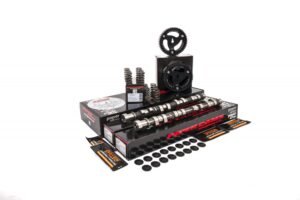
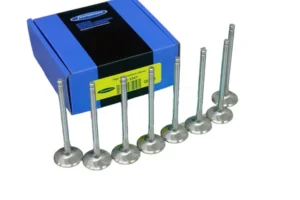
Shop Camshafts and Valve Springs


Conclusion
The best performance camshaft is the one that suits how you actually drive. For most UK road cars with the occasional track day, a fast road or drop-in profile with a proper tune gives a noticeable improvement while keeping the car pleasant to drive and realistic to get through the MOT. Ultimate road and race cams reward a fully built engine, but they demand matched valve springs, careful timing and an engine that can use the extra rpm.
Whatever profile you choose, treat the cams, valvetrain, timing and tune as one package, and follow the manufacturer’s instructions for your specific engine. Browse our camshaft range or visit performancecarsparts.co.uk to find parts for your car, and if you are unsure which profile or spring kit suits your engine, contact our team on WhatsApp or by email for fitment help.
Shop related performance parts

Explore related products


Always check the individual product listing for your vehicle and engine before ordering.