Ask anyone who has pushed a turbocharged four-cylinder hard for long enough and they will have a head gasket story. Bubbles in the expansion tank after a hot lap, a header tank that keeps dropping with no visible leak, a misfire that turns out to be coolant in one cylinder. As boost and cylinder pressure rise, the thin layer of steel sandwiched between the block and the head is asked to do far more than it was designed for, and an uprated head gasket starts to appear on a lot of build lists.
The trouble is that a head gasket is rarely the whole answer on its own. Whether a gasket survives depends on clamp load from the head fasteners, how flat and smooth the mating faces are, how hot the engine runs, and above all whether the tune keeps detonation under control. Swap the gasket and ignore the rest, and you can end up doing the job twice.
This guide explains when a UK road and track-day car genuinely needs an uprated head gasket, how multi-layer steel (MLS) and copper gaskets differ from a standard item, why gasket thickness changes your compression ratio, and when head studs are worth adding. It finishes with checks for popular UK tuned cars, the MOT and insurance angle, and a checklist to run through before you order parts.
Quick Answer: Do You Need an Uprated Head Gasket?
For most mapped road cars with a healthy engine, the factory head gasket is not the weak link and there is no reason to remove the head just to change it. An uprated MLS gasket earns its place when the head is coming off anyway on a tuned car, or when the build is heading towards big-turbo boost levels and forged internals. This guide covers petrol engines in road and track-day cars; diesels and full race engines have their own considerations.
| Your car and driving | Recommended starting point | Main compromise |
|---|---|---|
| Standard or Stage 1 map, no symptoms, road use | Keep the factory gasket; focus on cooling, fuel quality and a safe map | None, as long as the engine stays healthy |
| Stage 2 car, head coming off for other work (cams, valve stem seals, porting) | Quality OEM or uprated MLS gasket at the correct thickness, plus new head fasteners | Extra cost for fasteners and a surface check on the head |
| Bigger turbo, higher boost, forged pistons and rods | Uprated MLS gasket matched to bore and target compression, plus head studs | Needs flat, correctly finished surfaces and careful thickness selection |
| Dedicated competition engine at very high cylinder pressure | Specialist-built setup, sometimes copper with fire rings | Extra machining, specialist assembly and more frequent inspection |
Final choice always depends on the gasket maker’s specification for your engine code, bore and thickness. Browse our uprated head gaskets and check the listed bore and thickness against your engine before ordering.
Why Head Gaskets Fail on Tuned Engines
A head gasket has three jobs: sealing combustion pressure in each cylinder, keeping coolant and oil in their own passages, and coping with the head and block moving as they heat up and cool down. Tuning adds stress to every one of those jobs. More boost means higher peak cylinder pressure trying to lift the head, and more power means more heat that the cooling system has to remove.
Trade guidance from Engine Builder magazine on head gasket failures points to a handful of recurring causes, and they map neatly onto modified cars:
- Overheating. An aluminium head that gets too hot can expand and crush the gasket, often between cylinders, opening a leak path. Low coolant, a tired radiator or a failing fan are the usual suspects.
- Detonation. Sharp pressure spikes from knock can crack the gasket’s combustion armour and lead to burn-through. Lean mixtures, over-advanced timing, poor fuel and carbon build-up all raise the risk.
- Pre-ignition. A hot spot lights the mixture before the spark, often linked to lean running or cooling problems, and can lead on to detonation.
- Poor surface preparation. A head or block that is warped, or finished too coarsely, will not let the gasket seal properly however good the gasket is.
- Reused or incorrect fasteners. Torque-to-yield head bolts stretch when tightened and are not meant to be reused.
Notice that only one of those points is really about the gasket itself. That is why an uprated gasket should be treated as part of a package rather than a fix for a car that is running too lean, too hot or with too much ignition advance. If you are planning more power, our guide to Stage 1, Stage 2 and Stage 3 tuning explains where supporting mods usually come in.
MLS vs Stock vs Copper Head Gaskets: What’s the Difference?
Older engines often used composite gaskets made from fibre or graphite around a steel core. Many modern engines already leave the factory with a multi-layer steel gasket, so on a recent hot hatch the question is usually not “composite or MLS” but “factory MLS or uprated MLS”.
Multi-layer steel (MLS)
An MLS gasket stacks several thin steel layers, usually with raised embossments that act like springs. As explained in Performance Racing Industry’s head gasket Q&A, that spring-back helps the gasket keep sealing as the head grows and shrinks through heat cycles. Uprated aftermarket MLS gaskets typically differ from a standard part in layer count and material, the design of the stopper around each bore, the coating, and the range of thicknesses offered.
Grommet and stopper designs
Some uprated gaskets concentrate clamping pressure in a ring around each cylinder. HKS, for example, describes its grommet-type head gasket for the GR Yaris G16E-GTS as maintaining surface pressure on the sealing face so it can cope with higher boost, with shims at each end of the deck to spread bolt load and limit head distortion. HKS lists that particular version at 0.8mm against a 0.85mm standard gasket, which shows how even small thickness differences are part of the specification.
Copper with fire rings
Solid copper gaskets are used on some competition engines running very high cylinder pressure, usually combined with fire rings (wire rings set into grooves machined in the head or block). Builders quoted by Performance Racing Industry note that MLS works well for many high-power setups, and that copper is generally reserved for the most extreme engines because it needs extra machining and careful assembly. For a road car that does the odd track day, copper is rarely the sensible choice.
Head Gasket Thickness and Compression Ratio
Uprated gaskets are often sold in several thicknesses for the same engine, and this is where a lot of mistakes happen. The compressed thickness of the gasket forms part of the combustion chamber volume, so changing it changes the compression ratio and the clearance between the piston crown and the head.
- Thicker gasket: lowers compression slightly and increases piston-to-head clearance. Sometimes used to reduce compression on a high-boost build, or to restore height after the head or block has been skimmed.
- Thinner gasket: raises compression and tightens squish or quench clearance. It can sharpen combustion but reduces the margin on an interference engine and may raise knock sensitivity on a boosted car.
- Bore size: the gasket’s bore must suit the engine’s actual bore. An oversize bore after a rebuild needs a matching gasket, and a gasket bore that is too small can overhang into the cylinder.
There is no single “best” thickness for a given engine. The right choice depends on whether the head or block has been skimmed, the pistons fitted, the cam profiles, and the fuel and boost the map is built around. On a standard-bottom-end car, matching the factory thickness is the safe default. On a built engine, the engine builder should measure deck height and chamber volume and choose the thickness to hit a target compression ratio, then make sure the tune reflects it.
Head Studs vs Head Bolts: Is More Clamp Load the Answer?
A gasket can only seal if it is clamped evenly and hard enough. When cylinder pressure rises, the head tries to lift away from the block, and if the fasteners stretch too much the gasket loses its seal at the edge of a bore. That is why head studs are commonly fitted alongside an uprated gasket on higher-boost builds.
According to ARP’s fastener installation FAQ, studs help guide the head and gasket into alignment and give more consistent torque loading than bolts, although bolts can be more practical where head removal with the engine in the car would otherwise be blocked. Points worth knowing before you buy:
- Factory torque-to-yield bolts are stretched on installation and should be replaced rather than reused when the head comes off.
- Aftermarket stud torque figures can differ from factory specs. ARP says its torque values assume its own assembly lubricant and are engineered to reach a target clamp load, so do not mix factory torque angles with aftermarket studs.
- Studs are installed hand-tight into clean threads, with the nut doing the clamping. ARP advises against re-torquing a hot engine, and says re-torquing should not normally be needed unless the gasket maker specifies it.
- Block threads matter. Old, stretched or corroded threads in an aluminium block need careful cleaning and inspection before studs go in.
Head studs are not mandatory for every uprated gasket. On a mildly tuned car with new factory bolts, the factory clamp load may be enough. As boost climbs, studs become more common because they reduce one of the variables. You can browse our head stud kits, and many more engine-specific ARP kits are listed in our range under the engine code.
Surface Finish, Flatness and Fitting: Where Most Leaks Start
An MLS gasket is less forgiving than a soft composite gasket. It relies on clean, flat, smooth surfaces to seal, and the thin rubber-type coating on the layers can only fill very small imperfections.
- Surface finish: requirements vary by gasket maker, so there is no universal figure. Cometic’s tech support guidance asks for a finish of 50 Ra or finer for its MLS gaskets, while the Engine Builder guide quotes a tighter figure for MLS gaskets in general. Always follow the instructions for the gasket you are fitting.
- Flatness: check the head and block deck with a straight edge and feeler gauge. As an example, Engine Builder quotes 0.002in (0.05mm) for aluminium heads; your engine’s workshop manual gives the actual limit.
- No extra sealant unless the gasket instructions say otherwise. Cometic says its MLS gaskets should be fitted dry because added sealer can compromise the factory coating.
- Cleaning: avoid abrasive discs in a drill on aluminium faces. They can dish the surface and create the very low spots that stop a gasket sealing.
- Torque sequence: use a recently calibrated torque wrench, the correct lubricant and the tightening sequence specified by the fastener maker or workshop manual.
- Cooling system refill: bleed air out properly afterwards. An air lock that causes overheating can undo the whole job.
If a head has already overheated, have it pressure-tested and checked for flatness and cracks by a machine shop before reuse. A new gasket will not cure a warped head.
Cooling and Tuning: Protecting the New Gasket
Since overheating and detonation cause so many gasket failures, the most effective way to protect an uprated gasket is to deal with heat and knock at the same time.
- Map for the fuel you actually use. A map written for higher-octane fuel run on standard unleaded is asking for knock. Make sure your tuner knows what you fill up with.
- Log the engine. Knock correction, intake air temperature, coolant temperature and air-fuel ratio logs on a hot day or a track session tell you far more than a single dyno run.
- Keep coolant and oil temperatures in check. A healthy radiator, fresh coolant at the right concentration and, where needed, an oil cooler all reduce the heat load. Our guide to engine cooling upgrades covers radiators, oil coolers and hoses in detail.
- Control charge temperatures. On a turbo car, an intercooler that heat-soaks on track raises knock risk lap after lap.
Uprated Head Gaskets for Popular UK Tuned Cars
Each engine family has its own gasket designs, thickness options and fastener arrangements. Rather than claim a single “right” part for each car, the table below lists what owners should check before buying.
| Vehicle family | What to check |
|---|---|
| Honda Civic Type R FK2 / FK8 / FL5 (K20C1) | Confirm the engine code and bore; check whether the head or block has been skimmed before choosing thickness; decide on fasteners with your engine builder |
| Toyota GR Yaris (G16E-GTS) | Match the gasket to the G16E-GTS and confirm thickness against your target compression; check the cooling system and knock logs if you are raising boost |
| Ford Fiesta ST Mk7 (1.6 EcoBoost) | Check the model year and engine variant against the gasket listing; look at coolant loss or overheating history before assuming a gasket upgrade alone is enough |
| Mitsubishi Lancer Evo X (4B11T) | Confirm bore and thickness, particularly on built engines with oversize pistons; consider head studs on high-boost builds |
| VW Golf GTI / R, Audi S3 (EA888) | Identify the exact EA888 generation and bore before ordering, as gaskets differ; contact us if you cannot find a listing for your engine code |
Examples from our range
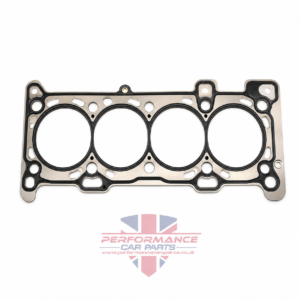
- Cometic MLS head gasket for the Honda K20C1 (88.0mm bore, 0.71mm) for Civic Type R owners planning a rebuild.
- HKS Super Cooling head gasket for the Toyota GR Yaris, designed for the G16E-GTS.
- Athena head gasket for the Ford Fiesta ST 2013-on (85.5mm bore, 1.35mm).
- Cometic MLS head gasket for the Evo X 4B11T (88mm bore) for built 2.0-litre turbo engines.
Always check the bore, thickness and engine code on the product listing against your engine before ordering. If you are unsure, send us your registration and engine details and we will help confirm fitment.
Signs Your Head Gasket Is Struggling
On a tuned car, it pays to catch a gasket problem early before it damages the head or block. Common warning signs include:
- Coolant level dropping with no visible external leak.
- Bubbles in the expansion tank, or the cooling system pressurising very quickly after a cold start.
- Overheating under sustained load, such as on track or a long motorway climb.
- A misfire on one cylinder, especially from cold, or white exhaust vapour that does not clear once the engine is warm.
- Milky deposits under the oil filler cap. Short trips in cold UK weather can cause condensation here too, so this sign needs to be read alongside the others.
- Low or uneven readings on a compression or leak-down test between adjacent cylinders.
A combustion leak (block) test on the coolant and a leak-down test are the usual ways a garage confirms a gasket failure. If the gasket has failed on a tuned car, find out why before fitting a new one, whether that is knock, overheating, a warped head or tired fasteners.
UK MOT, Insurance and Warranty Considerations
A head gasket is not an item the MOT tester inspects directly, and fitting an uprated gasket on its own does not change how the car is tested. A failing gasket can still lead to a fail, though. The DVSA MOT inspection manual (section 8) lists dense blue or clearly visible black smoke at idle or under acceleration as a major defect on petrol cars, and treats fluid leaks as a defect where they are excessive or pose a risk to other road users. The manual notes that engine coolant leaks are not a reason for failure on their own, so a gasket problem can pass an MOT while still damaging the engine. Do not treat a pass as a clean bill of health.
For insurance, an uprated gasket is usually fitted as part of wider engine work, such as a bigger turbo, a remap or forged internals, and those changes typically need declaring. Policies differ, so ask your insurer how they treat internal engine modifications. Our guide to car mods and insurance explains what to tell your insurer and why.
If your car is still under a manufacturer or extended warranty, removing the head and fitting non-standard parts may affect claims on related components. Check the terms before starting work.
Uprated Head Gasket Checklist: Before You Buy and Fit
- Confirm the exact engine code, bore size and any oversize pistons.
- Find out whether the head or block has ever been skimmed and by how much.
- Choose thickness to suit your target compression ratio and piston-to-head clearance, not just the part in stock.
- Decide on fasteners: new factory bolts or head studs, and never reuse torque-to-yield bolts.
- Have the head and deck checked for flatness, cracks and surface finish to the gasket maker’s requirements.
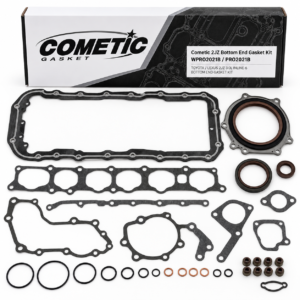
- Buy the supporting gaskets and seals for the job so the engine is not left half-assembled.
- Fix the root cause of any previous failure: cooling, fuelling, ignition timing or knock.
- Plan the tune around the new compression ratio and the fuel you will actually use, and log it afterwards.
- Tell your insurer about the wider engine modifications.
Shop Head Gaskets and Head Studs


Conclusion
An uprated head gasket is a sensible upgrade when the head is coming off a tuned engine anyway, and close to essential on big-turbo builds with forged internals. It is not a cure for a car that runs hot, runs lean or knocks, and it only seals as well as the surfaces, fasteners and torque procedure behind it. Get the thickness right for your compression target, pair the gasket with suitable fasteners, and fix the cause of any previous failure first.
Ready to plan your rebuild? Browse our MLS and uprated head gasket range or explore more engine parts at performancecarsparts.co.uk. If you need help matching a gasket’s bore and thickness to your engine, message the team on WhatsApp or email us with your car details and we will help you get the right fitment.
Shop related performance parts

Explore related products

Always check the individual product listing for your vehicle and engine before ordering.