
Pull the intake pipe off a high-mileage turbocharged engine and there is a good chance you will find a film of oil inside it. Some of that oil has come through the crankcase breather system, and on a tuned car making more boost and more cylinder pressure, the volume can be noticeable. An oil catch can is one of the most popular fixes in the UK modifying scene, but it is also one of the most misunderstood: some owners fit one and see a real difference, while others fit a cheap empty pot that does very little.
This guide explains what a catch can actually does, how the PCV and crankcase breather system works, why direct injection engines are often discussed in the same breath as carbon build-up, and how to choose between a baffled catch can, a simple breather filter and a vehicle-specific kit. We also cover what UK law and the MOT say about breather systems, because venting crankcase gases to atmosphere is not the harmless shortcut it is often made out to be.
By the end you should know whether your car is likely to benefit, which side of the breather system a can belongs on, and what to check before you spend any money.
Quick Answer: Do You Need an Oil Catch Can?
If you drive a turbocharged or direct-injection petrol car that is remapped, tracked or both, a well-designed baffled catch can in a closed (recirculating) layout is a sensible upgrade. On a standard naturally aspirated road car that is serviced on time, the benefit is usually smaller. The table below is a starting point rather than a rule.
| Your car and driving | Recommended starting point | Main compromise |
|---|---|---|
| Standard NA petrol, road use only | Keep the OEM breather system healthy; a can is optional | Limited benefit for the cost and extra maintenance |
| Turbo direct-injection hot hatch, Stage 1 or Stage 2 | Vehicle-specific baffled catch can on the PCV side, closed loop | Must be emptied regularly; adds hoses that need checking |
| Tuned car doing regular track days | Baffled can (or cans on both PCV and breather sides) with a drain | More plumbing, more to inspect after each event |
| High-boost build with known blow-by | Larger-capacity baffled can as part of a wider engine health plan | A can manages symptoms; it does not fix worn rings or seals |
| Older car with no breather filter or a split hose | Repair the OEM system first | A can will not cure a blocked or broken PCV valve |
Final choice depends on the manufacturer’s design, port sizes and fitment for your exact engine. This guide covers petrol road cars; diesel breather systems work differently and are not covered here. Browse our oil catch can range to see vehicle-specific and universal options.
What Is Blow-By and Why Does Your Engine Breathe?
No piston ring seals perfectly. During every combustion event, a small amount of high-pressure gas slips past the rings into the crankcase. This is blow-by, and it carries unburnt fuel, water vapour, combustion by-products and a fine mist of oil whipped up by the spinning crank.
If that gas had nowhere to go, crankcase pressure would rise and push oil past seals and gaskets. So every modern petrol engine has a crankcase ventilation system. In simple terms:
- PCV side (positive crankcase ventilation): under vacuum, gases are drawn from the crankcase into the intake manifold through a valve or calibrated orifice, so they are burnt in the engine.
- Breather or CCV side: under boost, when the manifold is pressurised, gases are routed to the intake upstream of the turbo instead, where the compressor draws them back in.
- Oil separator: most factory systems include some form of separator to drop out oil before the gases reach the intake, but these are designed around standard power and service intervals.
Layouts vary a lot between manufacturers. Some engines combine everything into a single unit on the rocker cover; others have separate PCV and breather routes with their own hoses. That is why vehicle-specific catch can kits exist, and why a universal can needs careful planning.
Why Tuned and Direct Injection Engines Get More Attention
Two things push catch cans up the priority list on modern UK performance cars: more blow-by and the way direct injection changes what reaches the intake valves.
More cylinder pressure, more blow-by
Raising boost and torque with a remap increases peak cylinder pressure. How much extra blow-by that creates depends on ring condition, piston and bore wear, oil choice and how hard the car is driven, so there is no fixed figure. What owners commonly report is more oil in intake pipes and intercooler pipework after tuning, especially on cars that see long full-throttle sessions on track. If you are planning a Stage 1, Stage 2 or Stage 3 tune, it is worth thinking about breather management at the same time.
Direct injection carbon build-up
On older port-injected engines, fuel was sprayed onto the back of the intake valves, and its detergents helped keep them clean. Direct injection puts fuel straight into the cylinder, so nothing washes the valves. Trade technical sources such as Tomorrow’s Technician and AA1Car’s guide to GDI intake valve deposits identify oily crankcase vapour from the PCV system as a key contributor: the film settles on hot valves and bakes into carbon over time.
Those same sources point out that carbon build-up has several causes, including valve timing strategy, oil volatility, valve stem seal wear and service intervals. A catch can only targets one of them. It can reduce the oil reaching the valves, but it is not a guarantee that a direct injection engine will never need an intake clean.
How a Baffled Catch Can Works
A catch can sits in the breather hose between the crankcase and the intake. Gas enters, slows down and changes direction, and the heavier oil droplets and condensed water fall out into the can. Cleaner gas then continues on to the intake as the factory system intended.
The internal design is what separates an effective can from an ornament:
- Empty cans rely only on the gas slowing down. They catch some liquid but let a lot of fine mist straight through.
- Baffled cans force the gas through a series of plates or chambers, giving oil more surfaces to condense on and preventing collected liquid splashing back out under cornering.
- Mesh or filter media in some designs adds extra surface area for fine mist, but must not restrict flow enough to raise crankcase pressure.
- Drain valves or dipsticks make it easier to check and empty the can without removing it.
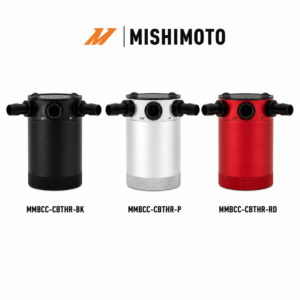
When Mishimoto developed its catch can kit for the Mazda MX-5 ND, its engineers stripped the intake and found oil entering the manifold through the PCV system, which is a useful reminder that even naturally aspirated engines can carry oil into the intake. Their kit uses a compact baffled can with an inlet diverter to churn the incoming mixture and help separation.
PCV Side, Breather Side or Both?
This is where many DIY installs go wrong. Because the PCV side feeds the intake manifold directly, and therefore the back of the intake valves, it is usually the priority on a direct injection engine. The breather side feeds the turbo inlet, so oil collected there would otherwise end up coating the compressor, intercooler and boost pipes.
- PCV-side can: the most common single-can setup on turbo DI cars, aimed at reducing oil at the intake valves.
- Breather-side can: helps keep the turbo inlet and intercooler cleaner, often more relevant on hard-driven track cars.
- Dual-can setups: cover both routes but add hoses, joins and maintenance.
Many factory PCV systems include a one-way valve or a restriction so that boost cannot push back into the crankcase. A good kit keeps that function in place. If a universal can is plumbed in a way that bypasses a check valve, you can end up pressurising the crankcase under boost, which can push oil out of seals. Always follow the kit maker’s instructions for your engine and keep the OEM valves where they are specified.
Vehicle-Specific Kit vs Universal Catch Can
Both have a place. The right one depends on how common your engine is and how confident you are with plumbing.
Vehicle-specific kits
- Come with brackets, hoses and fittings to suit the engine bay.
- Are designed to keep the factory PCV logic intact.
- Usually fit with hand tools and no cutting.
- Cost more than a bare can, and only suit specific engines.
Universal cans
- Useful for less common engines, project cars and custom builds.
- Need correctly sized hose and fittings rated for oil and fuel vapour.
- Need a sensible mounting point away from exhaust heat and moving parts.
- Leave the routing decisions, including check valves, up to you or your installer.
Whichever you choose, use hose rated for oil and fuel vapour. Ordinary heater hose can swell and soften over time. You can find bare cans, hoses and fittings in our catch can and breather parts section.
Oil Catch Cans for Popular UK Tuned Cars
The table below lists engine families that are common in the UK tuning scene and what owners should check before buying. These are checks, not promises: layouts change between model years and engine codes, so confirm fitment for your exact car.
| Vehicle family | What to check |
|---|---|
| VW Golf GTI / Golf R, Audi S3, Cupra (EA888 2.0 TSI) | Engine generation, as breather layouts differ between versions; whether the kit retains the OEM PCV valve; condition of the factory breather hoses |
| Ford Focus ST, Focus RS, Fiesta ST (EcoBoost) | Exact engine (1.5, 1.6, 2.0 or 2.3 EcoBoost); PCV versus breather-side kit; clearance around the intake and battery tray |
| BMW 125i/135i, 335i, M135i (N20, N55 and related) | Engine code, as kits are often engine-specific; whether the can mounts near hot charge pipes; condition of the factory oil separator |
| Honda Civic Type R and Civic 1.5 turbo | Generation (FK2, FK8, FL5, FK7); PCV-side versus breather-side coverage; ease of draining the can on a low front end |
| Audi RS3 / TT RS (2.5 TFSI) | Model year and engine version; whether the kit is designed for remapped cars; drain access |
Examples from our range
- Mishimoto Baffled Oil Catch Can, PCV side, for the Ford Focus RS 2016–2018
- Mishimoto Baffled Oil Catch Can, CCV side, for BMW N20 and N26 engines
- Mishimoto Baffled Oil Catch Can, PCV side, for the Honda Civic FK7 1.5 Turbo
- Catch can for the Audi TT RS (8S) and RS3 (8V)
Emptying and Maintaining Your Catch Can
A catch can only works if it is emptied. There is no universal interval: it depends on the engine, how much blow-by it produces, how the car is driven and the weather. Start by checking it every few hundred miles and after every track day, then set a routine based on what you find.
- Expect more liquid in winter. Short trips in cold, damp UK weather mean the engine spends longer below full temperature, so more water condenses in the breather system. The contents often look like a light brown, mayonnaise-like emulsion.
- Track days fill cans faster. Sustained high load and cornering forces move more oil through the breathers.
- Never let it overfill. A full can lets liquid through to the intake, defeating the point.
- Dispose of contents properly. The liquid is a mix of oil, fuel and water; take it to your local recycling centre’s oil bank rather than pouring it away.
- Inspect hoses and clips. A split or loose breather hose can cause an unmetered air leak, rough running or warning lights.
Treat the catch can as part of your normal oil care routine. If you are already shortening your service intervals, as we suggest in our guide to engine oil change intervals for performance cars, emptying the can at each oil check is an easy habit to build.
What the Catch Can Contents Tell You
One useful side effect of a catch can is that it gives you a window into engine health. Keep a note of how much you drain and what it looks like.
- Small amounts of thin oil and water: normal for most engines, particularly in winter.
- A sudden increase in volume: worth investigating. Possible causes include ring or bore wear, a failed PCV valve, or a change in how the car is being driven.
- Strong fuel smell: some fuel in blow-by is normal, but a lot can point to fuelling or mixture issues worth discussing with your tuner.
- Milky contents that never clear, even in summer: usually just condensation from short trips, but if it comes with coolant loss, get the engine checked for head gasket problems.
A catch can does not fix the cause of excess blow-by. If the volume keeps climbing, a compression or leak-down test will tell you more than any breather upgrade.
Catch Can MOT and UK Legality: Closed Loop vs Vented
There are two very different types of setup sold as “catch cans”:
- Closed-loop (recirculating): the can sits inline and the gases still return to the intake to be burnt. This keeps the factory principle intact.
- Vented to atmosphere: the crankcase vents through a can or breather filter straight into the engine bay. This is common on dedicated race cars but is a problem on a road car.
Regulation 61 of the Road Vehicles (Construction and Use) Regulations 1986 requires spark-ignition engines on vehicles first used from 1972 onwards to be equipped to stop crankcase vapours escaping to atmosphere, other than through the combustion chamber, so far as reasonably practicable, and that equipment must be kept in good working order. Later vehicles are covered by tighter emissions standards in the same regulation. In plain terms, venting crankcase gases into the air on a road car is likely to fall foul of the rules, whatever the MOT tester happens to notice.
On the MOT itself, the DVSA MOT inspection manual (section 8, Nuisance) includes a fluid leak check: a leak that forms a pool larger than 75mm in diameter within five minutes is a fail, and testers can refuse to test a car with an excessive leak. A catch can that overflows or a loose drain valve dripping oil could cause problems here. The same section also covers visible exhaust smoke and induction leaks that could affect emissions, so a poorly sealed breather hose is worth fixing before test day.
Insurance is the other consideration. A catch can is an engine modification, and most UK insurers expect modifications to be declared. Disclosure is usually simple for a closed-loop can, but check with your insurer rather than assuming it does not count.
Catch Cans and Your Wider Engine Health Plan
A catch can works best as one part of looking after a tuned engine, not a standalone fix. Oil that stays in the sump is oil doing its job, and keeping the intake clean helps your intercooler and sensors work as designed. Pair breather management with the right oil grade, sensible warm-up habits and good cooling. If you are building a car for track use, our guide to engine cooling upgrades, radiators and oil coolers covers the other side of keeping oil healthy under sustained load.
It is also worth being realistic about results. A catch can is a preventative part. It is not marketed by reputable makers as a power upgrade, and any gain you feel is more likely to come from a cleaner intake over the long term than from the can itself.
Oil Catch Can Checklist: Before You Buy and Fit
- Confirm your exact engine code and model year.
- Find out which breather routes your engine has: PCV, breather side or both.
- Choose a baffled design over an empty can.
- Make sure the kit keeps any OEM check valve or restriction in place.
- Plan a closed-loop (recirculating) setup for any road car.
- Use hoses and fittings rated for oil and fuel vapour.
- Check mounting position for heat, clearance and drain access.
- Inspect and replace any perished factory breather hoses at the same time.
- Set a routine for checking and emptying the can, more often in winter and after track days.
- Tell your insurer about the modification.
Shop Oil Catch Cans and Breather Parts

Conclusion
An oil catch can will not add horsepower, but on a remapped turbo or direct injection engine it can help reduce oil reaching the intake valves, turbo inlet and intercooler pipework. The difference between a useful can and a pointless one comes down to a baffled design, correct routing that keeps the factory PCV logic intact, and the discipline to empty it. Keep it closed loop on any road car, check it more often over a UK winter, and use what you drain as an early warning about engine health.
Ready to tidy up your breather system? Browse our oil catch cans or explore the full range at performancecarsparts.co.uk. If you are not sure which kit suits your engine, message our team on WhatsApp or email us with your registration and engine code, and we will help you check fitment before you order.
Shop related performance parts

Explore related products


Always check the individual product listing for your vehicle and engine before ordering.